

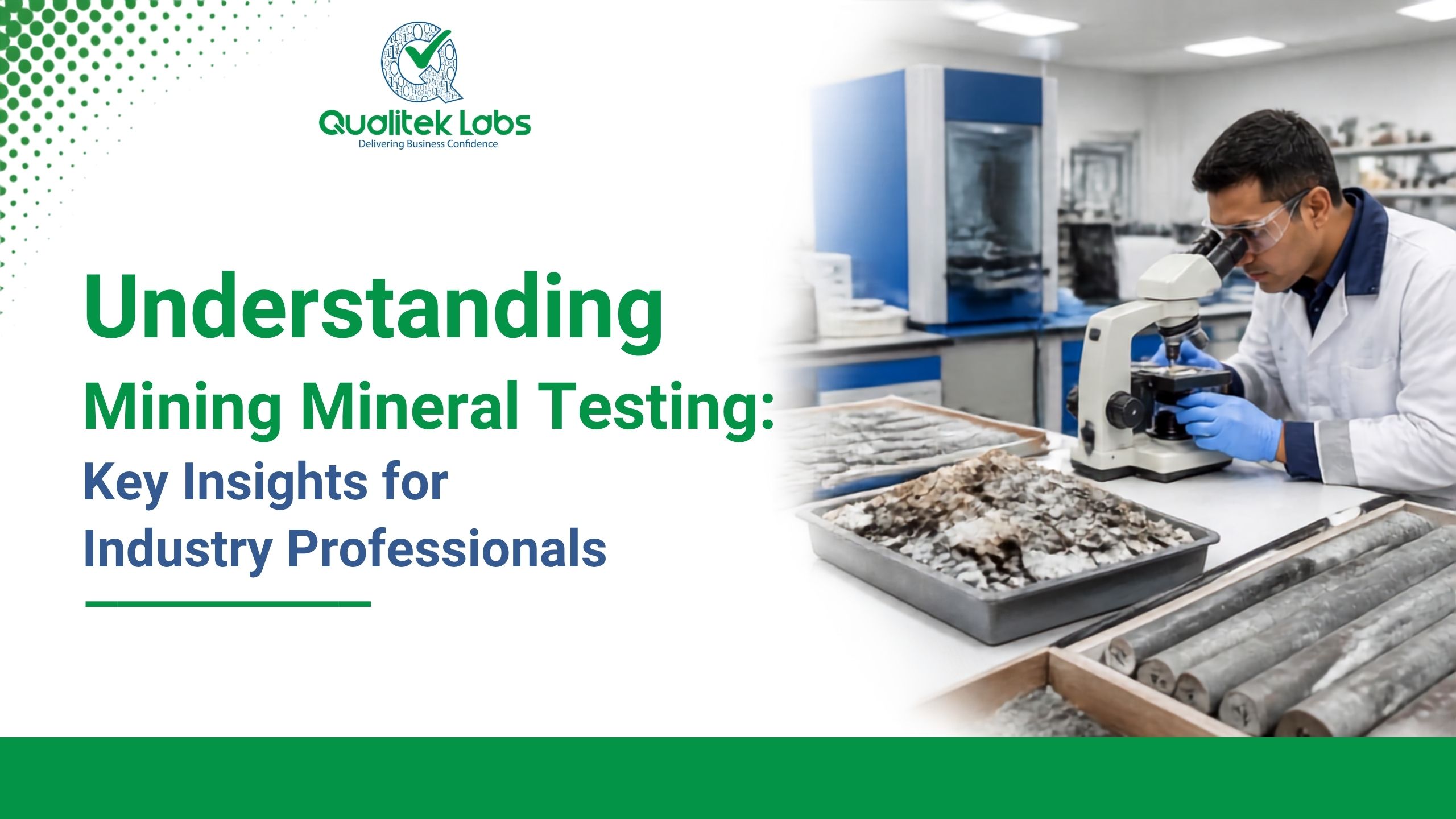
Minerals are the foundation of several industries, from mining and steel to construction, manufacturing and fertilizers. But the quality of a mineral cannot always be determined by its appearance. Its chemical composition, physical properties, impurities and other characteristics can directly affect processing, product quality and overall operational efficiency.
This is where reliable mineral testing becomes important. Testing provides manufacturers, miners and raw material buyers with measurable information about the materials they are handling. However, the reliability of that information depends heavily on the competence of the laboratory conducting the tests.
Choosing a NABL-accredited mineral testing laboratory gives businesses greater confidence that their testing is carried out under a recognised framework for laboratory competence and quality.
What Does NABL Accreditation Mean for a Testing Laboratory?
The National Accreditation Board for Testing and Calibration Laboratories (NABL) accredits testing laboratories against ISO/IEC 17025, the international standard for the competence of testing and calibration laboratories. Accreditation involves assessment of a laboratory’s technical competence and quality management systems.
For businesses, this distinction matters. A laboratory may offer mineral testing, but that does not automatically mean every test it performs is covered by NABL accreditation.
NABL itself advises users to check the laboratory’s specific scope of accreditation, including the relevant discipline, product group, test parameters and methods. Tests outside the accredited scope are not covered by that accreditation.
Why Is Mineral Testing Important for Mining and Manufacturing?
Mineral quality can vary considerably between sources, batches and lots. Even relatively small differences in composition can influence how a material performs during processing.
For example, iron ore quality can affect steelmaking, while the characteristics of coal and coke can influence their suitability for industrial applications. Similarly, minerals such as bauxite, manganese ore, limestone and chrome ore require appropriate analysis before they are used or traded.
A Proper Mineral Testing Programme Can Help Businesses:
- Verify the quality and composition of raw materials
- Identify impurities and undesirable elements
- Assess whether materials meet specified requirements
- Support supplier and purchase decisions
- Maintain consistency between batches
- Reduce the risk of quality-related disputes
- Generate reliable data for production and quality control
For mining companies and manufacturers dealing with large quantities of raw materials, these checks can have a direct impact on commercial and operational decisions.
5 Benefits of Choosing a NABL-Accredited Mineral Testing Laboratory
1. Greater Confidence in Test Results
Laboratory accreditation provides formal recognition of a laboratory’s competence against the applicable standard. NABL states that accreditation increases confidence in testing reports and provides assurance of accurate and reliable results.
This is particularly valuable when test results are used to approve raw materials, evaluate suppliers or make commercial decisions.
2. Better Control Over Raw Material Quality
Mining and manufacturing operations depend on consistent raw material quality. Regular analysis can reveal changes in composition before they create larger problems in processing or production.
Testing parameters can be selected according to the mineral, application and relevant specifications, allowing businesses to establish more systematic quality-control processes.
3. Support for Buying and Selling Decisions
Mineral testing is not limited to production environments. Test results can also play an important role in commercial transactions.
When buyers and sellers have objective laboratory data, they have a clearer basis for evaluating material quality, specifications and compliance. This can reduce uncertainty when dealing with bulk mineral consignments.
4. Improved Traceability and Documentation
Testing reports provide documented evidence of the characteristics of a material at a particular point in time. For businesses handling multiple suppliers, consignments or production batches, maintaining such records can make quality monitoring easier.
A consistent testing process also helps organisations compare results across batches and identify variations that may require attention.
5. Greater Confidence in Regulatory and Customer Requirements
Accurate testing data can support businesses when demonstrating conformity with applicable specifications, customer requirements or quality standards.
NABL notes that results from accredited laboratories are used extensively by regulators and that accreditation can increase confidence in data used for important decisions.
What Can Be Tested in Mineral Samples?
The scope of testing depends on the laboratory’s capabilities and accreditation. Mineral testing may include chemical, physical, mineralogical and metallurgical analysis, along with quality-control testing.
Commonly Tested Commodities Can Include:
- Iron ore
- Coal
- Coke
- Ferro alloys
- Manganese ore
- Limestone
- Gypsum
- Chrome ore
- Bauxite
- Rock phosphate
- Fertilizers
The exact parameters and methods should always be checked against the laboratory’s current scope before submitting samples.
How Should Manufacturers Choose a Mineral Testing Laboratory?
Accreditation is an important consideration, but businesses should look beyond the accreditation logo. The first step is to verify whether the laboratory’s scope of NABL accreditation covers the specific mineral, parameter and testing method required.
It is also useful to consider the laboratory’s technical capabilities, sampling and sample-preparation practices, reporting process, turnaround requirements and experience with the relevant industry.
This becomes particularly important when testing is being used for high-volume procurement, quality disputes or critical production decisions.
Choose Reliable Mineral Testing for Better Quality Decisions
Mineral quality has a direct connection with the performance, consistency and commercial value of raw materials. For mining companies and manufacturers, reliable testing is therefore more than a routine quality check, it is an important part of informed decision-making.
Working with a NABL-accredited mineral testing laboratory can provide greater confidence in the competence of the testing process and the reliability of the resulting data, provided the required tests fall within the laboratory’s accredited scope.
Qualitek Labs provides mineral testing services covering commodities such as iron ore, coal, coke, ferro alloys, manganese ore, limestone, gypsum, chrome ore, bauxite, rock phosphate and fertilizers. Its mineral testing capabilities include chemical, physical, mineralogical, metallurgical and quality-control analysis.
For businesses looking to make more informed decisions about mineral quality, selecting the right testing partner can be an important step towards better raw material control and consistent operations.
FAQs
1. Why should businesses choose a NABL-accredited mineral testing laboratory?
A NABL-accredited mineral testing laboratory has been assessed against applicable requirements for laboratory competence under ISO/IEC 17025. This gives businesses greater confidence in the competence of the laboratory and reliability of its test results.
2. What minerals can be tested in a mineral testing laboratory?
Depending on the laboratory’s scope, mineral testing can cover materials such as iron ore, coal, coke, manganese ore, ferro alloys, limestone, gypsum, chrome ore, bauxite, rock phosphate and fertilizers.
3. What is tested during mineral analysis?
Mineral analysis may examine chemical composition, physical characteristics, mineralogical properties and, where applicable, metallurgical behaviour. The exact parameters depend on the material, application, specification and laboratory’s accredited scope.
4. Is every test performed by a NABL-accredited laboratory accredited?
No. NABL accreditation applies to the laboratory’s defined scope. Businesses should check the laboratory’s current accreditation scope to confirm that the specific mineral, parameter and test method required are covered.
5. How does mineral testing help manufacturers?
Mineral testing helps manufacturers verify incoming raw material quality, identify variations and impurities, evaluate suppliers and maintain consistency between batches. Reliable test data can support better procurement, production and quality-control decisions.
6. How can I choose the right mineral testing laboratory?
Check the laboratory’s NABL accreditation scope, relevant test parameters and methods, technical capabilities, sampling practices, reporting process and experience with your mineral or industry. The laboratory should be able to meet your specific testing requirements.