

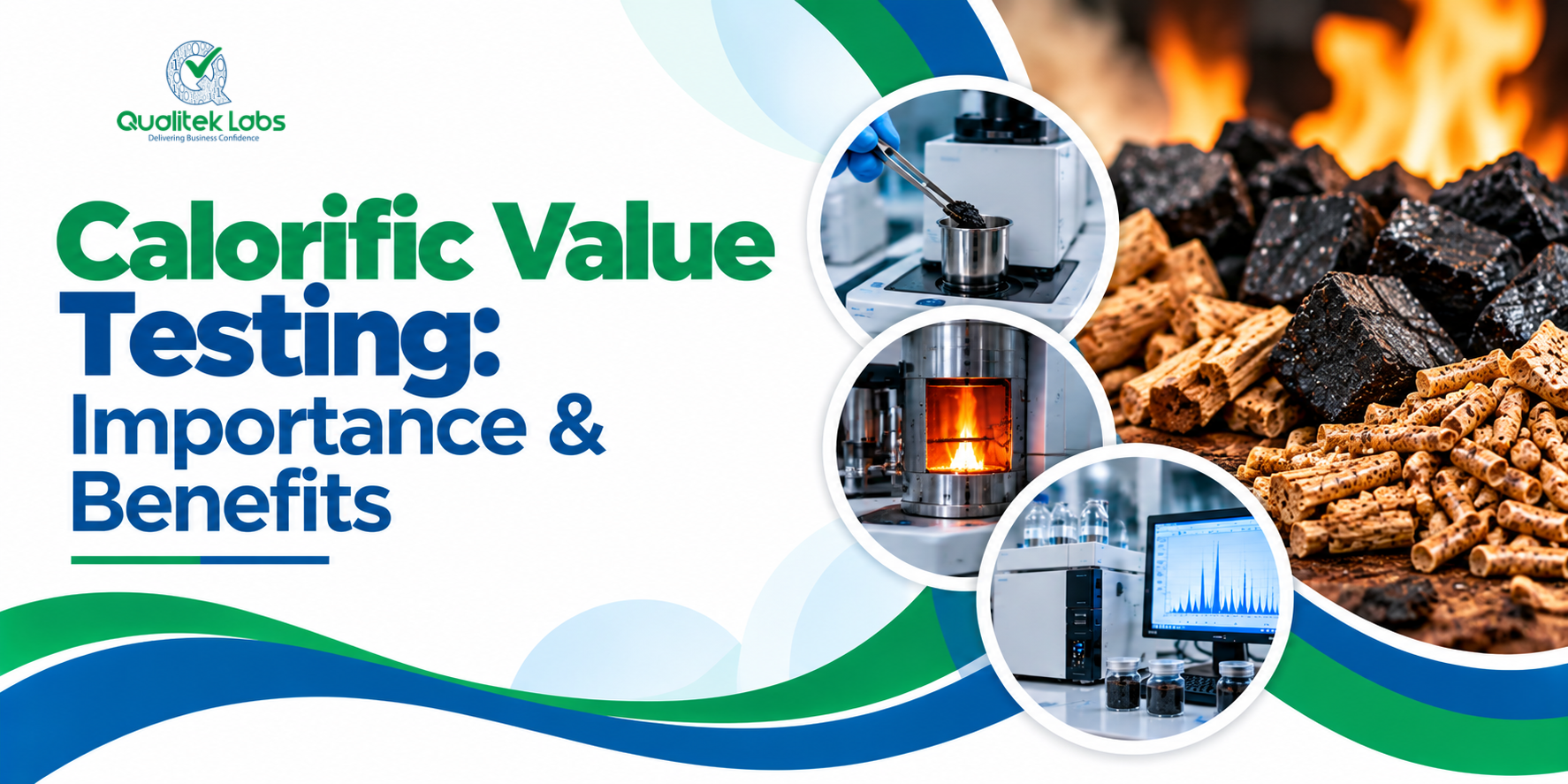
Calorific value is one of the most important parameters used to evaluate the quality and energy potential of solid fuels. Industries that rely on coal, petroleum coke, charcoal, and other solid fuels need accurate information about their energy content to optimise fuel consumption, maintain operational efficiency, and manage production costs.
Calorific value testing of solid fuels helps determine the amount of heat released when a specified quantity of fuel is completely combusted under defined conditions. These results allow industries to compare fuel quality, evaluate supplier specifications, and select fuels that meet their operational requirements.
In India, where solid fuels support power generation, cement manufacturing, metallurgy, and several other industrial processes, reliable calorific value analysis plays an important role in fuel quality control.
In this article, we explore what calorific value testing is, how it works, the key factors that influence results, and the benefits it offers to industries.
What Is Calorific Value Testing?
Calorific value testing is a laboratory procedure used to measure the heat energy released during the complete combustion of a fuel sample. It is commonly performed on coal, petroleum coke, charcoal, and other suitable combustible materials.
The result indicates the energy available from a specified quantity of fuel and is generally expressed in:
- Megajoules per kilogram (MJ/kg)
- Kilocalories per kilogram (kcal/kg)
A higher calorific value generally indicates greater energy content per unit mass. However, the overall suitability of a fuel also depends on factors such as moisture, ash, Sulphurcontent, combustion characteristics, and the requirements of the industrial process.
Types of Calorific Value
Calorific value is commonly reported in two forms: gross calorific value and net calorific value.
1. Gross Calorific Value (GCV)
Gross calorific value, also known as higher heating value (HHV), represents the total heat released during complete combustion when the products are cooled to the specified reference condition, allowing the water formed during combustion to condense.
GCV is useful for comparing the energy content of solid fuels under a consistent reporting basis.
2. Net Calorific Value (NCV)
Net calorific value, also known as lower heating value (LHV), accounts for the energy that remains available when the water produced during combustion is treated as vapour rather than condensed.
NCV is particularly relevant in applications where the latent heat of water vapour is not recovered.
Important: GCV and NCV values should not be compared directly without considering the reporting basis and calculation method. Moisture content and hydrogen content can affect the relationship between these values.
Looking for Reliable Calorific Value Testing Services in India?
Evaluate the energy content and quality of solid fuels with reliable calorific value testing from Qualitek Labs. Get accurate insights into coal, petroleum coke, and other solid fuels to support better industrial decisions.
How Is Calorific Value Testing Performed?
A bomb calorimeter is commonly used to determine the gross calorific value of solid fuel samples. The method involves controlled combustion under specified laboratory conditions.
The typical testing process includes the following steps:
Step 1: Sample Collection and Preparation
A representative sample is collected and prepared according to the applicable testing method. Proper sample preparation helps minimise errors caused by variations in the material.
Step 2: Sample Weighing
A specified quantity of the prepared fuel sample is accurately weighed before testing.
Step 3: Controlled Combustion
The sample is placed in a bomb calorimeter, where it is combusted in an oxygen-rich environment under controlled conditions.
Step 4: Heat Measurement
The heat released during combustion is measured through the temperature change in the surrounding calorimeter system.
Step 5: Calculation and Reporting
The measured data are used to determine the calorific value according to the relevant standard and method. The report should identify the result, units, test method, and applicable sample basis.
Recognised methods, such as applicable ASTM or ISO standards, may be used depending on the fuel type and testing requirements.
Key Factors That Affect the Calorific Value of Solid Fuels
The energy content of solid fuels varies according to their composition and physical properties.
1. Moisture Content
Moisture reduces the useful energy available per unit mass of fuel as received because part of the heat is used to evaporate water during combustion. Therefore, moisture analysis is important when interpreting calorific value results.
2. Ash Content
Ash represents the inorganic residue remaining after combustion under specified conditions. Higher ash content generally reduces the combustible fraction per unit mass of fuel and may increase residue-handling requirements.
3. Carbon and Hydrogen Content
Carbon and hydrogen contribute significantly to the heat released during combustion. Their proportions influence the energy potential of many solid fuels.
4. Fuel Type and Composition
Different fuels have different energy characteristics. Coal grades, petroleum coke, and charcoal can vary considerably in calorific value because of differences in composition, processing, and moisture content.
5. Reporting Basis
Results may be reported on an as-received, air-dried, or dry basis. Comparing results on different bases can lead to misleading conclusions, so the reporting basis must always be considered.
Importance of Calorific Value Testing for Industries
Calorific value testing provides essential information for industrial fuel selection and quality management.
1. Better Fuel Selection
Accurate test results help industries compare fuel options and determine whether a material meets the energy requirements of their processes.
2. Improved Energy Management
Understanding fuel energy content allows businesses to estimate how much fuel may be required to meet a given energy demand. Actual consumption will also depend on equipment efficiency and operating conditions.
3. Consistent Product Quality
Industries that depend on stable combustion conditions can use routine testing to identify changes in fuel quality between batches or suppliers.
4. Better Procurement Decisions
Calorific value results help purchasing teams evaluate fuel specifications and compare energy content alongside price, moisture, ash, sulfur, and transportation costs.
5. Support for Process Optimisation
Reliable fuel data can help plant operators review combustion settings, investigate changes in fuel consumption, and improve process control.
Benefits of Calorific Value Testing
Calorific value analysis can deliver several practical benefits when incorporated into a wider fuel-quality programme.
- Cost control: Helps businesses compare the energy value of fuels against their purchase price.
- Quality assurance: Supports verification of fuel specifications and supplier claims.
- Operational reliability: Helps identify changes in fuel properties that may affect process performance.
- Resource efficiency: Supports more informed fuel-use planning and energy management.
- Informed decision-making: Provides measurable data for fuel purchasing, supplier evaluation, and quality-control activities.
Calorific value should not be considered in isolation. A complete assessment may also require proximate analysis, Sulphurtesting, and other parameters relevant to the fuel and application.
Industries That Require Calorific Value Testing
Power Generation
Power plants use calorific value results to evaluate coal quality, estimate fuel requirements, and monitor incoming fuel consignments.
Cement Manufacturing
Cement plants use coal and petroleum coke in kiln operations. Testing helps assess the energy content of these fuels and supports fuel-quality control.
Steel and Metallurgical Industries
Fuel and carbon materials may be analysed to determine their suitability for specific thermal and metallurgical processes.
Industrial Boilers and Furnaces
Boiler and furnace operators use fuel-quality information to plan operations and evaluate variations in energy input.
Fuel Trading and Procurement
Suppliers, buyers, and quality-control teams use calorific value testing to verify specifications and support commercial fuel assessments.
Standards Used for Calorific Value Testing
Calorific value testing should follow an appropriate, recognised test method for the material being evaluated.
Depending on the fuel and application, relevant methods may include:
- ASTM standards for determining the gross calorific value of coal and coke.
- ISO standards for calorific value determination of solid mineral fuels.
- Applicable national or industry specifications that define test methods and reporting requirements.
The selected method should match the fuel type and intended application. Laboratories and customers should also agree on the reporting basis to ensure that results can be compared meaningfully.
How to Choose a Calorific Value Testing Laboratory in India
Selecting a competent testing laboratory is important for obtaining dependable results.
Before choosing a laboratory, consider the following:
- Relevant accreditation: Check whether the laboratory holds applicable accreditation and whether calorific value testing for the required material is included in its current accredited scope.
- Suitable equipment: Confirm that the laboratory has appropriate calorimetry equipment and follows the selected test method.
- Standardised procedures: Look for consistent sample preparation, calibration, and quality-control practices.
- Testing capabilities: Ensure that the laboratory can test the specific material, such as coal or petroleum coke.
- Clear reporting: Reports should identify the method, units, results, and relevant reporting basis.
- Technical support: The laboratory should be able to clarify results and explain any testing requirements.
Choosing the right laboratory helps businesses establish reliable fuel-quality data and make informed operational and procurement decisions.
Conclusion
Calorific value testing is essential for evaluating the energy content and quality of solid fuels used across industrial applications. By measuring the heat released during combustion, businesses can compare fuels, verify specifications, manage energy requirements, and support consistent operations.
When combined with moisture, ash, sulfur, and other relevant analyses, calorific value testing provides a more complete understanding of fuel performance. Selecting an appropriate testing method and a technically competent laboratory is therefore important for reliable results.
Qualitek Labs offers solid fuels testing services in India for materials including coal, petroleum coke, graphite, and charcoal. With advanced testing infrastructure and technical expertise, Qualitek Labs supports businesses in evaluating material properties and making informed quality-control decisions. Customers should confirm the availability of the specific calorific value test and its inclusion in the laboratory’s current accreditation scope, where applicable.
If your organisation requires calorific value testing or comprehensive solid fuel analysis, contact Qualitek Labs to discuss your testing requirements and request a quote.
Frequently Asked Questions (FAQs)
1. What is calorific value testing of solid fuels?
Calorific value testing measures the amount of heat released when a specified quantity of solid fuel is completely combusted under defined conditions. It helps determine the energy content of materials such as coal, petroleum coke, and charcoal.
2. What is the difference between GCV and NCV?
Gross calorific value (GCV) includes the heat recovered when water vapour produced during combustion condenses. Net calorific value (NCV) accounts for the water remaining as vapour. NCV is therefore generally lower than GCV for the same fuel and reporting basis.
3. Which instrument is used for calorific value testing?
A bomb calorimeter is commonly used to determine the gross calorific value of suitable solid fuels. The test measures the heat released during controlled combustion of a prepared sample.
4. Why is calorific value testing important for coal and petroleum coke?
It helps industries evaluate energy content, compare fuel quality, verify supplier specifications, estimate fuel requirements, and support procurement decisions. The results are most useful when interpreted alongside moisture, ash, and other relevant parameters.
5. Where can I get calorific value testing services in India?
Qualitek Labs provides solid fuels testing services for materials including coal and petroleum coke. Contact Qualitek Labs to confirm the availability of your required calorific value test, applicable method, turnaround time, and accreditation scope.