

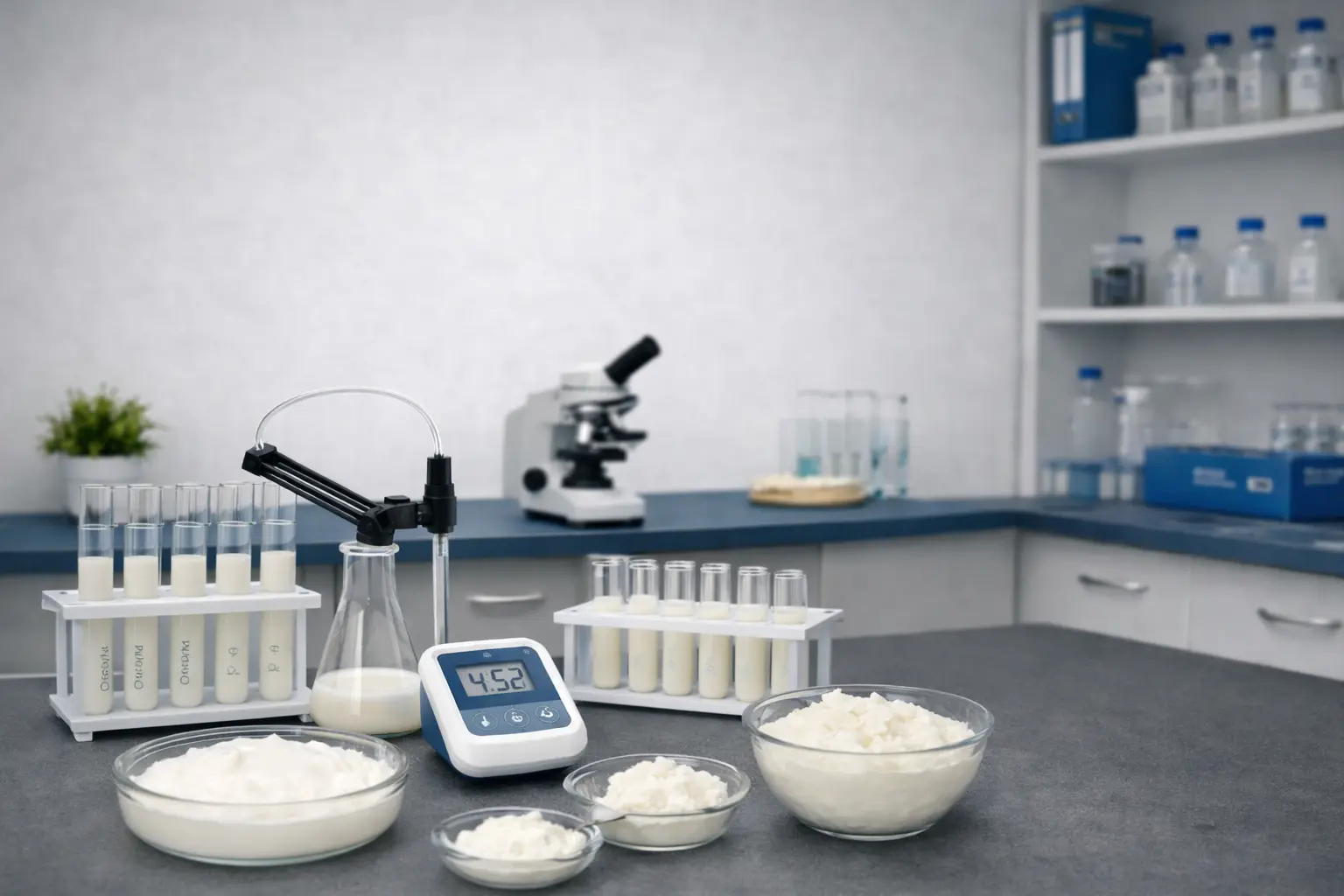
Recent incidents of contamination in packaged dairy products served on premium trains have made both consumers and manufacturers more careful than ever. This is where insights from a Curd Testing Lab become essential.
Packaged curd is a daily staple for Indians, valued for its taste, nutrition, and digestive benefits. While curd may look fresh from the outside, safety depends on several unseen factors. Visible packaging integrity tells you almost nothing about what is happening inside.
In this blog, we break down simple checks you can do and what actually happens inside a professional Curd Testing Laboratory to ensure quality and safety.
Why Curd Safety Needs Attention
Curd is a fermented dairy product, which makes it highly sensitive to contamination as microbial activity continues at a low level, even after packaging. Factors like poor hygiene, improper storage, and temperature fluctuations can lead to microbial growth. A product that left the factory in perfect condition can deteriorate significantly across a flawed supply chain.
A Food Testing Lab for Curd often detects issues that are invisible to the naked eye, making testing a critical step in ensuring safe consumption. For manufacturers, relying on Curd Testing Services is not just about quality; it’s about compliance, brand reputation, and consumer trust.
7 Ways to Check If Packaged Curd Is Safe
1) Check the Packaging Integrity
Always inspect the outer packaging. If the container is swollen, leaking, or damaged, it may indicate microbial activity or gas formation. Even before reaching a Curd Testing Lab, such signs suggest the product is unsafe.
2) Look at the Expiry Date
While obvious, expiry dates are often overlooked. However, even within the expiry period, improper storage can spoil curd. That’s why Curd Quality Testing goes beyond just shelf-life labelling.
3) Observe the Texture
Fresh curd should have a smooth, consistent texture. If you notice excessive water separation, sliminess, or unusual lumps, it may be a sign of spoilage. These changes are typically confirmed through Curd Microbiological Analysis.
Try thisA well-set curd should hold its shape on a spoon without dripping. This simple test reflects proper fermentation and good microbial activity. |
4) Smell Before Consumption
Curd naturally has a mild sour aroma. A strong, foul, or unusual smell indicates contamination. A Dairy Testing Lab for Curd Analysis can identify the exact microbial cause behind such odour changes.
5) Check the Taste (If Safe to Do So)
If everything else seems normal, a small taste can help. Bitter or overly sour curd is a red flag. However, avoid tasting if the packaging or smell already seems off.
6) Storage Conditions Matter
Curd must be stored at the right temperature throughout the supply chain. Breaks in the cold chain can cause bacterial growth. This is why manufacturers look for “Curd Testing Services Near Me” to validate product stability under different conditions.
7) Trust Certified Testing
For complete assurance, only products tested by an NABL-approved curd testing lab should be trusted. Such labs follow strict protocols for Curd Microbiological Testing, ensuring compliance with safety standards.
What Happens Inside a Curd Testing Laboratory?
A professional Analytical Testing Lab performs multiple tests to evaluate curd safety and quality. These include:
- Microbial Testing:Spots harmful bacteria, yeast & mould hiding inside sealed packs
- Adulteration Testing:Catches unwanted additives or fillers that shouldn’t be in your curd
- Shelf-Life Analysis:Tests how long the product is actually safe, not just what’s printed on the label
- Physicochemical Testing:Checks pH, acidity & composition to confirm quality standards
Most of these tests are offered by accredited testing labs and NABL-accredited labs in India, and that accreditation is not a formality. It means the methods are validated, the equipment is calibrated, and the results will hold up under regulatory scrutiny. For consumers, it means confidence. For manufacturers, it means legal and commercial protection.
If you are choosing a food testing laboratory, accreditation should be the first thing you check, not the last.
Why Brands Rely on Curd Testing Labs
For dairy businesses, partnering with a Quality Assurance Laboratory is no longer optional. Here’s why dairy businesses rely on curd testing labs:
- Methods are validated & scientifically proven
- Equipment is regularly calibrated
- Results are accepted by regulators & courts
- NABL Accredited Labs in India follow global ISO/IEC 17025 standards.
Many companies actively search for Analytical Labs Near Me to conduct regular testing and maintain quality standards.
Conclusion
A visual check can tell you something is obviously wrong. It can’t tell you what’s quietly growing inside a sealed cup. That’s the gap a professional Curd Testing Lab and certified food testing laboratory fills. It tests for microbial safety, quality compliance, and scientific validation that no label or expiry date can replace. For dairy manufacturers, this isn’t optional. Your product integrity and consumer trust both depend on getting it right before it reaches the shelf.
Qualitek Labs makes that easy. With comprehensive Curd Testing Services, advanced testing technology, and a team that knows dairy inside out, we give you results you can act on and stand behind.
As a NABL Accredited Testing Lab, our findings meet regulatory standards and hold up where it matters, with auditors, buyers, and authorities alike. Safe curd doesn’t happen by chance. It happens in a curd testing lab.
Frequently Asked Questions
How do I know if packaged curd is spoiled?
Look for signs like bad smell, unusual texture, bloated packaging, or sour/bitter taste.
What causes contamination in curd?
Contamination can occur due to poor hygiene, improper storage, or breaks in the cold chain during transport.
What tests are done in a Curd Testing Lab?
Tests include microbial analysis, adulteration checks, shelf-life testing, and physicochemical evaluation.
Why is microbiological testing important for curd?
It helps detect harmful bacteria, yeast, and mould that can cause spoilage or health risks.
Are NABL-approved curd testing labs reliable?
Yes, NABL-approved labs follow standardised methods and provide accurate, trustworthy results.
Can curd spoil before the expiry date?
Yes, if it is not stored properly or exposed to temperature fluctuations.
How can dairy businesses ensure curd safety?
By using regular testing services from an accredited food testing laboratory and maintaining proper storage and hygiene practices.