

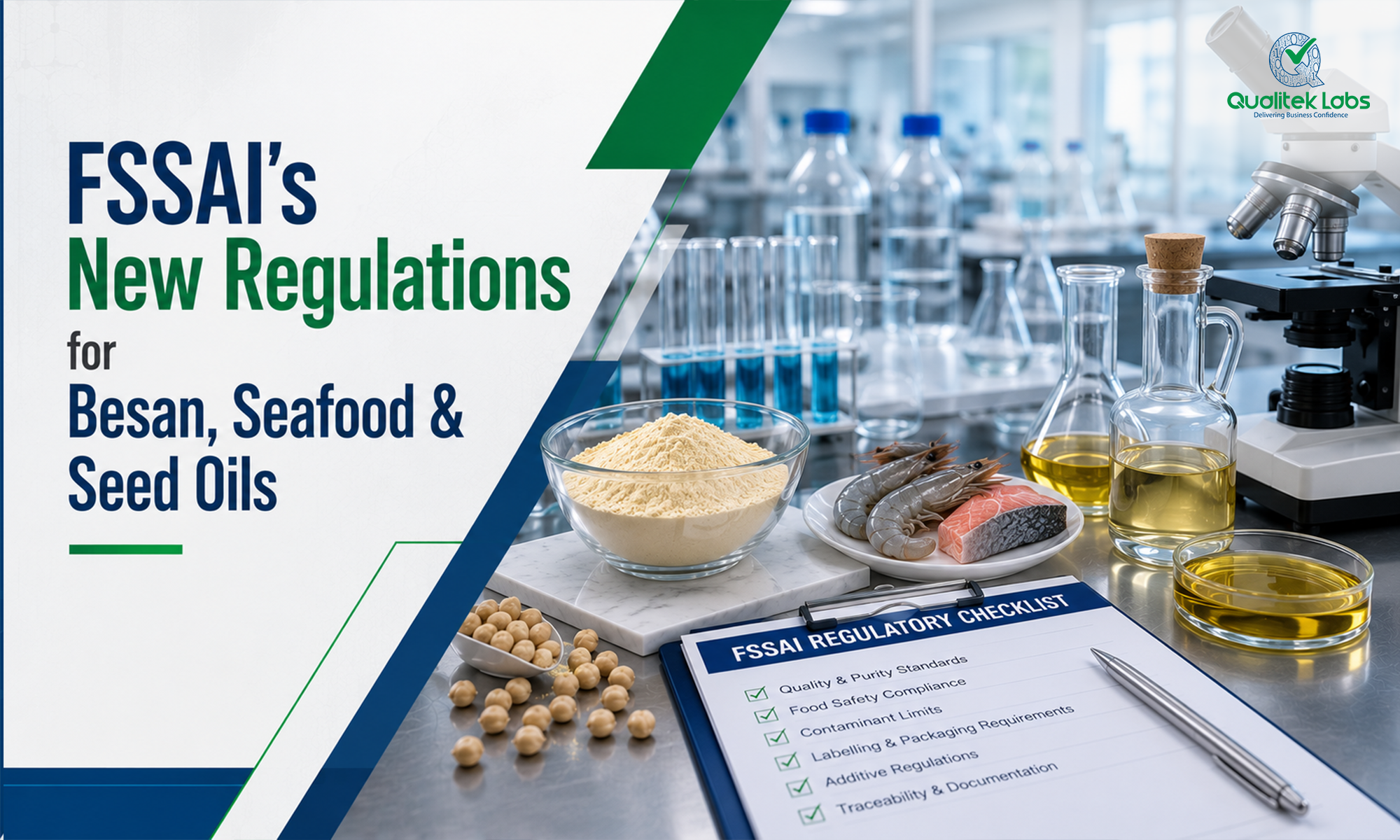
The Food Safety and Standards Authority of India (FSSAI) has introduced new regulations for besan, seafood, and seed oils. These changes are aimed at improving food safety, preventing adulteration, and ensuring better quality standards across the food industry.
For food manufacturers, exporters, processors, and retailers, keeping up with these FSSAI new rules is essential. Non-compliance can lead to product recalls, regulatory action, and loss of consumer trust. On the other hand, businesses that adopt these changes early can strengthen their quality systems and gain a competitive advantage.
Let’s take a closer look at what has changed and why these updates matter.
What’s New for Besan?
Besan is a staple ingredient in Indian kitchens and is widely used in snacks, sweets, and ready-to-cook products. Due to its high demand, it has often been vulnerable to adulteration with cheaper flours or other substances.
The latest FSSAI new rules introduce a clear standard for besan. According to the revised regulations, besan should be prepared from clean and sound Bengal gram (chana dal). It must also meet prescribed quality parameters related to moisture, ash content, and other physicochemical characteristics.
The amendment also strengthens contaminant requirements by specifying limits for naturally occurring toxic substances, including aflatoxins. Aflatoxins are harmful toxins produced by certain moulds that can grow on improperly stored grains and pulses. Long-term exposure to these toxins can pose serious health risks, making routine testing an important part of quality assurance.
Manufacturers should also ensure that besan is free from foreign matter, insect infestation, and microbial contamination before it reaches consumers.
Revised Standards for Seafood
Seafood is one of India’s largest food export categories. Maintaining international-quality standards is essential for protecting consumers and supporting global trade.
Under the latest FSSAI new rules, seafood products must comply with stricter safety requirements. The revised standards focus on controlling microbiological contamination, heavy metals, veterinary drug residues, and environmental pollutants.
One of the key updates includes revised limits for certain antibiotic residues in seafood. The use of antibiotics in aquaculture is closely monitored because excessive residues can contribute to antimicrobial resistance and pose health concerns.
The regulations also emphasise proper hygiene during harvesting, transportation, storage, and processing. Businesses are expected to implement strong quality management systems to minimise contamination throughout the supply chain.
Regular laboratory testing helps manufacturers verify compliance before products enter the domestic or export market.
Updated Requirements for Seed Oils
The FSSAI new rules also bring greater clarity to standards for seed oils. These changes are intended to improve product authenticity and reduce adulteration in edible oils.
The revised regulations prescribe quality parameters for different seed oils, including specific chemical characteristics that help establish identity and purity. They also define acceptable limits for contaminants and ensure that oils meet safety requirements before reaching consumers.
Another important aspect of the update is accurate product labelling. Manufacturers must clearly declare the type of oil and ensure that labels comply with FSSAI requirements. Misleading claims or incorrect declarations can lead to regulatory action.
Routine chemical analysis plays a key role in confirming oil quality, composition, and compliance with regulatory standards.
Why These New Rules Matter
The latest FSSAI new rules are designed to strengthen India’s food safety ecosystem.
For Manufacturers
They provide clear quality benchmarks that help reduce compliance risks and improve production consistency.
For Consumers
They ensure safer food products and greater confidence in what they buy.
For Exporters
These updated standards support international market access by aligning products with stricter quality expectations.
Overall, the amendments encourage better manufacturing practices, stronger quality control, and increased transparency across the food supply chain.
How Food Businesses Can Stay Compliant
Food regulations continue to evolve, making it important for businesses to regularly review their quality assurance systems.
Some Best Practices Include:
- Test raw materials before production.
- Conduct routine contaminant and microbiological testing.
- Monitor aflatoxins, heavy metals, and antibiotic residues where applicable.
- Verify product quality against the latest FSSAI standards.
- Maintain proper documentation and traceability.
- Review product labels to ensure regulatory compliance.
- Stay updated with new notifications issued by FSSAI.
Taking a preventive approach can help businesses avoid costly recalls and maintain customer confidence.
The Role of Food Testing Laboratories
Compliance begins with reliable laboratory testing. Accredited food testing laboratories help manufacturers verify product safety, detect contaminants, and ensure products meet applicable regulatory requirements.
Depending on the Product, Testing May Include:
- Physicochemical analysis
- Microbiological testing
- Heavy metal analysis
- Aflatoxin testing
- Antibiotic residue analysis
- Edible oil quality testing
- Nutritional analysis
Regular testing not only supports compliance but also strengthens brand reputation and consumer trust.
Conclusion
The latest FSSAI new rules for besan, seafood, and seed oils reflect India’s continued focus on improving food safety and product quality. As regulatory standards become more stringent, businesses must strengthen their quality assurance processes and adopt routine testing to ensure compliance.
Partnering with an experienced and accredited food testing laboratory can make this process much easier. Qualitek Labs offers comprehensive food testing services covering contaminants, microbiological analysis, residue testing, edible oil testing, nutritional analysis, and regulatory compliance. Backed by advanced analytical infrastructure and experienced professionals, Qualitek Labs helps food businesses confidently meet evolving FSSAI requirements while protecting product quality and consumer trust.
Frequently Asked Questions
1. What are the latest FSSAI new rules for besan?
The latest FSSAI new rules specify that besan must be made from clean Bengal gram (chana dal) and comply with defined quality parameters. The regulations also prescribe limits for contaminants like aflatoxins to ensure food safety and product quality.
2. Why has FSSAI updated the standards for seafood?
FSSAI has revised seafood standards to improve consumer safety and align with international quality requirements. The updates include stricter limits for antibiotic residues, contaminants, and microbiological hazards while promoting better hygiene throughout the supply chain.
3. What changes have been made to seed oil regulations?
The new FSSAI rules for seed oils define quality and purity standards, specify acceptable contaminant limits, and strengthen labelling requirements. These measures help prevent adulteration and ensure consumers receive safe and authentic edible oils.
4. Why is laboratory testing important for FSSAI compliance?
Food testing helps manufacturers verify that their products meet FSSAI standards for safety, quality, contaminants, and composition. Regular laboratory analysis also supports regulatory compliance, reduces the risk of recalls, and builds consumer confidence.
5. Who needs to comply with the latest FSSAI regulations?
The latest FSSAI regulations apply to food manufacturers, processors, importers, exporters, distributors, and brand owners dealing with besan, seafood, seed oils, and other regulated food products marketed in India.
6. How can Qualitek Labs help businesses meet FSSAI requirements?
Qualitek Labs offers comprehensive food testing services, including microbiological analysis, heavy metal testing, aflatoxin testing, antibiotic residue analysis, edible oil testing, and regulatory compliance support to help businesses meet the latest FSSAI standards.