

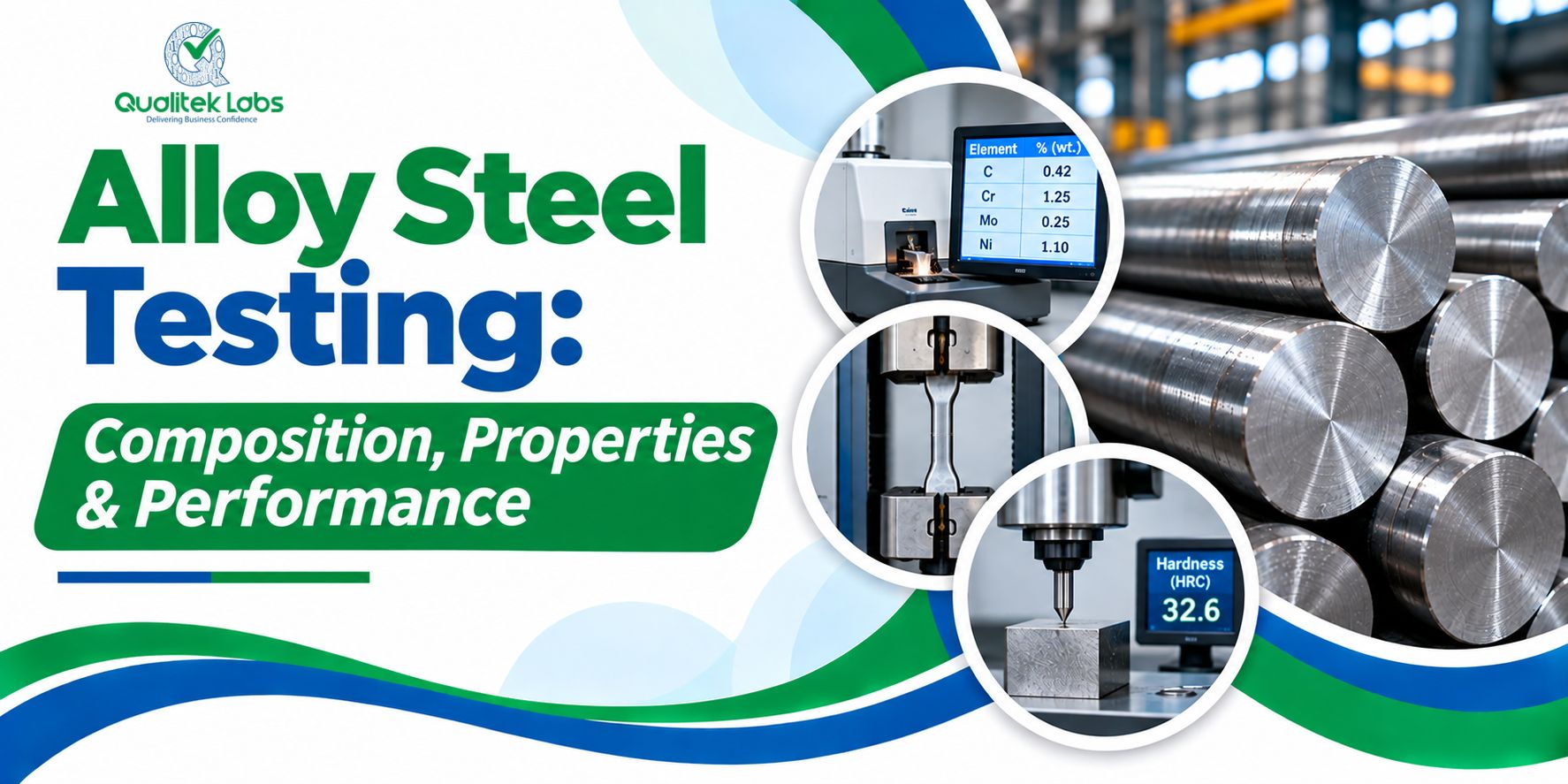
Alloy steel plays an important role in modern manufacturing, construction, automotive, engineering, and heavy industrial applications. It is produced by combining iron and carbon with specific alloying elements such as chromium, nickel, manganese, molybdenum, vanadium, silicon, and boron. These elements enhance the mechanical and chemical properties of steel, making it suitable for applications that require high strength, hardness, toughness, and wear resistance.
However, the quality and performance of alloy steel depend significantly on its chemical composition and manufacturing process. Even minor variations in alloying elements can influence its strength, durability, and suitability for specific applications.
This is why alloy steel testing is essential for manufacturers, suppliers, and industries. Through professional metal testing services, businesses can verify material composition, identify impurities, confirm alloy grades, and ensure compliance with relevant quality standards.
What Is Alloy Steel Testing?
Alloy steel testing is the process of evaluating the chemical composition, mechanical properties, and overall quality of alloy steel to determine whether it meets the required specifications.
It involves analysing the percentage of different alloying elements present in the material and assessing its physical and mechanical characteristics.
A professional alloy steel testing laboratory uses specialised analytical instruments and testing methods to evaluate material quality and verify whether the steel is suitable for its intended application.
Common elements analysed during alloy steel chemical composition testing include:
- Chromium (Cr)
- Nickel (Ni)
- Manganese (Mn)
- Molybdenum (Mo)
- Vanadium (V)
- Silicon (Si)
- Carbon (C)
- Sulphur (S)
- Phosphorus (P)
- Boron (B)
Accurate chemical analysis helps manufacturers verify alloy grades and maintain consistent material quality.
Why Is Alloy Steel Testing Important?
Alloy steel is widely used in applications where material strength, durability, and reliability are essential. Therefore, testing is necessary to ensure that the material performs as expected under different operating conditions.
Here are some important reasons why alloy steel testing matters.
1. Verifies Chemical Composition
The chemical composition of alloy steel determines its mechanical properties and performance. Testing helps verify whether the percentage of alloying elements falls within the specified limits.
2. Confirms Alloy Grade Identification
Different alloy steel grades contain varying proportions of alloying elements. Alloy grade identification helps manufacturers and suppliers confirm material specifications and avoid incorrect material selection.
3. Detects Impurities
Unwanted elements such as excessive sulphur and phosphorus can negatively affect steel quality. Chemical testing helps identify these elements and assess their concentrations.
4. Ensures Quality and Regulatory Compliance
Manufacturers must ensure that alloy steel meets relevant industry specifications and customer requirements. Regular metal quality testing supports quality assurance and material verification.
5. Prevents Material and Structural Failures
Incorrect chemical composition or inadequate mechanical properties can affect the performance of steel components. Testing helps identify potential material issues before the steel is used in critical applications.
6. Supports Better Material Selection
Accurate testing results help industries select suitable alloy steel grades based on strength, hardness, toughness, and application requirements.
Understanding the Chemical Composition of Alloy Steel
The chemical composition of alloy steel plays a significant role in determining its overall performance. Each alloying element contributes specific characteristics to the material.
Let’s understand the role of some important alloying elements.
1. Chromium (Cr)
Chromium improves hardness, wear resistance, and corrosion resistance. It is commonly added to alloy steels used in automotive components, machinery, and industrial equipment.
2. Nickel (Ni)
Nickel improves toughness, ductility, and impact resistance. It is particularly useful in steel applications requiring reliable performance under demanding conditions.
3. Manganese (Mn)
Manganese contributes to strength, hardness, and hardenability. It also helps reduce the harmful effects of sulphur during steel production.
4. Molybdenum (Mo)
Molybdenum improves hardenability, strength, and resistance to high-temperature conditions. It is widely used in alloy steels designed for heavy industrial applications.
5. Vanadium (V)
Vanadium improves strength, hardness, and grain refinement. It is commonly used in high-strength alloy steels.
6. Silicon (Si)
Silicon acts as a deoxidising agent during steel manufacturing and contributes to strength and other mechanical properties.
7. Carbon (C)
Carbon is one of the most important elements in steel. Its concentration significantly influences hardness, strength, ductility, and weldability.
Understanding these elements through alloy steel chemical composition analysis helps determine whether a material meets its required grade and performance specifications.
Major Alloy Steel Testing Methods
Different testing methods are used to evaluate alloy steel depending on its composition, application, and required specifications.
The following are some commonly used approaches in alloy steel testing.
1. Chemical Composition Analysis
Chemical composition analysis is one of the most important aspects of alloy steel testing.
It determines the concentration of different elements present in the steel and helps verify whether the material matches the specified grade.
Depending on the material and testing requirements, suitable analytical techniques may include:
- Optical Emission Spectroscopy (OES)
- X-Ray Fluorescence (XRF)
- Inductively Coupled Plasma Optical Emission Spectrometry (ICP-OES)
- Carbon and sulphur analysis using suitable analytical methods
These methods support accurate elemental analysis and material grade verification.
2. Hardness Testing
Hardness testing evaluates the resistance of alloy steel to indentation, scratching, or deformation.
It helps determine whether the material possesses the required hardness for its intended industrial application.
Common hardness testing methods include:
- Rockwell hardness testing
- Brinell hardness testing
- Vickers hardness testing
The appropriate method depends on the material, sample dimensions, and applicable testing standards.
3. Tensile Strength Testing
Tensile testing evaluates the behaviour of alloy steel when subjected to a pulling force.
It helps determine important mechanical properties such as:
- Ultimate tensile strength
- Yield strength
- Elongation
- Reduction in area
These parameters help industries assess the strength and ductility of alloy steel before using it in manufacturing or structural applications.
4. Impact Testing
Impact testing evaluates the ability of alloy steel to absorb energy during sudden loading or impact.
It is particularly important for materials used in demanding operating environments where toughness and resistance to sudden failure are essential.
Charpy impact testing is a commonly used method for evaluating impact toughness.
5. Microstructural Examination
Microstructural examination involves studying the internal structure of alloy steel using appropriate metallographic techniques.
It helps evaluate grain structure, phase distribution, inclusions, and other microstructural characteristics that can influence material performance.
Together, these testing methods provide a better understanding of alloy steel quality and suitability.
Industrial Applications of Alloy Steel
Due to its enhanced mechanical properties, alloy steel is used across several industries.
Some major applications include:
Automotive Industry
Alloy steel is used in gears, shafts, crankshafts, axles, and other automotive components that require strength and wear resistance.
Construction and Infrastructure
Certain alloy steel grades are used in structural components, heavy equipment, and infrastructure applications where mechanical reliability is important.
Oil and Gas Industry
Alloy steel is used in pipelines, pressure-related equipment, drilling components, and other applications requiring specific mechanical and corrosion-resistant properties.
Heavy Engineering
Industrial machinery, manufacturing equipment, and heavy engineering components often use alloy steel because of its strength and durability.
Power Generation
Alloy steel grades are used in selected power plant components that operate under high-temperature and high-pressure conditions.
For these applications, reliable alloy steel quality testing helps ensure that the material meets the required specifications.
Standards and Specifications for Alloy Steel Testing
Alloy steel testing must follow appropriate testing standards to ensure reliable and consistent results.
Depending on the alloy grade, material form, application, and customer requirements, relevant standards may include:
- ASTM standards for chemical analysis and mechanical testing.
- ISO standards for material testing and evaluation.
- BIS standards for applicable Indian steel grades and testing requirements.
- Other internationally recognised material specifications.
The selection of a particular standard depends on the type of alloy steel and the properties being evaluated.
Industries should ensure that testing methods and acceptance criteria are aligned with the relevant material specifications.
How to Choose the Right Alloy Steel Testing Laboratory?
Selecting a reliable alloy steel testing laboratory is important for obtaining accurate results and maintaining material quality.
Before choosing a testing partner, industries should consider the following factors:
1. Laboratory Accreditation
Check whether the laboratory holds relevant NABL accreditation and whether the required testing parameters are covered under its accredited scope.
2. Advanced Testing Equipment
A reliable laboratory should have suitable analytical instruments for chemical composition testing and other required material assessments.
3. Technical Expertise
Experienced metallurgists and testing professionals help ensure proper sample handling, testing, and interpretation of results.
4. Compliance with Testing Standards
The laboratory should follow relevant ASTM, ISO, BIS, and other applicable testing procedures.
5. Accurate and Timely Reporting
Clear testing reports help manufacturers make informed decisions about material acceptance, quality control, and industrial applications.
Choosing the right metal testing laboratory helps businesses maintain consistent material quality and reduce the risk of product failures.
Looking for Reliable Alloy Steel Testing Services?
Ensure accurate alloy steel composition analysis, material grade identification, and quality assurance with professional testing services from Qualitek Labs.
Benefits of Professional Alloy Steel Testing Services
Professional alloy steel testing services provide several advantages to manufacturers, suppliers, and industrial organisations.
Some key benefits include:
- Verification of alloy steel chemical composition.
- Accurate identification of alloy grades.
- Detection of unwanted elements and impurities.
- Evaluation of mechanical properties.
- Improved manufacturing quality control.
- Support for material selection and verification.
- Reduced risk of material-related failures.
- Assistance in meeting applicable industry specifications.
By investing in reliable metal testing services, industries can improve product quality, enhance material reliability, and maintain customer confidence.
Frequently Asked Questions (FAQs)
1. What is alloy steel testing?
Alloy steel testing is the process of analysing the chemical composition and mechanical properties of alloy steel to verify its quality, grade, and suitability for specific industrial applications.
2. Which elements are tested in alloy steel chemical composition analysis?
Commonly analysed elements include chromium, nickel, manganese, molybdenum, vanadium, silicon, carbon, sulphur, phosphorus, and boron. The exact elements depend on the alloy grade and applicable specifications.
3. What are the common methods used for alloy steel testing?
Common testing methods include chemical composition analysis, optical emission spectroscopy, X-ray fluorescence, hardness testing, tensile strength testing, impact testing, and microstructural examination. The selection depends on the testing requirements.
4. Why is alloy grade identification important?
Alloy grade identification helps verify whether a material contains the required percentage of alloying elements. It prevents incorrect material selection and supports quality control in manufacturing and industrial applications.
5. How do I choose a reliable alloy steel testing laboratory?
Look for a laboratory with relevant NABL accreditation, modern analytical equipment, experienced technical professionals, appropriate testing standards, and reliable reporting practices. Always verify that your required tests fall within its accredited scope where accreditation is needed.
Conclusion: Choose Qualitek Labs for Reliable Alloy Steel Testing Services
Alloy steel testing is essential for ensuring material quality, verifying chemical composition, and evaluating mechanical performance. From identifying alloy grades to detecting impurities and assessing strength and hardness, comprehensive testing helps industries maintain quality standards and prevent material-related failures.
Choosing an experienced testing partner is equally important for obtaining accurate and dependable analytical results.
Qualitek Labs offers comprehensive metals and alloy testing services backed by advanced analytical capabilities, modern testing equipment, and experienced metallurgical professionals. As a NABL-accredited testing laboratory, Qualitek Labs provides testing solutions for a wide range of ferrous and non-ferrous metals, including alloy steel, carbon steel, stainless steel, ferroalloys, cast iron, and pig iron.
With a focus on accuracy, quality assurance, and reliable reporting, Qualitek Labs supports manufacturers and industrial organisations in meeting their material testing requirements.
If you are looking for a dependable alloy steel testing laboratory in India, partner with Qualitek Labs for professional metals and alloy testing services.