

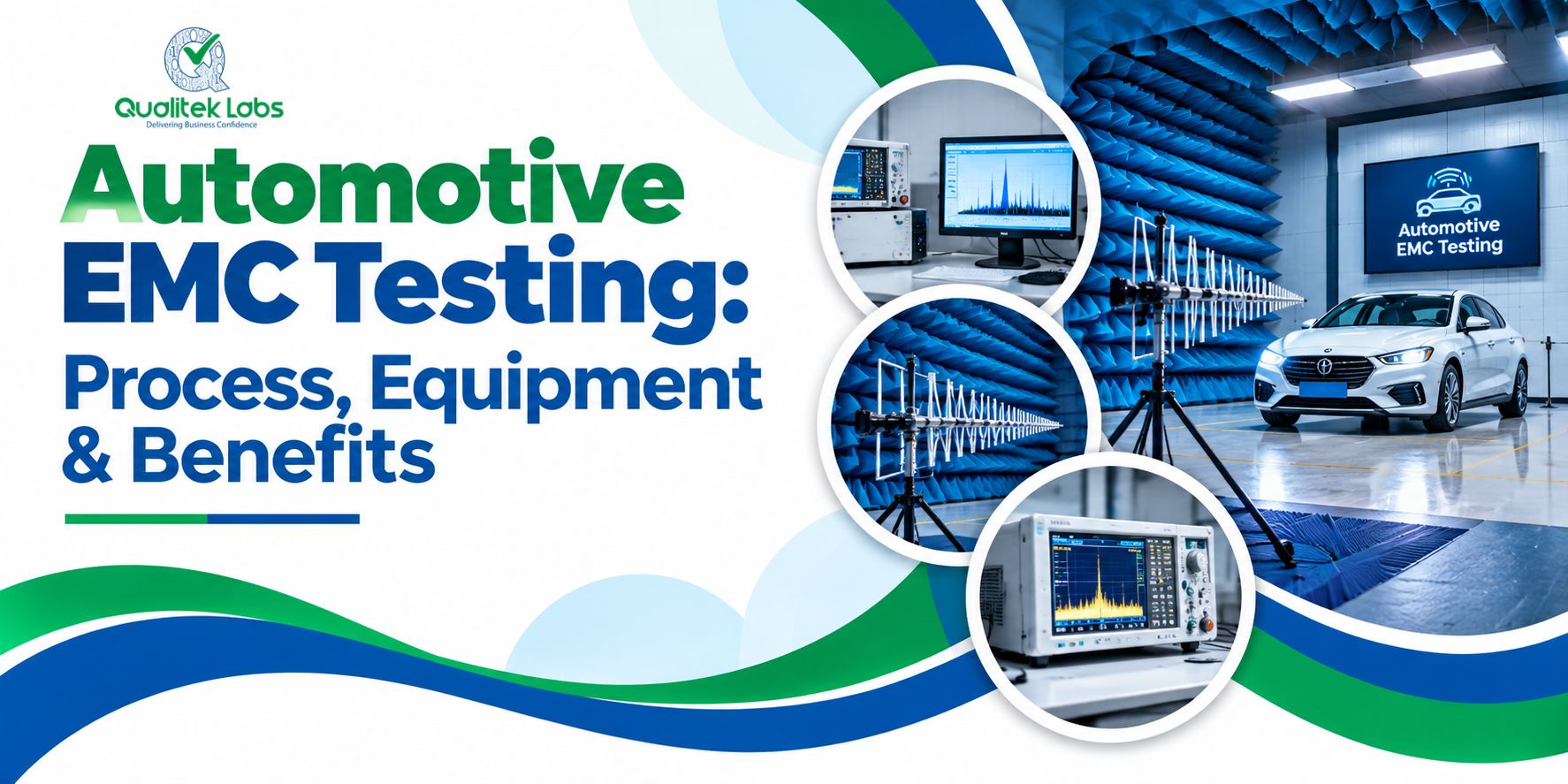
The automotive industry is experiencing significant technological advancements with the increasing adoption of electric vehicles (EVs), hybrid vehicles, Advanced Driver Assistance Systems (ADAS), connected cars, and intelligent automotive electronics. Modern vehicles rely on multiple electronic components and control systems to ensure safety, performance, comfort, and operational efficiency.
However, the growing use of electronic devices in vehicles also increases the possibility of electromagnetic interference (EMI). Electromagnetic interference can disrupt the normal functioning of electronic components, affect communication between vehicle systems, and potentially impact critical safety functions. To prevent these issues, automotive manufacturers and component suppliers must ensure that their products meet electromagnetic compatibility (EMC) requirements.
An Automotive EMC Testing Laboratory plays an important role in evaluating the electromagnetic performance of automotive electronic components and systems. Automotive EMC testing determines whether a product can operate reliably in its intended electromagnetic environment without generating excessive electromagnetic disturbances or being affected by external interference.
From electronic control units and battery management systems to electric vehicle charging systems and infotainment devices, EMC testing helps manufacturers identify potential electromagnetic issues before products enter the market.
In this article, we will explore the automotive EMC testing process, essential testing equipment, important industry standards, and the major benefits of choosing a professional automotive EMC testing laboratory.
What Is Automotive EMC Testing?
Automotive EMC testing, also known as automotive electromagnetic compatibility testing, is the process of evaluating the ability of vehicle electronic components and electrical systems to function correctly in an electromagnetic environment.
The primary objective of EMC testing is to ensure that automotive electronic devices operate without generating electromagnetic disturbances that could affect other devices and without experiencing performance issues when exposed to external electromagnetic interference.
Automotive EMC testing focuses on two major areas:
1. Electromagnetic Emissions Testing
Electromagnetic emissions testing measures unwanted electromagnetic disturbances generated by automotive electronic components during normal operation.
Excessive electromagnetic emissions can interfere with nearby electronic systems, radio communication devices, navigation systems, and other vehicle electronics.
For example, an automotive electronic control unit (ECU), DC-DC converter, or battery management system should not generate excessive electromagnetic noise that affects other electronic components.
2. Electromagnetic Immunity Testing
Electromagnetic immunity testing evaluates how effectively an automotive electronic component can withstand external electromagnetic disturbances without malfunctioning or losing its intended functionality.
Modern vehicles operate in environments containing electromagnetic signals from mobile phones, radio transmitters, wireless communication systems, and other electronic devices.
Immunity testing helps verify that automotive electronic components can continue operating correctly under specified electromagnetic conditions.
Both emissions and immunity testing are essential for ensuring automotive electromagnetic compatibility and improving vehicle electronic system reliability.
Why Is an Automotive EMC Testing Laboratory Important?
Modern vehicles contain several interconnected electronic systems that perform essential functions, including engine management, braking, steering, battery monitoring, navigation, wireless connectivity, and driver assistance.
Electromagnetic disturbances can potentially affect the performance of these systems if appropriate EMC design and validation measures are not implemented.
An automotive EMC testing laboratory helps manufacturers evaluate electromagnetic performance and identify potential compatibility issues during product development.
Some important reasons why automotive EMC testing is necessary include:
-
- Vehicle Safety: EMC testing helps verify the reliable operation of safety-related electronic systems, including airbags, braking systems, steering controls, and ADAS components.
-
- Regulatory Compliance: Automotive manufacturers must meet applicable EMC regulations and standards before introducing products into different markets.
-
- Product Reliability: Testing identifies electromagnetic vulnerabilities that could affect the performance of automotive electronic components.
-
- Reduced Development Costs: Identifying EMC problems during early product development helps avoid expensive redesigns and repeated testing.
-
- Improved Product Quality: EMC evaluation supports better electronic circuit design, grounding, shielding, and filtering.
-
- Customer Confidence: Successful EMC validation provides technical evidence that products have been evaluated against relevant electromagnetic requirements.
As automotive electronics become increasingly sophisticated, working with a professional EMC testing laboratory has become an important part of automotive product development and validation.
Automotive EMC Testing Process: Step-by-Step Guide
An automotive EMC testing laboratory follows a systematic process to evaluate the electromagnetic performance of vehicle electronic components and systems.
The exact testing procedure depends on the product category, operating conditions, applicable standards, and customer requirements.
1. Product Evaluation and Requirement Analysis
The first step in automotive EMC testing involves understanding the product and identifying its testing requirements.
The laboratory reviews technical documentation and collects information such as:
-
- Product specifications and electrical characteristics.
-
- Operating voltage and current requirements.
-
- Wiring diagrams and connector configurations.
-
- Product dimensions and installation details.
-
- Intended automotive application.
-
- Applicable automotive EMC standards.
-
- Required emissions and immunity tests.
For example, an automotive ECU may require conducted emissions, radiated emissions, conducted immunity, and radiated immunity testing.
Based on the product information, the laboratory prepares a suitable test plan according to the relevant standards and customer specifications.
2. Test Setup and Sample Preparation
Once the testing requirements are finalized, laboratory engineers prepare the equipment under test (EUT) and configure the required testing environment.
The sample is connected to appropriate power supplies, electrical loads, communication interfaces, and monitoring systems.
The test setup must follow the requirements of the applicable automotive EMC standard.
Correct grounding, cable positioning, antenna placement, and equipment configuration are important for achieving accurate and repeatable measurements.
3. Conducted Emissions Testing
Conducted emissions testing measures unwanted electrical disturbances transmitted through power supply lines and other conductive connections.
Automotive electronic components can generate electrical noise during normal operation. This noise may travel through vehicle wiring harnesses and potentially affect other electronic devices.
Conducted emissions testing helps determine whether the generated electrical disturbances remain within the specified limits.
This testing is particularly important for:
-
- Automotive electronic control units.
-
- Battery management systems.
-
- DC-DC converters.
-
- Electric vehicle power electronics.
-
- Onboard charging systems.
-
- Automotive infotainment modules.
4. Radiated Emissions Testing
Radiated emissions testing evaluates the electromagnetic energy emitted by automotive electronic components into the surrounding environment.
Electronic circuits, switching power supplies, electric motors, and communication modules may generate electromagnetic radiation during operation.
Excessive radiated emissions can interfere with radio receivers, wireless communication systems, navigation devices, and other automotive electronics.
During this test, the equipment under test operates under defined conditions while measurement antennas and EMI receivers monitor the generated electromagnetic emissions.
The recorded results are compared with applicable standard limits to determine whether the product meets the required emission criteria.
5. Conducted Immunity Testing
Conducted immunity testing evaluates the ability of automotive electronic equipment to withstand electromagnetic disturbances introduced through connected electrical cables and wiring harnesses.
These disturbances may originate from switching operations, power converters, electrical motors, and other electronic systems.
During testing, controlled disturbances are introduced into the relevant connections while engineers monitor the performance of the equipment under test.
The objective is to verify that the product continues functioning correctly without unacceptable degradation or malfunction.
6. Radiated Immunity Testing
Radiated immunity testing evaluates how automotive electronic components perform when exposed to external electromagnetic fields.
Modern vehicles operate in environments containing electromagnetic signals from mobile communication networks, radio transmitters, radar systems, and wireless technologies.
These signals may affect sensitive electronic circuits if the products are not designed with adequate electromagnetic immunity.
During radiated immunity testing, the equipment under test is exposed to controlled electromagnetic fields using specialized antennas and RF signal generation equipment.
Engineers monitor the product’s operation to identify any malfunction, performance degradation, or unexpected behaviour.
7. Electrical Transient and ESD Testing
Automotive electrical systems can experience voltage disturbances due to switching operations, inductive loads, power supply variations, and electrostatic discharge.
Electrical transient testing evaluates the ability of automotive electronic components to withstand temporary electrical disturbances.
Depending on the product and applicable requirements, testing may include:
-
- Electrical transient immunity testing.
-
- Load dump testing.
-
- Reverse voltage testing.
-
- Supply voltage variation testing.
-
- Cranking voltage simulation.
-
- Electrostatic discharge (ESD) testing.
These tests help manufacturers evaluate the electrical robustness of automotive electronic components under defined operating conditions.
8. Test Result Analysis and Reporting
After completing the required tests, laboratory engineers analyze the measurement data and compare the results with applicable acceptance criteria.
A detailed automotive EMC test report generally includes:
-
- Product identification and specifications.
-
- Applicable testing standards.
-
- Test equipment and calibration details.
-
- Testing conditions and configurations.
-
- Test setup photographs and diagrams, where applicable.
-
- Measurement results.
-
- Compliance status.
-
- Technical observations and deviations.
If a product fails to meet the specified requirements, engineers may help identify potential causes and suggest corrective measures such as improved shielding, grounding optimization, filtering, or circuit design modifications.
Looking for Reliable Automotive EMC Testing Services?
Ensure automotive product safety, reliability, and EMC compliance with professional testing services from Qualitek Labs.
Essential Equipment Used in an Automotive EMC Testing Laboratory
Automotive EMC testing requires specialized equipment to generate, detect, and measure electromagnetic disturbances under controlled conditions.
Some commonly used automotive EMC testing equipment includes:
1. EMI Test Receiver
An EMI test receiver measures electromagnetic disturbances generated by electronic devices.
It is widely used for conducted and radiated emissions testing. The receiver helps engineers evaluate unwanted electromagnetic signals across specified frequency ranges.
2. Spectrum Analyzer
A spectrum analyzer measures electromagnetic signals across different frequencies.
It helps identify unwanted emissions, interference sources, frequency peaks, and harmonics generated by automotive electronic systems.
3. Anechoic Chamber
An anechoic chamber is a specially designed testing environment that minimizes unwanted electromagnetic reflections.
It is commonly used for radiated emissions and immunity testing.
The chamber contains electromagnetic absorbing materials that help create controlled measurement conditions.
4. RF Signal Generator
An RF signal generator produces electromagnetic signals at specified frequencies, power levels, and modulation settings.
It is commonly used during conducted and radiated immunity testing.
5. RF Power Amplifier
RF power amplifiers increase the power of generated radio frequency signals to achieve the required field strengths during immunity testing.
6. EMC Testing Antennas
Different types of antennas are used to transmit and receive electromagnetic signals during EMC testing.
Common examples include:
-
- Biconical antennas.
-
- Log-periodic antennas.
-
- Horn antennas.
-
- Monopole antennas.
-
- Loop antennas.
The antenna selection depends on the frequency range and testing method.
7. Coupling and Decoupling Networks
Coupling and decoupling networks (CDNs) are used in conducted immunity testing to introduce controlled electromagnetic disturbances into electrical or signal connections.
They help perform standardized immunity evaluations while providing appropriate isolation between the equipment under test and supporting equipment.
8. Electrostatic Discharge Simulator
An electrostatic discharge (ESD) simulator generates controlled electrostatic discharge pulses to evaluate the resistance of automotive electronic components against static electricity.
It is particularly relevant for electronic control modules, connectors, switches, displays, and infotainment systems.
9. Automotive Transient Test Systems
Automotive transient test systems generate electrical disturbances to simulate different transient conditions in vehicle electrical networks.
These systems help evaluate the ability of automotive components to withstand defined voltage disturbances and electrical stress conditions.
Using suitable equipment and measurement systems is essential for obtaining reliable automotive EMC test results.
Important Automotive EMC Testing Standards
Automotive EMC testing laboratories follow internationally recognized standards and regulatory requirements to evaluate the electromagnetic performance of vehicle electronic components.
Some important automotive EMC standards include:
1. CISPR 25
CISPR 25 specifies limits and measurement methods for radio disturbance characteristics of components and modules used in vehicles, boats, and internal combustion engine-powered devices.
It is widely used for conducted and radiated emissions testing of automotive electronic components.
2. ISO 11452 Series
The ISO 11452 series covers component-level immunity testing methods for electrical disturbances caused by narrowband radiated electromagnetic energy.
It includes different test methods, such as absorber-lined shielded enclosure testing, stripline testing, and bulk current injection testing.
3. ISO 7637 Series
The ISO 7637 series addresses electrical disturbances caused by conduction and coupling in vehicle electrical systems.
It is important for evaluating automotive electronic components against electrical transient disturbances.
4. ISO 10605
ISO 10605 specifies test methods for evaluating the resistance of road vehicle electronic equipment to electrostatic discharge.
It helps manufacturers assess the ESD robustness of automotive electronic components.
5. UNECE Regulation No. 10
UNECE Regulation No. 10 establishes electromagnetic compatibility requirements for vehicles and relevant electrical or electronic subassemblies within its scope.
It is particularly important for manufacturers seeking vehicle type approval in markets applying this regulation.
Manufacturers should always confirm the applicable standard edition, amendments, product category, and customer-specific requirements before starting automotive EMC testing.
Major Benefits of Choosing a Professional Automotive EMC Testing Laboratory
Working with an experienced automotive EMC testing laboratory offers several advantages for automotive manufacturers, component suppliers, and electronic product developers.
1. Ensures Regulatory Compliance
Automotive products must meet applicable electromagnetic compatibility requirements before entering regulated markets.
Professional EMC testing helps manufacturers evaluate their products against relevant standards and identify potential compliance gaps.
2. Improves Vehicle Safety
Electromagnetic disturbances can potentially affect critical automotive electronic systems.
EMC testing helps verify that safety-related components maintain their intended functionality under specified electromagnetic conditions.
3. Reduces Product Development Costs
Identifying electromagnetic compatibility problems during early product development helps manufacturers avoid expensive redesigns, production delays, and repeated compliance evaluations.
Pre-compliance testing can be particularly useful for identifying potential issues before formal testing.
4. Enhances Product Reliability
Automotive electronic components must operate consistently in complex electromagnetic environments.
EMC testing helps identify weaknesses in circuit design, grounding, shielding, and filtering, supporting better product robustness and reliability.
5. Supports Electric Vehicle Development
Electric vehicles contain high-voltage batteries, traction inverters, electric motors, onboard chargers, and DC-DC converters.
These systems can generate electromagnetic disturbances that may affect other vehicle electronics.
Automotive EMC testing helps EV manufacturers evaluate electromagnetic emissions and immunity to support reliable electric vehicle operation.
6. Builds Customer Confidence
Automotive OEMs and Tier 1 suppliers often require EMC validation as part of component approval and supplier qualification processes.
Detailed test reports from competent laboratories provide technical evidence of product evaluation and help build confidence among customers and business partners.
Automotive EMC Testing Challenges in Modern Vehicles
The rapid development of automotive technology has introduced new electromagnetic compatibility challenges.
Some of the major challenges include:
Increasing Electronic Complexity: Modern vehicles contain numerous interconnected electronic systems that must operate without causing electromagnetic interference.
Electric Vehicle Power Electronics: High-voltage batteries, electric motors, and switching converters create additional electromagnetic noise challenges.
ADAS and Autonomous Driving: Radar sensors, cameras, communication modules, and other safety-related electronics require reliable electromagnetic performance.
Wireless Connectivity: Bluetooth, Wi-Fi, GPS, cellular networks, and vehicle-to-everything (V2X) communication increase the complexity of the electromagnetic environment.
Compact Electronic Designs: Smaller automotive electronic modules provide limited space for shielding, filtering, and grounding solutions.
To address these challenges, automotive manufacturers should consider EMC requirements during the earliest stages of product design and development.
How to Choose the Right Automotive EMC Testing Laboratory?
Selecting the right automotive EMC testing laboratory is essential for achieving reliable test results and meeting regulatory requirements.
Before selecting a testing partner, manufacturers should consider the following factors:
-
- Testing Capabilities: Verify whether the laboratory offers conducted emissions, radiated emissions, immunity, transient, and ESD testing.
-
- Applicable Standards: Check experience with CISPR 25, ISO 11452, ISO 7637, ISO 10605, and UNECE Regulation No. 10.
-
- Testing Infrastructure: Evaluate the availability of suitable EMC chambers, antennas, receivers, generators, and measurement systems.
-
- Technical Expertise: Experienced engineers can help identify EMC issues and recommend appropriate corrective measures.
-
- Accreditation: Verify whether the laboratory holds ISO/IEC 17025 accreditation and whether the required testing methods are included in its accredited scope.
-
- Testing Accuracy: Check equipment calibration, measurement traceability, and testing procedures.
-
- Technical Support: Choose a laboratory that provides detailed test reports and assistance throughout the testing process.
A reliable testing partner can help automotive manufacturers improve product quality, minimize compliance risks, and streamline product validation.
Conclusion: Choose Qualitek Lab for Automotive EMC Testing Support
Automotive EMC testing is an essential part of modern vehicle development. As vehicles increasingly depend on electronic control units, electric powertrains, wireless communication, ADAS, and advanced safety technologies, electromagnetic compatibility has become more important than ever.
A professional automotive EMC testing laboratory helps manufacturers evaluate electromagnetic emissions, verify immunity performance, identify potential interference issues, and demonstrate compliance with applicable automotive standards.
From conducted and radiated emissions to immunity, electrical transient, and electrostatic discharge testing, comprehensive EMC evaluation supports product reliability, vehicle safety, and regulatory compliance.
If you are looking for a testing partner for your automotive electromagnetic compatibility requirements, Qualitek Lab is worth considering for your testing needs. Qualitek Lab can be approached to discuss your automotive EMC testing requirements, understand applicable testing standards, and explore suitable testing solutions for automotive electronic components and systems.
Partnering with the right EMC testing laboratory can help you identify potential technical challenges, improve product quality, and move toward your automotive compliance goals with greater confidence.
Contact Qualitek Lab to discuss your automotive EMC testing requirements and take the next step toward reliable automotive product validation.
Frequently Asked Questions (FAQs) – Automotive EMC Testing
1. What is Automotive EMC Testing?
Automotive EMC testing evaluates whether vehicle electronic components can operate reliably without generating or experiencing harmful electromagnetic interference.
2. Why is Automotive EMC Testing important?
It helps ensure vehicle safety, electronic system reliability, electromagnetic compatibility, and compliance with applicable automotive standards.
3. Which standards are used for Automotive EMC Testing?
Common standards include CISPR 25, ISO 11452, ISO 7637, ISO 10605, and UNECE Regulation No. 10.
4. What equipment is used in an Automotive EMC Testing Laboratory?
Common equipment includes EMI receivers, spectrum analyzers, anechoic chambers, RF signal generators, antennas, power amplifiers, and transient test systems.
5. Which automotive components require EMC Testing?
Automotive ECUs, battery management systems, electric vehicle chargers, infotainment systems, sensors, ADAS components, and other electronic modules may require EMC testing depending on their application and applicable requirements.