

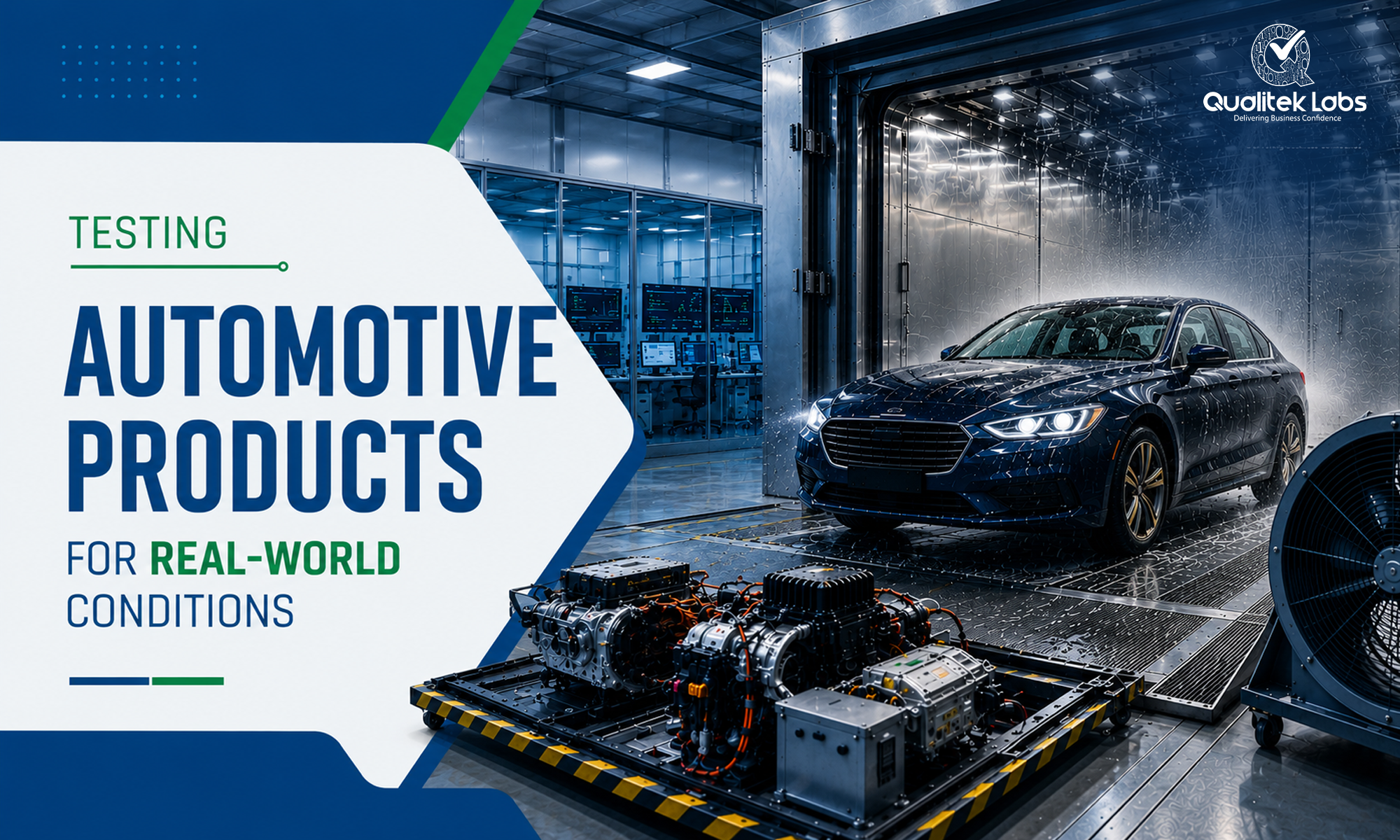
The automotive industry has changed dramatically over the past decade. Modern vehicles are no longer just mechanical machines, they are equipped with advanced electronics, intelligent sensors, connected technologies, and, increasingly, electric powertrains. While these innovations improve performance and safety, they also raise the expectations placed on every automotive component.
Whether it’s a battery enclosure, wiring harness, connector, sensor, switch, or electronic control unit, every part must perform reliably throughout the vehicle’s life. Components are exposed to constant vibration, extreme temperatures, dust, water, humidity, and years of daily use. Even a minor failure can affect vehicle performance, increase maintenance costs, or compromise passenger safety.
This is why automotive product qualification has become an essential part of product development. It helps manufacturers confirm that components can withstand real-world operating conditions before they are approved for production.
Among the most important qualification procedures are vibration testing, thermal cycling, ingress protection (IP) testing, and durability testing. Together, these tests provide valuable insight into how a product will perform throughout its expected service life.
Why Automotive Product Qualification Is Important
Developing an innovative product is only half the challenge. The real test begins when that product is exposed to the demanding conditions experienced on the road.
Without proper automotive product qualification, manufacturers may encounter unexpected failures after the product reaches customers. These failures often result in warranty claims, product recalls, production delays, and damage to brand reputation.
Qualification testing allows manufacturers to identify design weaknesses early in the development process. Engineers can make improvements before large-scale production begins, reducing both technical risks and long-term costs.
As vehicles continue to evolve, product qualification has become a critical requirement for maintaining quality, safety, and regulatory compliance.
Vibration Testing: Simulating Real Road Conditions
No vehicle operates in a perfectly stable environment. Every journey exposes components to continuous vibration caused by the engine, road surface, braking, acceleration, potholes, and uneven terrain.
As part of automotive product qualification, vibration testing recreates these mechanical stresses inside a controlled laboratory environment. The objective is to determine whether a component continues to function correctly after prolonged exposure to vibration.
Products commonly evaluated include:
- Electronic control units (ECUs)
- Automotive sensors
- Printed circuit boards
- Wiring harnesses
- Battery modules
- Connectors
- Lighting assemblies
Vibration testing can reveal loose electrical connections, weak solder joints, structural fatigue, cracked housings, and mounting issues that might otherwise remain undetected until the product is in service.
By identifying these problems early, manufacturers can improve product reliability and reduce the likelihood of field failures.
Thermal Cycling: Preparing Components for Temperature Extremes
Automotive components rarely operate at a constant temperature.
A vehicle parked in direct sunlight during summer may experience temperatures above 70°C inside certain compartments. The same vehicle may later be driven in freezing winter conditions. These repeated temperature changes cause materials to expand and contract, placing stress on internal components.
During automotive product qualification, thermal cycling exposes products to alternating high and low temperatures over multiple cycles.
This process helps evaluate how different materials behave when subjected to repeated thermal stress.
Thermal cycling is especially valuable for testing:
- Battery packs
- Automotive electronics
- Plastic enclosures
- Displays
- Sensors
- LED lighting systems
- Electronic modules
Manufacturers use these results to identify issues such as cracked solder joints, material deformation, seal failures, and electrical performance degradation before products reach the market.
Ingress Protection (IP) Testing: Keeping Dust and Water Out
Automotive products are constantly exposed to environmental contaminants. Rain, mud, road dust, humidity, and vehicle washing all create challenging operating conditions.
Ingress Protection, commonly known as IP testing, evaluates how effectively an enclosure prevents dust and water from entering sensitive components.
Within automotive product qualification, IP testing is particularly important for products installed on the exterior of the vehicle or in harsh environments.
These include:
- Cameras
- Parking sensors
- Exterior lighting
- Battery enclosures
- Charging connectors
- Junction boxes
- Electronic control modules
Depending on the intended application, components may be tested against dust ingress, water spray, high-pressure jets, or temporary immersion.
Successful IP testing demonstrates that the product can continue operating safely even after prolonged exposure to demanding environmental conditions.
Durability Testing: Measuring Long-Term Performance
Some automotive components are used hundreds or even thousands of times throughout a vehicle’s lifetime.
Door handles are opened repeatedly. Switches are pressed daily. Charging ports are connected and disconnected countless times. Hinges, buttons, connectors, and locking mechanisms all experience continuous wear.
Durability testing forms another important part of automotive product qualification by evaluating how products perform after repeated operation.
Rather than focusing on a single environmental condition, durability testing measures long-term mechanical reliability.
Typical evaluations include:
- Mechanical cycling
- Load testing
- Fatigue testing
- Wear analysis
- Functional verification
- Repeated operational testing
These assessments help determine whether a product maintains consistent performance throughout its expected service life.
Durability testing also provides valuable information for improving product design and extending operational lifespan.
Meeting Industry Standards
Automotive qualification testing isn’t performed randomly. Most manufacturers follow internationally recognized standards along with customer-specific validation requirements.
Depending on the product, testing may be conducted according to:
- ISO standards
- IEC standards
- SAE standards
- ASTM standards
- OEM qualification specifications
- Customer validation protocols
Following established standards ensures consistency, improves product acceptance, and supports regulatory compliance across global markets.
Benefits of Comprehensive Automotive Product Qualification
A structured automotive product qualification program provides advantages throughout the product lifecycle.
Some of the key benefits include:
- Improved product reliability
- Earlier detection of design issues
- Reduced warranty claims
- Better regulatory compliance
- Increased customer confidence
- Faster product development
- Lower maintenance costs
- Greater product consistency
- Enhanced brand reputation
Instead of reacting to failures after launch, manufacturers can proactively validate performance before products enter production.
Choosing the Right Testing Partner
Qualification testing requires more than sophisticated equipment. It demands technical expertise, well-defined procedures, experienced engineers, and accurate interpretation of results.
An ideal testing laboratory should offer:
- Accredited testing capabilities
- Advanced environmental simulation equipment
- Comprehensive reporting
- Compliance with international standards
- Experienced technical specialists
- Fast turnaround times
- Customized testing programs
- Reliable customer support
Partnering with an experienced laboratory helps manufacturers shorten development cycles while maintaining confidence in product quality.
Conclusion
As automotive technology becomes more advanced, the need for reliable and thoroughly tested components continues to grow. Automotive product qualification helps manufacturers ensure that products can withstand vibration, temperature fluctuations, moisture, dust, and years of everyday use before they reach the market. By investing in vibration testing, thermal cycling, ingress protection, and durability testing, companies can reduce product failures, improve safety, strengthen compliance, and deliver long-lasting performance to their customers.
Qualitek Labs supports automotive manufacturers and component suppliers with comprehensive product qualification services tailored to industry requirements. Equipped with advanced testing infrastructure and experienced technical professionals, Qualitek Labs performs vibration, thermal cycling, ingress protection, durability, and a wide range of environmental and mechanical tests to validate product performance under real-world conditions. Whether you’re developing conventional automotive components or next-generation EV technologies, Qualitek Labs provides dependable testing solutions that help you bring safer, high-quality, and compliant products to market with confidence.
Frequently Asked Questions
1. What is automotive product qualification?
Automotive product qualification is the process of testing vehicle components to verify their safety, reliability, durability, and compliance with industry standards before production.
2. Why is automotive product qualification important?
Automotive product qualification helps identify design weaknesses, reduce product failures, ensure regulatory compliance, and improve the long-term reliability of automotive components.
3. What is vibration testing in automotive product qualification?
Vibration testing evaluates how automotive components withstand continuous mechanical stress caused by road conditions, engine operation, and vehicle movement.
4. What does thermal cycling testing measure?
Thermal cycling testing assesses how automotive components perform under repeated high and low temperature changes, ensuring durability and reliable operation.
5. Why is ingress protection (IP) testing required?
Ingress protection testing verifies that automotive components resist dust, water, and environmental contaminants, helping maintain performance in harsh operating conditions.
6. Which automotive products require durability testing?
Switches, connectors, sensors, battery systems, door handles, charging ports, lighting systems, and electronic modules commonly undergo durability testing.
7. Which industries benefit from automotive product qualification?
Automotive OEMs, EV manufacturers, component suppliers, battery manufacturers, and automotive electronics companies benefit from automotive product qualification testing.
8. Why choose Qualitek Labs for automotive product qualification?
Qualitek Labs provides comprehensive automotive product qualification services, including vibration, thermal cycling, ingress protection, and durability testing for reliable, compliant automotive components.