

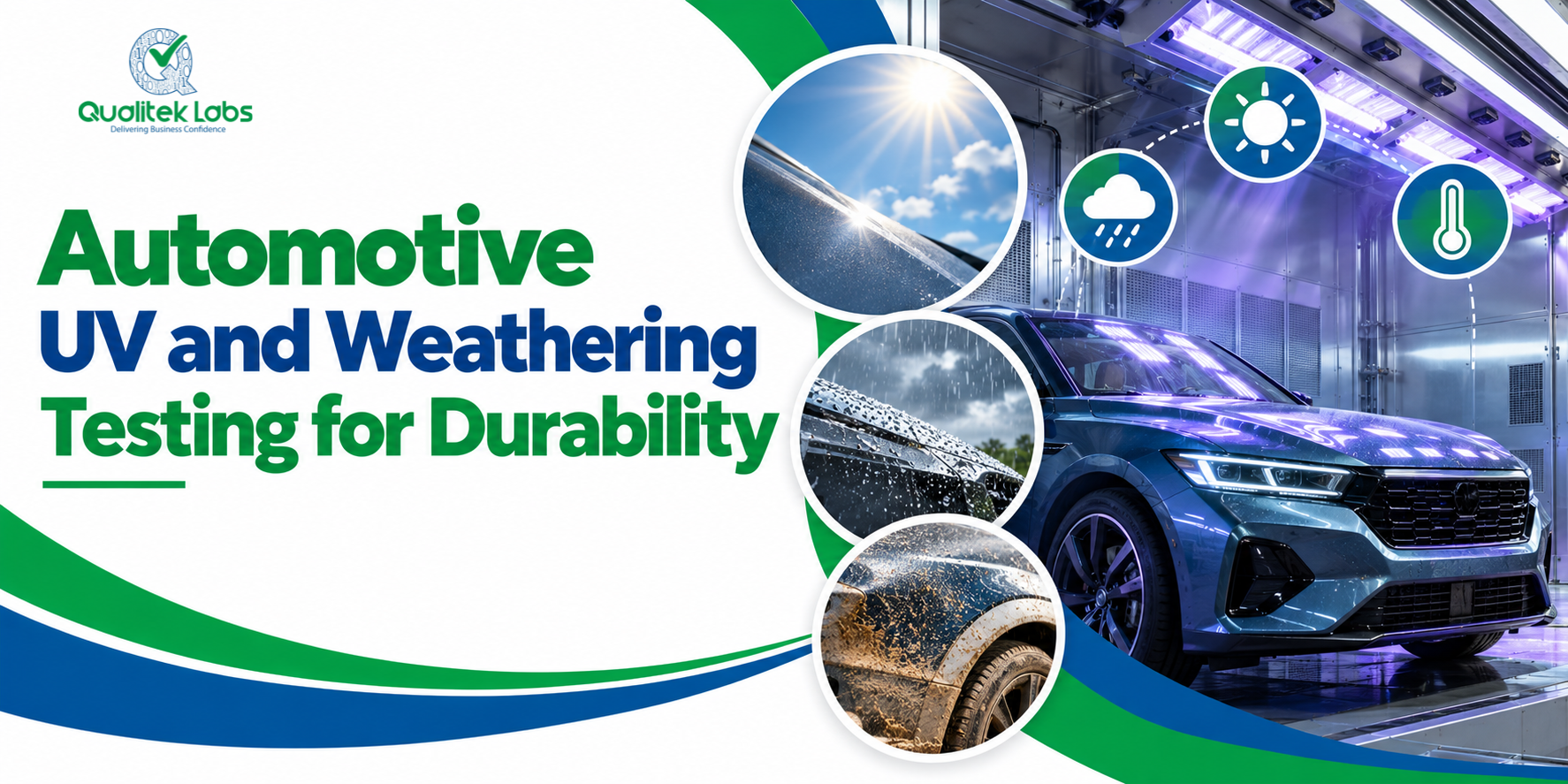
Modern vehicles are exposed to a wide range of environmental conditions throughout their lifespan. From intense sunlight and extreme temperatures to humidity, rain, dust, and corrosive pollutants, these factors can gradually affect the appearance, strength, and performance of automotive components. To ensure long-term reliability, manufacturers must evaluate how their products respond to environmental exposure before introducing them to the market.
This is where automotive UV and weathering testing becomes essential. These testing methods help manufacturers assess the durability of materials, identify potential weaknesses, and understand how environmental conditions may influence vehicle components over time.
As the automotive industry continues to develop electric vehicles, lightweight materials, advanced coatings, and innovative polymer components, the importance of reliable automotive testing is increasing. Environmental testing helps manufacturers make informed decisions about material selection, product design, and quality control.
In this article, we explore automotive UV and weathering testing, its methods, benefits, applications, and the role of professional testing laboratories in ensuring vehicle durability.
What Is Automotive UV and Weathering Testing?
Automotive UV and weathering testing evaluates how vehicle materials and components withstand exposure to sunlight and other environmental conditions. The objective is to identify changes in physical appearance, mechanical properties, chemical composition, and functional performance caused by environmental stress.
Ultraviolet (UV) radiation is one of the major contributors to the degradation of materials used in vehicles. Prolonged exposure to sunlight can cause fading, discolouration, cracking, brittleness, and surface deterioration in plastics, paints, rubber, and other materials.
Weathering testing goes beyond UV exposure. Depending on the test method, it may simulate temperature fluctuations, moisture, condensation, rain, and other environmental conditions.
A professional automotive testing lab uses specialised chambers and controlled procedures to expose automotive materials to defined environmental conditions. The resulting changes are evaluated against product specifications, relevant standards, or performance requirements.
These tests help manufacturers determine whether materials are suitable for their intended applications and expected service conditions.
Why Is UV Testing Important in the Automotive Industry?
Vehicles operate in different climates, ranging from hot and dry regions to humid coastal environments and areas with significant seasonal temperature changes. Materials that perform well under one set of conditions may deteriorate more quickly under another.
UV testing helps manufacturers evaluate material resistance before components are used in production vehicles.
Preventing Material Degradation
UV radiation can initiate chemical reactions in polymers, coatings, adhesives, and other organic materials. Over time, these reactions may cause colour changes, surface chalking, cracking, or reduced flexibility.
For example, an exterior plastic trim component may lose its original appearance after prolonged exposure to sunlight. Similarly, certain rubber seals may become brittle and lose their ability to maintain an effective seal.
Testing helps identify these potential problems and supports the selection of materials with suitable weather resistance.
Maintaining Vehicle Appearance
Vehicle appearance is an important consideration for manufacturers and customers. Paint finishes, dashboard surfaces, exterior trims, headlamp covers, and decorative components must retain their appearance under expected environmental conditions.
UV and weathering tests help assess changes in colour, gloss, surface texture, and other visual characteristics.
These evaluations can support the development of coatings, pigments, polymers, and protective finishes that provide improved resistance to environmental exposure.
Supporting Long-Term Component Performance
Environmental degradation can affect more than appearance. In certain applications, it may influence flexibility, impact resistance, tensile strength, sealing performance, and other functional properties.
Automotive weathering tests help manufacturers understand these changes and determine whether additional material protection or design modifications are required.
Key Types of Automotive UV and Weathering Tests
Different testing methods simulate different environmental conditions. The appropriate method depends on the material, component design, intended application, and applicable requirements.
A. UV Light Exposure Testing
UV light exposure testing evaluates the effects of ultraviolet radiation on automotive materials.
Samples are exposed to controlled UV radiation for a defined duration. Depending on the test method, temperature and moisture conditions may also be controlled.
After exposure, the samples may be examined for:
- Colour fading and discolouration
- Surface cracking and chalking
- Changes in gloss and texture
- Loss of flexibility
- Changes in mechanical properties
UV testing is commonly relevant to exterior plastics, rubber components, automotive coatings, adhesives, and selected interior materials exposed to sunlight.
The exposure conditions should be selected according to the relevant standard or product specification.
B. Xenon Arc Weathering Testing
Xenon arc testing uses a specialised light source designed to simulate important characteristics of natural sunlight. Depending on the equipment and filters, the test can reproduce different portions of the solar spectrum.
The test may combine light exposure with controlled temperature, humidity, and water spray or moisture cycles.
This approach helps evaluate how materials respond to combined environmental stresses rather than light exposure alone.
Xenon arc weathering is used for applications such as automotive paints, exterior plastics, dashboards, trim materials, and other components where realistic sunlight simulation is important.
C. UV-A Weathering Testing
UV-A testing uses ultraviolet radiation within the UV-A range to assess the effects of UV exposure on susceptible materials.
Certain testing programmes combine UV exposure with condensation or moisture cycles to evaluate degradation under alternating wet and dry conditions.
The method can be useful for screening materials and comparing the relative weathering performance of different formulations.
However, the results depend on the selected lamp type, irradiance, temperature, exposure cycle, and evaluation criteria. UV-A testing does not automatically reproduce every aspect of natural outdoor exposure.
D. Accelerated Weathering Testing
Accelerated weathering testing exposes samples to controlled environmental conditions intended to produce measurable degradation within a shorter period than natural exposure.
Depending on the test programme, equipment may combine UV radiation, elevated temperatures, moisture, condensation, and other controlled conditions.
This approach helps manufacturers compare materials, evaluate protective coatings, and identify potential durability concerns during product development.
Accelerated testing should not be interpreted as a direct prediction of exact service life. The relationship between laboratory exposure and real-world performance depends on the material, environmental conditions, and test method.
E. Salt Spray and Corrosion Testing
Salt spray testing evaluates the corrosion resistance of metals, coatings, plated components, and selected assemblies under specified corrosive conditions.
Automotive components exposed to road salt, coastal air, and moisture may require corrosion testing as part of their durability evaluation.
Although salt spray testing is not a UV weathering test, it complements environmental testing by assessing a different degradation mechanism.
For components exposed to multiple environmental stresses, manufacturers may use separate tests or a broader validation programme covering light, moisture, temperature, and corrosion.
Looking for Reliable Automotive UV and Weathering Testing Services?
Evaluate automotive component durability with reliable UV and weathering testing services from Qualitek Labs.
Automotive Components Commonly Evaluated Through Weathering Tests
UV and weathering testing can be applied to a wide range of materials and vehicle components.
| Automotive Component | Purpose of Testing |
| Exterior plastic trims | Assess fading, cracking, and surface deterioration. |
| Automotive paints and coatings | Evaluate colour stability, gloss retention, and coating degradation. |
| Rubber seals and gaskets | Assess changes in flexibility and resistance to environmental exposure. |
| Headlamp lenses and covers | Examine optical appearance and material deterioration. |
| Dashboard and interior plastics | Evaluate appearance and durability under relevant light exposure. |
| Adhesives and sealants | Assess environmental effects on material properties and bonding performance where applicable. |
| Protective coatings | Compare resistance to UV radiation, moisture, and other specified environmental stresses. |
| Polymer-based components | Identify changes in surface condition and physical properties. |
The exact test programme should reflect the component’s location, material composition, expected exposure, and functional requirements.
For instance, exterior components generally require careful evaluation of sunlight and moisture exposure, while interior components may need testing under conditions representative of sunlight transmitted through vehicle glazing.
How Automotive UV and Weathering Testing Is Conducted
A structured testing process helps ensure that results are consistent, meaningful, and suitable for engineering decisions.
Step 1: Define the Testing Requirements
The laboratory and manufacturer identify the material, component, intended application, environmental exposure, and performance requirements.
Relevant standards, customer specifications, and acceptance criteria are established before testing begins.
Step 2: Prepare the Test Samples
Samples are prepared according to the selected test method. Their dimensions, surface condition, colour, and other relevant characteristics may be recorded.
Baseline measurements are taken so that changes can be compared after exposure.
Step 3: Select the Appropriate Test Method
The laboratory selects a suitable method, such as UV-A exposure, xenon arc weathering, or another environmental simulation procedure.
Important variables may include light intensity, exposure duration, temperature, humidity, condensation, and water spray cycles.
Step 4: Expose Samples Under Controlled Conditions
Samples are placed inside the relevant testing chamber and exposed according to the defined cycle.
Laboratory personnel monitor the test conditions and maintain appropriate equipment controls and records.
Step 5: Evaluate the Results
Following exposure, samples are examined for visible deterioration and changes in specified properties.
Depending on the application, evaluation may include colour measurement, gloss measurement, surface inspection, tensile testing, hardness measurement, or other relevant assessments.
Step 6: Prepare the Test Report
Results are documented against the applicable requirements. The report may include test conditions, methods, observations, measurements, and conclusions regarding compliance with the specified acceptance criteria.
A professional automotive testing laboratory should clearly identify the method used and explain the scope and limitations of the results.
Standards Used in Automotive UV and Weathering Testing
Testing standards help laboratories and manufacturers follow consistent procedures and compare results more effectively.
The appropriate standard depends on the material, component, test method, and customer requirements.
Examples of commonly referenced standards include:
- ISO 4892 series: Covers methods for exposing plastics to laboratory light sources, including xenon arc and fluorescent UV sources.
- ASTM G154: Addresses operating fluorescent UV lamp apparatus for exposure of non-metallic materials.
- ASTM G155: Addresses operation of xenon arc light apparatus for exposure of materials.
- ISO 16474 series: Covers methods for exposing paints and varnishes to laboratory light sources.
These standards address different materials and test procedures, so they are not interchangeable. Automotive manufacturers may also specify internal methods or additional requirements for particular components.
Before testing, manufacturers should confirm the applicable edition, sample preparation requirements, exposure cycle, and acceptance criteria.
A qualified laboratory can help identify the relevant method based on the intended use of the component.
Benefits of Automotive UV and Weathering Testing
Environmental testing provides several benefits throughout the automotive product development and manufacturing lifecycle.
Improved Product Durability
Testing helps identify materials that may deteriorate under environmental exposure. Manufacturers can use these findings to improve material selection, protective coatings, and component design.
Better Quality Control
Consistent testing procedures help manufacturers compare batches, suppliers, and material formulations. This can support quality control and help detect unexpected changes in product performance.
Reduced Product Development Risks
Identifying weaknesses before mass production can reduce the risk of premature component degradation, customer complaints, and expensive design changes after product launch.
Support for Standards and Customer Requirements
Automotive manufacturers frequently work with detailed technical specifications and validation requirements. Testing provides documented evidence that materials or components have been evaluated against the specified criteria.
The applicable test results may support product qualification, supplier approval, and internal quality processes.
More Informed Material Selection
Comparing multiple materials under the same controlled conditions helps engineers understand their relative weathering performance.
This information can support decisions involving coatings, polymers, pigments, additives, and protective treatments.
How to Choose the Right Automotive Testing Lab
Selecting an appropriate laboratory is essential for obtaining reliable and relevant results. Manufacturers should evaluate several factors before selecting a testing provider.
Technical Capabilities
Look for a laboratory that offers the required UV exposure and weathering methods, appropriate test chambers, and relevant material evaluation capabilities.
An experienced provider of automotive testing services should be able to explain which method is suitable for the component and why.
Equipment and Expertise
Modern testing equipment, trained technical personnel, controlled test conditions, and documented procedures contribute to reliable results.
Ask whether the laboratory can accommodate the required sample dimensions, exposure cycles, and post-exposure measurements.
Standards and Accreditation
Verify whether the laboratory can test according to the applicable ISO, ASTM, or automotive manufacturer specifications.
Where accredited testing is required, confirm that the laboratory’s current accreditation scope covers the specific method and material involved.
Reporting and Quality Assurance
A reliable laboratory should provide clear documentation of test conditions, results, observations, and applicable acceptance criteria.
Quality management practices and technical review procedures help support the consistency and traceability of laboratory results.
An inspection company may provide complementary inspection or conformity assessment services, but manufacturers should confirm that the provider has the specific technical capability needed for UV and weathering testing.
Comprehensive Testing Capabilities
Environmental durability may be only one part of an automotive validation programme. Depending on the component, additional testing may be required for mechanical strength, vibration, corrosion, flammability, electrical performance, or material composition.
Some requirements may also involve automotive battery testing, particularly for electric vehicle systems and battery-related components. Battery safety testing is a separate technical area and should be planned according to the applicable battery standards and requirements.
An analytical testing lab may support complementary material characterisation, while specialised analytical testing services can help investigate changes in chemical composition or polymer properties after environmental exposure. An analytical testing laboratory with appropriate instrumentation may provide techniques such as FTIR, DSC, or TGA when these are relevant to the investigation.
When comparing automotive testing labs, focus on their actual technical scope rather than the number of services advertised.
Why Automotive Weathering Testing Matters for Future Vehicle Development
Automotive technology is evolving rapidly. Electric vehicles, lightweight polymer components, advanced coatings, smart materials, and redesigned vehicle interiors are changing the materials used in modern vehicles.
These developments create new durability challenges. Components may need to withstand sunlight, heat, moisture, vibration, and other environmental conditions while meeting increasingly specific performance requirements.
Weathering testing supports product development by helping manufacturers understand how materials respond to these stresses before production.
For electric vehicles, environmental durability can also be relevant to battery enclosures, exterior charging components, polymer housings, and protective materials. However, UV weathering alone cannot establish battery safety or overall EV system reliability; those applications require additional tests appropriate to their risks.
Combining environmental testing with other relevant validation methods helps manufacturers build a more complete picture of component performance.
Conclusion
Automotive UV and weathering testing plays an important role in evaluating the durability, appearance, and performance of vehicle materials exposed to environmental stress. By simulating selected environmental conditions under controlled laboratory settings, manufacturers can identify potential weaknesses, compare materials, improve product designs, and support quality assurance.
From exterior plastics and automotive coatings to rubber seals and polymer components, appropriate testing helps manufacturers make informed decisions about material selection and long-term product performance. Choosing the right testing partner is equally important to ensure that test methods, equipment, and reporting procedures match the intended application.
Qualitek Labs is a strong option to consider for automotive testing requirements. The company offers a comprehensive range of automotive testing services under one roof, supported by advanced testing facilities, modern equipment, and a skilled team of professionals. According to the company information provided, its testing capabilities are designed to address applicable global requirements, including ISO and AIS standards, alongside other relevant regulations.
Qualitek Labs also offers customized testing plans to meet the specific needs of manufacturers and suppliers, helping them pursue accurate, reliable, and compliant testing outcomes.
If you are evaluating automotive materials, coatings, or components for environmental durability, consider contacting Qualitek Labs to discuss your testing requirements, applicable standards, and the most suitable validation approach. The right testing strategy can help you develop more durable components and deliver safer, better-performing vehicles to the market.
Frequently Asked Questions (FAQs)
1. What is automotive UV testing?
Automotive UV testing evaluates how vehicle materials respond to ultraviolet radiation. It helps identify issues such as colour fading, cracking, surface deterioration, and changes in material properties.
2. What is the difference between UV testing and weathering testing?
UV testing primarily evaluates the effects of ultraviolet radiation. Weathering testing may include UV exposure alongside controlled temperature, humidity, condensation, or water spray cycles, depending on the selected method.
3. Which automotive components require UV and weathering testing?
Common examples include exterior plastics, paints, coatings, rubber seals, headlamp covers, dashboards, decorative trims, adhesives, and selected polymer components. The need for testing depends on the component’s material and expected environmental exposure.
4. Which standards are used for automotive weathering testing?
Commonly referenced standards include the ISO 4892 series for plastics, ASTM G154 for fluorescent UV exposure, ASTM G155 for xenon arc exposure, and the ISO 16474 series for paints and varnishes. The appropriate method depends on the material and test requirements.
5. How do I choose a reliable automotive testing laboratory?
Evaluate the laboratory’s equipment, technical expertise, testing methods, relevant accreditation scope, quality assurance procedures, and reporting capabilities. Ensure that it can perform the specific test required for your material or component.