

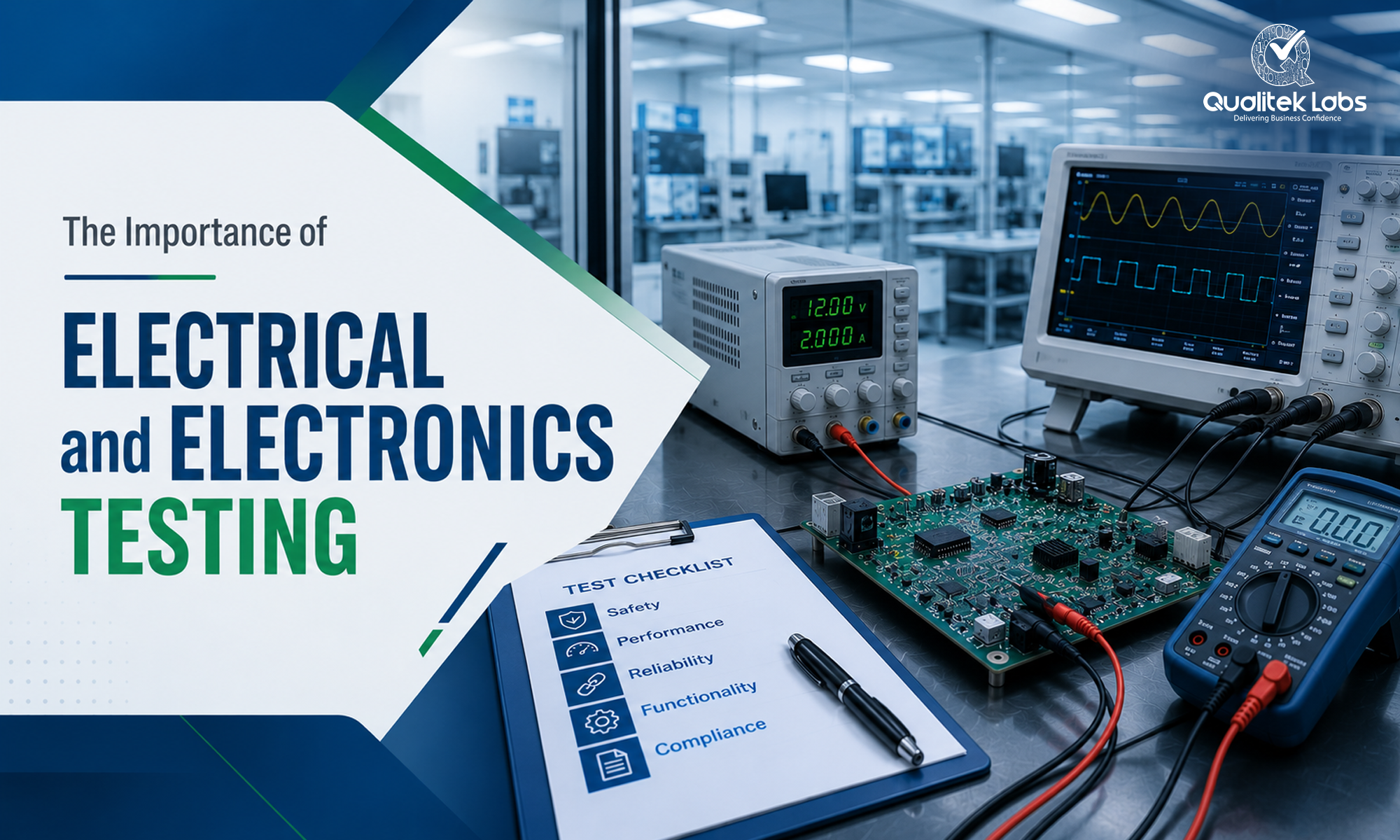
The global market for electrical and electronic products is growing rapidly, but so are the expectations for product safety, quality, and compliance. Whether you’re manufacturing consumer electronics, industrial equipment, medical devices, or automotive components, meeting regulatory requirements is no longer optional, it’s a necessity.
Before a product reaches the market, it must demonstrate that it complies with applicable safety and performance standards. This is where electrical and electronics testing becomes an integral part of the product development process. It helps manufacturers verify product reliability, identify potential risks, and ensure compliance with national and international regulations.
In today’s competitive landscape, investing in comprehensive testing isn’t just about obtaining certifications, it’s about building trust, minimizing risks, and ensuring long-term business success.
What Is Electrical and Electronics Testing?
Electrical and electronics testing is the process of evaluating electrical and electronic products to ensure they meet defined safety, performance, reliability, and regulatory requirements. These tests are carried out throughout the product lifecycle, from prototype development to final production.
Depending on the product and target market, testing may include:
- Electrical safety testing
- Electromagnetic compatibility (EMC) testing
- Environmental testing
- Reliability testing
- Ingress Protection (IP) testing
- Performance evaluation
Together, these assessments help manufacturers identify design weaknesses and verify that their products can perform safely under real-world operating conditions.
Why Regulatory Compliance Matters
Regulatory compliance ensures that electrical and electronic products meet established standards before they are introduced into the market. These standards are designed to protect consumers, reduce safety hazards, and maintain consistent product quality across industries.
Non-compliance can lead to serious consequences, including delayed product launches, rejected certifications, costly recalls, legal liabilities, and reputational damage.
By incorporating electrical and electronics testing early in the development process, manufacturers can address compliance issues before they become expensive problems.
Enhancing Product Safety
Safety is one of the primary reasons manufacturers invest in electrical and electronics testing. Electrical faults, overheating, insulation failures, or electromagnetic interference can create significant risks for users and surrounding equipment.
Comprehensive testing helps identify these issues before products enter the market. Manufacturers can then make necessary design improvements to ensure their products operate safely throughout their intended lifespan.
For industries such as healthcare, industrial automation, and consumer electronics, maintaining high safety standards is critical to both regulatory approval and customer confidence.
Supporting Global Market Access
Many manufacturers aim to sell their products across multiple international markets. However, each region has its own regulatory requirements and certification standards.
Electrical and electronics testing provides the technical evidence required to demonstrate compliance with applicable standards, making it easier for manufacturers to obtain product approvals in different countries.
Testing early also reduces the likelihood of unexpected compliance issues that could delay product launches or restrict access to new markets.
Improving Product Reliability
Customers expect electrical and electronic products to perform consistently under a wide range of operating conditions. Reliability testing evaluates how products respond to factors such as temperature fluctuations, humidity, vibration, mechanical stress, and prolonged usage.
By conducting electrical and electronics testing, manufacturers gain valuable insights into product durability and long-term performance. Identifying potential weaknesses during development helps improve overall product quality while reducing warranty claims and customer complaints.
Minimizing Business Risks
Product failures after commercialization can be extremely costly. Beyond direct financial losses, manufacturers may face product recalls, legal action, supply chain disruptions, and damage to their brand reputation.
Comprehensive electrical and electronics testing helps minimize these risks by identifying defects before products reach customers.
Early testing also allows engineering teams to optimize product designs, improve manufacturing processes, and ensure greater consistency in production quality.
Accelerating Product Development
Some manufacturers assume that testing slows down product development. In reality, integrating testing early often shortens development timelines.
When compliance requirements are considered during the design phase, issues can be identified and corrected before mass production begins. This reduces the need for costly redesigns and repeated certification efforts.
A proactive testing strategy helps manufacturers bring products to market faster while maintaining confidence in product quality and regulatory readiness.
Building Customer Trust
Today’s customers are more informed than ever before. They expect products to meet recognized safety and quality standards.
Manufacturers that prioritize electrical and electronics testing demonstrate a commitment to product excellence and consumer safety. This not only strengthens customer confidence but also enhances relationships with distributors, retailers, and regulatory authorities.
Over time, consistent product quality contributes to stronger brand credibility and increased customer loyalty.
Choosing the Right Testing Partner
Selecting the right testing laboratory is just as important as conducting the tests themselves. An experienced laboratory can provide technical expertise, regulatory guidance, and efficient project management throughout the certification process.
When evaluating a testing partner, manufacturers should consider:
- Accreditation and technical expertise
- Comprehensive testing capabilities
- Knowledge of applicable international standards
- Timely project execution
- Detailed reporting and regulatory support
Working with a trusted laboratory helps manufacturers navigate complex compliance requirements while reducing project risks and delays.
Conclusion
As regulatory requirements continue to evolve, manufacturers cannot afford to overlook the importance of electrical and electronics testing. It plays a critical role in ensuring product safety, improving reliability, reducing business risks, and achieving regulatory compliance across global markets.
By integrating testing into every stage of product development, manufacturers can streamline approvals, enhance product quality, and confidently introduce safe, compliant products to the market.
For businesses seeking a reliable compliance partner, Qualitek Labs offers comprehensive electrical and electronics testing services tailored to the needs of manufacturers across diverse industries. With advanced testing facilities, experienced technical professionals, and a strong understanding of global regulatory standards, Qualitek Labs helps businesses validate product performance, meet certification requirements, and accelerate market access with confidence.
Frequently Asked Questions
1. What is electrical and electronics testing?
Electrical and electronics testing evaluates product safety, performance, reliability, and compliance with applicable national and international standards.
2. Why is electrical and electronics testing important?
It helps manufacturers ensure product safety, meet regulatory requirements, reduce risks, and improve overall product quality before market launch.
3. Which products require electrical and electronics testing?
Consumer electronics, industrial equipment, medical devices, automotive components, household appliances, and electrical products typically require testing.
4. What are the common types of electrical and electronics testing?
Common tests include electrical safety, EMC, environmental, reliability, performance, insulation, and IP (Ingress Protection) testing.
5. How does electrical and electronics testing support regulatory compliance?
It verifies that products meet required safety and performance standards, helping manufacturers obtain certifications and regulatory approvals.
6. When should manufacturers conduct electrical and electronics testing?
Testing should begin during product development and continue through production to identify issues early and ensure consistent product quality.
7. Can electrical and electronics testing reduce product recalls?
Yes. Early testing helps identify design flaws and safety issues, reducing the risk of product failures, recalls, and costly compliance issues.
8. Why should manufacturers choose an accredited testing laboratory?
Accredited laboratories provide reliable test results, regulatory expertise, and recognized reports that support faster certification and global market access.