

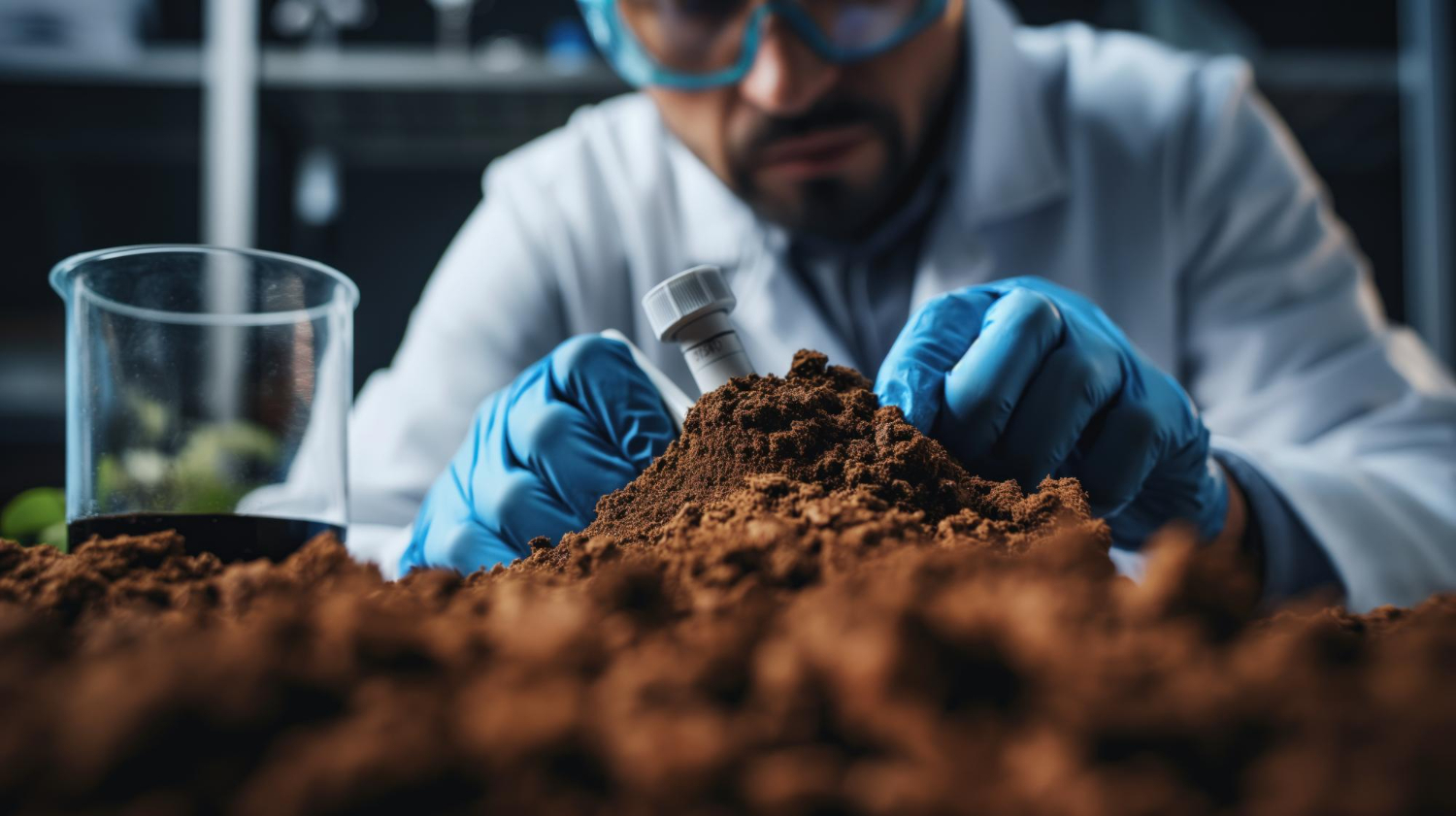
Construction projects are only as strong as the ground they stand on. Soil testing is the first and most important step before beginning any residential, commercial, or infrastructure project because it determines whether the soil can safely support the proposed structure. Professional soil testing services help identify the soil’s bearing capacity, composition, moisture content, contamination levels, and other critical properties that directly impact foundation design and long-term structural stability. Whether you are planning a home, factory, bridge, highway, or commercial building, investing in soil testing before construction minimizes risks, reduces unexpected costs, and ensures compliance with engineering and environmental standards. In this comprehensive guide, you’ll discover the top 10 reasons why soil testing is essential, what parameters are analyzed, and how choosing a reliable soil testing laboratory can contribute to the success of your project.
What is Soil Testing?
Soil testing is the scientific process of evaluating soil characteristics to determine its suitability for construction, agriculture, and environmental purposes. During soil analysis, trained professionals collect samples from different depths and examine their physical, chemical, and engineering properties in a certified soil testing lab.
The results help engineers understand:
- Soil bearing capacity
- Moisture content
- Soil density
- Grain size distribution
- Plasticity
- Compaction characteristics
- Groundwater influence
- Presence of contaminants
- Soil classification
These findings enable engineers to design foundations that match the site’s actual conditions, significantly reducing the risk of settlement, structural damage, or foundation failure.
Professional soil testing services also support compliance with BIS standards, IS Codes, and environmental regulations, making them an indispensable part of every construction project.
Why is Soil Testing Important Before Construction?
Many construction failures are caused not by poor construction practices but by inadequate knowledge of the soil beneath the structure. Soil conditions vary greatly, even within the same plot of land. Without proper soil analysis, engineers may overestimate or underestimate the soil’s strength, leading to unsafe foundation designs or unnecessary construction costs.
A professional soil testing laboratory provides reliable data that helps engineers make informed decisions regarding:
- Foundation type
- Excavation depth
- Ground improvement techniques
- Drainage systems
- Load-bearing capacity
- Construction materials
This proactive approach enhances structural safety, reduces risks, and contributes to the long-term durability of buildings.
10 Reasons Why Soil Testing Services Are Essential Before Construction
1. Soil Testing Determines Soil Bearing Capacity
One of the primary objectives of soil testing is to determine the soil’s bearing capacity. This refers to the maximum load that the ground can safely support without excessive settlement or failure.
Every building transfers its weight to the soil through the foundation. If the soil cannot withstand this load, problems such as cracks, uneven settlement, or complete structural failure may occur.
Professional soil testing services measure:
- Safe bearing capacity
- Shear strength
- Settlement characteristics
- Load distribution
Engineers use this information to select the most appropriate foundation system, ensuring the structure remains safe for decades.
2. Soil Testing Prevents Structural Failures
Weak or unstable soil is one of the leading causes of construction defects worldwide. Buildings constructed without proper soil analysis often experience:
- Foundation cracks
- Uneven flooring
- Wall deformation
- Water seepage
- Differential settlement
A certified soil testing laboratory identifies these risks before construction begins.
For example, expansive clay soils swell when wet and shrink during dry seasons. Without proper testing, these natural movements can damage foundations and walls over time.
By understanding soil behavior in advance, engineers can adopt suitable construction techniques to prevent future structural issues.
3. Soil Testing Helps Select the Right Foundation Design
Every construction site has unique soil conditions. A one-size-fits-all foundation approach can lead to expensive mistakes.
Professional soil testing services provide engineers with detailed information about:
- Soil composition
- Density
- Compressibility
- Water table
- Strength characteristics
Using this data, engineers determine whether the project requires:
- Shallow foundations
- Raft foundations
- Pile foundations
- Mat foundations
- Combined foundations
Choosing the right foundation not only improves safety but also optimizes construction costs.
4. Soil Analysis Reduces Construction Costs
Many people assume soil testing is an additional expense. In reality, it is one of the smartest investments before construction.
Accurate soil analysis helps avoid:
- Over-designed foundations
- Unnecessary excavation
- Excessive use of concrete
- Unexpected redesigns
- Construction delays
- Future repair costs
For example, if engineers know the exact bearing capacity of the soil, they can design foundations using only the required amount of reinforcement and concrete instead of adding unnecessary safety margins.
This results in substantial savings, particularly for large commercial and infrastructure projects.
In addition, engaging a qualified inspection company and an experienced analytical testing laboratory early in the project helps identify potential issues before construction begins. Their expertise ensures that the design is based on accurate site data rather than assumptions, reducing costly changes during execution.
5. Soil Testing Services Ensure Compliance with Regulatory Standards
Every construction project must comply with applicable engineering and environmental regulations. Professional soil testing services help builders, developers, and contractors meet these requirements by providing accurate data that aligns with national and international standards.
A certified soil testing laboratory performs tests in accordance with:
- BIS (Bureau of Indian Standards)
- IS Codes for Geotechnical Investigation
- EPA Act 1986
- MoEF Guidelines
- CPCB/SPCB Requirements (where applicable)
- ISO/IEC 17025 Laboratory Standards
Whether you’re constructing a residential complex, industrial facility, highway, bridge, or commercial building, proper soil testing demonstrates due diligence and supports regulatory approvals. Reports from an accredited laboratory also provide confidence to project stakeholders, consultants, and government authorities.
6. Soil Testing Identifies Drainage and Groundwater Issues
Water is one of the biggest factors affecting the stability of any structure. Excess groundwater or poor drainage can weaken soil over time, leading to settlement, erosion, and foundation damage.
Through professional soil analysis, engineers evaluate:
- Groundwater level
- Soil permeability
- Water retention capacity
- Drainage characteristics
- Capillary action
These findings help engineers design effective drainage systems and waterproofing measures before construction begins.
For example, a commercial project built on land with a high water table may require specialized foundation techniques or dewatering solutions. Without soil testing services, such issues often remain unnoticed until construction has already started, resulting in significant delays and increased costs.
7. Soil Testing Detects Contaminated Soil
Not every construction site consists of clean, stable soil. Industrial areas, landfill sites, mining zones, and former manufacturing facilities may contain hazardous substances that pose risks to both construction workers and future occupants.
A professional soil testing laboratory can identify contaminants such as:
- Heavy metals
- Petroleum hydrocarbons
- Chemical residues
- Industrial waste
- Organic pollutants
Testing contaminated soil is particularly important before residential developments, schools, hospitals, and public infrastructure projects.
A reliable analytical testing laboratory uses advanced analytical instruments to detect even trace levels of contamination. Early identification allows developers to plan remediation measures, ensuring environmental compliance and protecting public health.
8. Soil Testing Improves Project Planning and Risk Management
Construction projects involve significant financial investment. Every unexpected issue can affect project timelines and budgets.
Professional soil testing services reduce uncertainty by providing engineers with detailed information about subsurface conditions before construction begins.
These reports support:
- Accurate project budgeting
- Better resource allocation
- Construction scheduling
- Equipment selection
- Excavation planning
- Risk assessment
For example, if a project site contains loose sandy soil instead of dense soil, engineers may recommend ground improvement before foundation work starts. Identifying this requirement during planning is far less expensive than addressing it after construction has begun.
A certified inspection company works alongside engineers and project managers to ensure site conditions are fully understood before execution.
9. Soil Testing Enhances Long-Term Structural Performance
Buildings are expected to remain safe for decades. Their longevity depends largely on the quality of the foundation.
Professional soil testing helps engineers design structures that resist:
- Differential settlement
- Soil movement
- Seasonal expansion and shrinkage
- Erosion
- Foundation instability
This is especially important for:
- High-rise buildings
- Warehouses
- Manufacturing plants
- Schools
- Hospitals
- Dams
- Bridges
- Airports
Reliable soil testing services contribute to structures that require fewer repairs and lower maintenance costs over their lifecycle.
Investing in soil testing today helps avoid expensive structural repairs in the future.
10. Soil Testing Supports Sustainable Construction
Sustainability has become a priority in modern construction. Developers increasingly focus on reducing environmental impact while improving project efficiency.
Comprehensive soil analysis supports sustainable construction by helping engineers:
- Minimize unnecessary excavation
- Optimize foundation design
- Reduce concrete consumption
- Lower carbon emissions
- Preserve natural resources
- Improve land utilization
Modern analytical testing services also evaluate environmental factors that influence long-term site sustainability.
Using accurate scientific data allows construction companies to build safer, greener, and more cost-effective projects.
What Does a Soil Testing Laboratory Analyze?
A professional soil testing lab performs numerous tests to evaluate engineering and environmental properties.
| Test | Purpose |
| Soil Bearing Capacity | Determines foundation strength |
| Moisture Content | Evaluates water presence |
| Grain Size Analysis | Classifies soil type |
| Atterberg Limits | Measures soil plasticity |
| Compaction Test | Determines maximum density |
| Permeability Test | Evaluates drainage capability |
| Shear Strength Test | Measures resistance to failure |
| Soil pH Test | Determines chemical characteristics |
| Organic Content | Evaluates soil composition |
| Contamination Analysis | Detects hazardous substances |
These tests help engineers make informed design decisions and ensure construction safety.
Importance of Soil Testing Labs in India
With India’s rapidly growing infrastructure sector, the demand for reliable soil testing labs in India continues to increase.
Projects such as:
- Smart Cities
- Metro Rail
- National Highways
- Industrial Parks
- Residential Townships
- Commercial Complexes
- Renewable Energy Projects
all require professional soil testing services before construction begins.
Choosing an experienced soil testing laboratory ensures accurate testing, timely reporting, and compliance with Indian Standards (IS Codes).
Soil Testing vs Guesswork
| Soil Testing | No Soil Testing |
| Accurate foundation design | Assumptions |
| Lower construction risk | Higher failure risk |
| Cost optimization | Unexpected expenses |
| Regulatory compliance | Approval delays |
| Long-lasting structures | Frequent repairs |
| Better project planning | Construction uncertainty |
Common Mistakes to Avoid
Many developers unknowingly make costly mistakes before construction starts.
Avoid these common errors:
- Skipping soil testing to save initial costs.
- Choosing an uncertified soil testing lab.
- Collecting soil samples from only one location.
- Ignoring groundwater conditions.
- Using outdated soil reports.
- Selecting contractors without geotechnical expertise.
- Failing to conduct environmental soil analysis where contamination is possible.
- Not consulting an experienced inspection company for complex projects.
Each of these mistakes can lead to structural issues, project delays, or increased construction costs.
When Should You Conduct Soil Testing?
Professional soil testing services should ideally be carried out:
- Before purchasing land for development.
- Before preparing structural designs.
- Prior to foundation construction.
- Before expanding an existing structure.
- Before industrial development.
- Before highway, bridge, or railway projects.
- During environmental impact assessments.
- Whenever site conditions appear unusual or variable.
Conducting soil testing at the planning stage saves both time and money while ensuring safer construction outcomes.
Real-World Example
Imagine two developers planning identical warehouse projects on neighboring plots.
The first developer invests in professional soil testing services and discovers that the site has loose sandy soil with a high groundwater table. Engineers recommend pile foundations and an improved drainage system before construction begins.
The second developer skips soil testing to reduce initial costs. A few months after construction, uneven settlement causes cracks in the warehouse floor and walls. Repairs require partial demolition, project delays, and significantly higher expenses.
This example illustrates why professional soil analysis is not merely a regulatory requirement—it is a critical investment in the safety, durability, and long-term success of any construction project.
Why Choose Qualitek Labs for Soil Testing Services?
Selecting the right testing partner is just as important as conducting soil testing itself. At Qualitek Labs, we combine technical expertise, modern laboratory infrastructure, and industry-recognized certifications to deliver accurate and dependable testing solutions for construction, environmental, industrial, and infrastructure projects.
Why Qualitek Labs?
✔ NABL Accredited Laboratory
✔ ISO/IEC 17025 Certified
✔ Testing conducted as per EPA Act 1986, IS Standards, and global testing protocols
✔ MoEF, CPCB/SPCB, BIS, and FSSAI compliance capabilities
✔ Advanced analytical testing laboratory equipped with modern instruments
✔ Experienced scientists, geotechnical experts, and laboratory professionals
✔ Fast turnaround time with accurate and reliable reports
✔ Pan-India laboratory network serving diverse industries
✔ Comprehensive analytical testing services under one roof
✔ Customer-first approach with dedicated technical support
Whether you are a builder, developer, consultant, contractor, manufacturer, government agency, or infrastructure company, Qualitek Labs delivers dependable soil testing services tailored to your project requirements.
As a trusted soil testing laboratory, analytical testing lab, and inspection company, we are committed to helping clients make informed decisions through precise scientific analysis and quality-focused testing.
Conclusion
No construction project should begin without understanding the condition of the ground it will stand on. Professional soil testing provides the essential information needed to design safe foundations, improve construction quality, reduce project risks, and optimize costs. From evaluating soil bearing capacity and groundwater conditions to identifying contamination and ensuring regulatory compliance, soil testing services play a vital role in every successful construction project.
Choosing a certified soil testing laboratory also gives developers, engineers, and contractors confidence that every design decision is based on accurate scientific data rather than assumptions. In today’s construction industry, where safety, sustainability, and compliance are top priorities, investing in professional soil analysis is not an option—it is a necessity.
If you’re looking for reliable soil testing services, soil testing labs in India, or a trusted analytical testing laboratory, Qualitek Labs is your ideal partner. Backed by NABL accreditation, ISO/IEC 17025 certification, advanced laboratory infrastructure, and a team of experienced experts, Qualitek Labs provides accurate testing solutions that meet national and international standards. From residential and commercial developments to large-scale infrastructure and industrial projects, Qualitek Labs delivers dependable results that help you build with confidence.
Frequently Asked Questions (FAQs)
1. What is soil testing and why is it important before construction?
Soil testing is the process of analyzing the physical, chemical, and engineering properties of soil to determine its suitability for construction. It helps engineers assess soil bearing capacity, moisture content, density, compaction, and other critical parameters. Conducting soil testing before construction ensures the foundation is designed according to actual site conditions, reducing the risk of structural failure, settlement, and costly repairs.
2. What tests are performed in a soil testing laboratory?
A professional soil testing laboratory performs a wide range of tests depending on the project requirements. These commonly include:
- Soil Bearing Capacity Test
- Moisture Content Test
- Grain Size Analysis
- Atterberg Limits
- Compaction Test
- Permeability Test
- Shear Strength Test
- Soil pH Analysis
- Organic Content Test
- Contamination Analysis
These tests provide engineers with the information needed to design safe, durable, and cost-effective foundations.
3. How do soil testing services help reduce construction costs?
Professional soil testing services help optimize foundation design by providing accurate information about soil conditions. This prevents overdesigning or under designing foundations, reduces unnecessary excavation, minimizes material wastage, and avoids unexpected structural problems during construction. Although soil testing requires an initial investment, it often results in significant long-term cost savings by preventing expensive repairs and project delays.
4. How do I choose the right soil testing lab?
When selecting a soil testing lab, look for laboratories that are:
- NABL Accredited
- ISO/IEC 17025 Certified
- Equipped with advanced testing instruments
- Experienced in geotechnical and environmental testing
- Compliant with BIS and IS Standards
- Recognized by MoEF and CPCB/SPCB where applicable
- Known for accurate reporting and timely service
Choosing a certified laboratory ensures reliable results that can be confidently used for engineering design and regulatory compliance.
5. Why should I choose professional soil testing services instead of basic site inspection?
A visual site inspection cannot determine the engineering properties of soil beneath the surface. Professional soil testing services involve scientific analysis using specialized equipment and standardized testing methods. This provides precise data on soil strength, composition, groundwater conditions, and potential contaminants, enabling engineers to design safe foundations and avoid costly construction issues.