

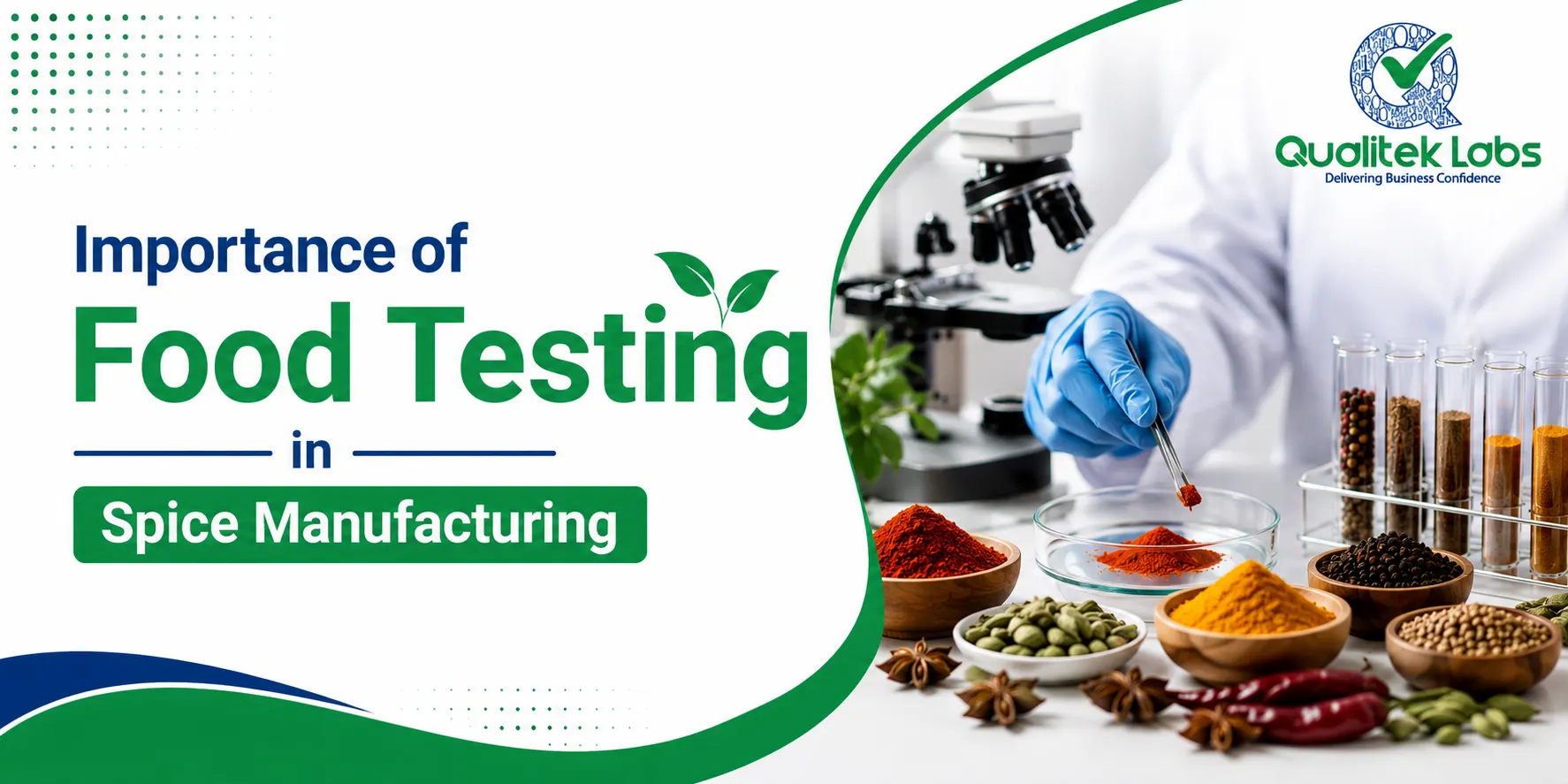
Spices are an essential part of the global food industry. From turmeric and red chilli powder to cumin, coriander, and black pepper, they are used in households, restaurants, and food processing units across the world. As consumer demand grows, so do expectations around quality, safety, and compliance.
For spice manufacturers, maintaining consistent product quality is no longer enough. Products must also meet food safety regulations and buyer specifications. This is where food testing plays a crucial role. It helps manufacturers verify the quality of raw materials and finished products while reducing the risk of non-compliance, product recalls, and rejected consignments.
Why Food Testing Is Important for Spice Manufacturers
Spices pass through multiple stages before reaching consumers. They are cultivated, harvested, processed, packed, stored, and transported. At each stage, there is a possibility of contamination or quality deterioration.
Routine food testing helps manufacturers detect potential issues before products are released into the market. Instead of reacting to customer complaints or regulatory action, businesses can identify problems early and take corrective measures.
For manufacturers, this means better quality control and greater confidence in every batch they produce.
Common Risks in Spice Manufacturing
Several factors can affect the safety and quality of spices. Some of the most common risks include:
- Microbial contamination
- Heavy metals
- Pesticide residues
- Adulteration
- Moisture-related quality issues
- Foreign matter
- Incorrect nutritional values
Without proper food testing, these issues may go unnoticed until products reach distributors or consumers. That can result in recalls, financial losses, and damage to brand reputation.
How Food Testing Supports Quality Control
Quality control begins long before the final product is packed. Manufacturers should evaluate raw materials as well as finished products to ensure they meet defined quality standards.
Regular food testing helps manufacturers:
Food testing helps manufacturers:
- Verify the quality of incoming raw materials
- Monitor consistency across production batches
- Confirm product specifications
- Detect contaminants before products are dispatched
- Improve overall manufacturing processes
Testing also provides valuable data that can help manufacturers improve sourcing and production decisions over time.
Helps Meet Regulatory Requirements
Food safety regulations continue to become more stringent across domestic and international markets. Manufacturers supplying products within India or exporting overseas must ensure their spices comply with applicable standards.
By incorporating food testing into routine quality assurance, manufacturers can demonstrate compliance with regulatory requirements and maintain the documentation required during inspections and audits.
This reduces the chances of shipment delays, rejected consignments, or regulatory penalties.
Builds Customer Trust
Customers today are more aware of food safety than ever before. Retailers, distributors, and export buyers expect manufacturers to supply products that consistently meet quality standards.
Reliable food testing helps manufacturers deliver safe, high-quality products while building long-term trust with customers. Consistency is often one of the biggest factors influencing repeat business in the food industry.
Supports Export Opportunities
Many international markets have strict quality and safety requirements for spices. Products that fail to meet these standards may be rejected at the destination, leading to financial losses and disruption of supply chains.
Routine testing allows manufacturers to verify compliance before products are exported. This improves confidence during international trade and reduces business risks.
Choosing the Right Food Testing Laboratory
The effectiveness of food testing depends on the laboratory performing the analysis. Manufacturers should work with a laboratory that has the technical expertise, modern infrastructure, and recognized accreditation required for accurate testing.
When selecting a testing partner, consider:
- NABL-accredited testing services
- Experienced technical professionals
- Advanced analytical instruments
- Accurate and timely reports
- Comprehensive food testing capabilities
Choosing the right laboratory not only supports compliance but also strengthens the overall quality management system.
Conclusion
For spice manufacturers, quality and safety go hand in hand. Investing in regular food testing helps identify potential risks early, maintain product consistency, meet regulatory requirements, and protect brand reputation. It is a proactive approach that supports both compliance and business growth.
At Qualitek Labs, we provide comprehensive food testing services to help spice manufacturers ensure product quality and regulatory compliance. Backed by NABL accreditation, advanced testing facilities, and experienced professionals, we deliver reliable results that help businesses make informed decisions and confidently supply safe, high-quality spices to domestic and global markets.
Frequently Asked Questions (FAQs)
1. Why is food testing important for spice manufacturers?
Food testing helps spice manufacturers detect contaminants, maintain product quality, comply with food safety regulations, and reduce the risk of product recalls.
2. What parameters are commonly tested in spices?
Spices are commonly tested for microbiological contamination, pesticide residues, heavy metals, moisture content, adulteration, foreign matter, and nutritional parameters.
3. How often should spice manufacturers conduct food testing?
Food testing should be carried out on raw materials, during production when required, and on finished products before they are released into the market.
4. Can food testing help spice manufacturers meet export requirements?
Yes. Food testing verifies that products meet the safety and quality standards required by international buyers and importing countries.
5. Why should manufacturers choose a NABL-accredited food testing laboratory?
A NABL-accredited laboratory follows standardized testing methods and provides accurate, reliable results that support regulatory compliance and quality assurance.
6. Why choose Qualitek Labs for food testing?
Qualitek Labs offers NABL-accredited food testing services with advanced analytical capabilities, helping spice manufacturers ensure product safety, quality, and compliance.