

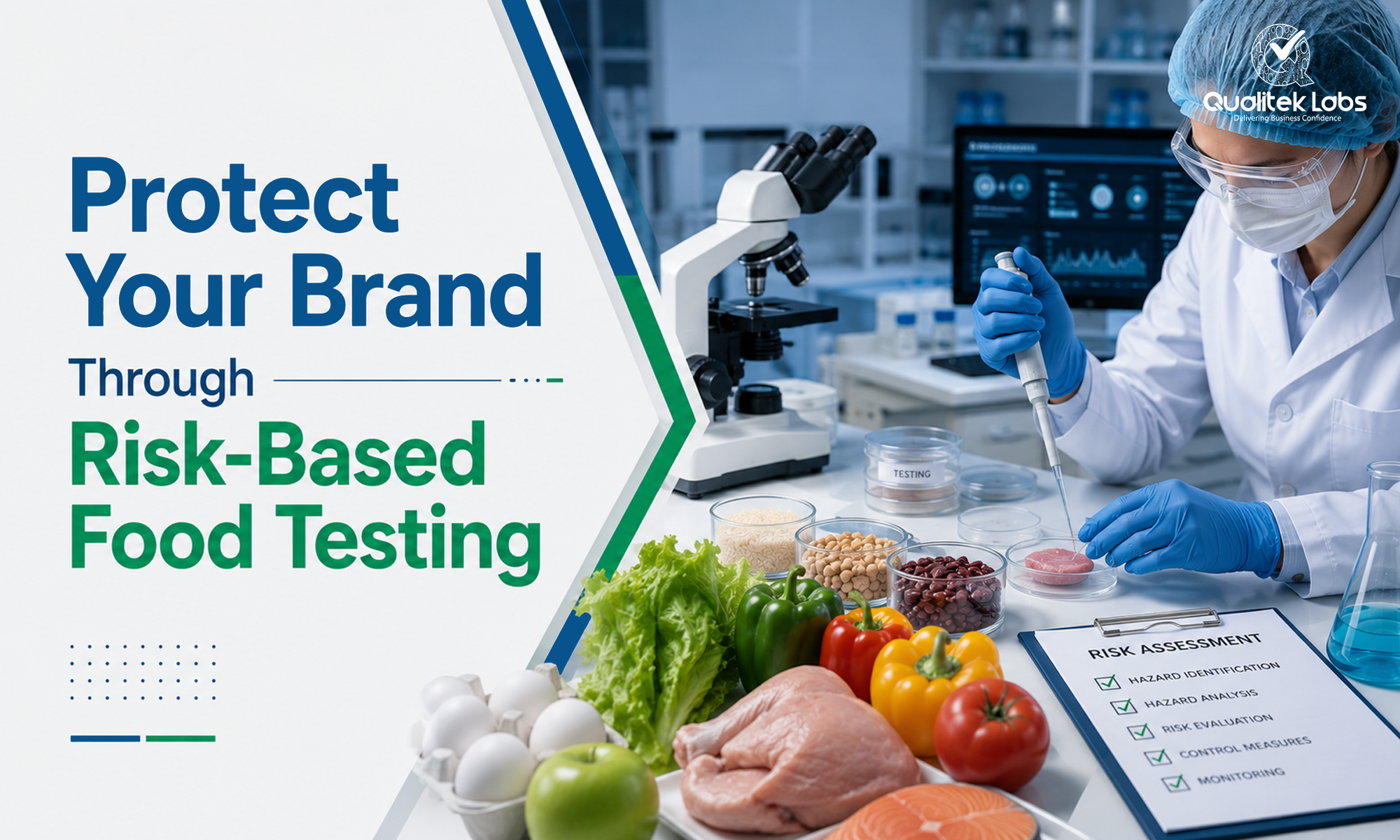
Food safety has become a top priority for manufacturers, retailers, and consumers alike. With increasingly stringent regulations and growing consumer awareness, businesses can no longer rely on routine testing alone. Instead, adopting a risk-based food testing strategy helps identify potential hazards before they become costly compliance issues or damage brand reputation.
A well-planned food testing program focuses resources where risks are highest, enabling food businesses to ensure product quality, meet regulatory requirements, and protect consumer health. Whether producing packaged foods, beverages, dairy products, spices, or ready-to-eat meals, implementing risk-based testing is essential for maintaining trust and achieving long-term business success.
What Is Risk-Based Food Testing?
Risk-based food testing is a scientific approach that prioritizes testing based on the likelihood and severity of potential hazards. Rather than applying the same testing protocol to every product, manufacturers evaluate factors such as raw material quality, production processes, storage conditions, supplier reliability, and historical contamination trends to determine the most critical testing requirements.
This targeted approach allows companies to detect food safety risks early while optimizing testing resources and ensuring compliance with national and international food safety regulations.
Why Risk-Based Testing Matters
Food products move through complex supply chains before reaching consumers. Every stage, from sourcing raw materials to packaging and distribution, introduces potential risks. Biological contaminants, chemical residues, allergens, heavy metals, and foreign particles can compromise product safety if not identified in time.
A risk-based testing strategy helps manufacturers:
- Identify high-risk ingredients and processes.
- Detect contamination before products enter the market.
- Reduce product recalls and financial losses.
- Maintain regulatory compliance.
- Improve consumer confidence.
- Strengthen overall quality management systems.
Instead of reacting to food safety incidents, businesses become proactive in preventing them.
Key Components of a Risk-Based Food Testing Strategy
1. Hazard Identification
The first step is identifying potential hazards associated with each product. These may include microbial contamination, pesticide residues, mycotoxins, allergens, heavy metals, veterinary drug residues, or physical contaminants.
Understanding these risks allows manufacturers to develop testing plans tailored to specific products and production environments.
2. Raw Material Risk Assessment
Raw materials often represent the greatest source of contamination. Ingredients sourced from different suppliers or geographical regions may carry varying levels of risk.
Regular supplier evaluation, incoming material inspection, and targeted analytical testing help verify raw material quality before production begins.
3. Process Monitoring
Manufacturing processes should be evaluated to identify critical control points where contamination could occur. Monitoring equipment hygiene, environmental conditions, water quality, and personnel practices reduces the likelihood of food safety failures.
Routine verification ensures preventive controls remain effective throughout production.
4. Finished Product Testing
Final product testing confirms that food products meet regulatory standards and internal quality specifications before reaching consumers.
Testing may include microbiological analysis, nutritional verification, shelf-life evaluation, contaminant screening, allergen detection, and chemical analysis depending on product type.
Supporting Regulatory Compliance
Food manufacturers must comply with evolving regulations established by national and international authorities. Regulatory agencies expect companies to maintain scientific evidence demonstrating that products consistently meet safety requirements.
Risk-based testing generates reliable analytical data that supports:
- Regulatory inspections
- Product registrations
- Export certifications
- Internal quality audits
- Supplier qualification
- Corrective and preventive actions
Well-documented testing records also simplify regulatory reviews and demonstrate due diligence during audits.
Protecting Brand Reputation
A single food safety incident can severely impact consumer trust. Product recalls not only result in direct financial losses but also create long-term reputational damage that may take years to recover from.
By identifying potential hazards before products enter the marketplace, manufacturers significantly reduce the likelihood of recalls, customer complaints, and legal liabilities.
Consumers today actively choose brands that prioritize food safety, transparency, and quality. Investing in preventive testing is, therefore an investment in brand protection.
The Role of Advanced Analytical Technologies
Modern food testing laboratories use sophisticated analytical instruments capable of detecting contaminants at extremely low concentrations. Technologies such as HPLC, GC-MS/MS, ICP-MS, LC-MS/MS, and molecular microbiology provide highly accurate and reliable results.
These advanced methods help manufacturers identify emerging contaminants, verify nutritional claims, monitor preservatives, detect adulteration, and ensure compliance with food safety standards.
As regulatory expectations continue to evolve, advanced laboratory capabilities become increasingly important for maintaining consistent product quality.
Choosing the Right Food Testing Partner
Selecting an experienced third-party laboratory strengthens a company’s food safety program. An accredited laboratory provides unbiased analytical results, validated testing methods, qualified scientists, and comprehensive technical support.
When evaluating a testing partner, businesses should consider:
- Laboratory accreditation
- Regulatory expertise
- Modern analytical infrastructure
- Wide testing capabilities
- Fast turnaround time
- Data integrity practices
- Experienced technical professionals
- Strong customer support
A trusted laboratory becomes an extension of the manufacturer’s quality assurance team, helping businesses stay compliant while improving operational efficiency.
Conclusion
Risk-based food testing is no longer just a regulatory requirement, it is a strategic approach to protecting consumers, ensuring compliance, and safeguarding brand reputation. By focusing testing efforts on the highest-risk areas, food manufacturers can improve product quality, reduce recalls, strengthen supply chain confidence, and meet evolving food safety regulations.
Partnering with an experienced testing laboratory further enhances this strategy. Qualitek Labs provides comprehensive food testing services backed by advanced analytical technologies, experienced scientists, and internationally accepted quality standards. From microbiological analysis and contaminant testing to nutritional evaluation and shelf-life studies, Qualitek Labs delivers accurate, reliable, and timely results that help food businesses maintain regulatory compliance while protecting the trust their customers place in every product.
Frequently Asked Questions
1. What is risk-based food testing?
Risk-based food testing prioritizes testing based on potential food safety hazards, helping manufacturers improve regulatory compliance and product quality.
2. Why is risk-based food testing important?
It identifies high-risk contaminants early, reduces recalls, ensures regulatory compliance, and protects consumer health and brand reputation.
3. How does food testing support regulatory compliance?
Food testing verifies products meet safety, quality, and labeling standards required by food safety regulations and regulatory authorities.
4. What hazards are detected through food testing?
Food testing detects microorganisms, allergens, pesticide residues, heavy metals, mycotoxins, contaminants, and adulterants in food products.
5. How often should food products be tested?
Testing frequency depends on product type, raw material risks, manufacturing processes, regulatory requirements, and quality management practices.
6. Why choose an accredited food testing laboratory?
An accredited laboratory provides accurate, reliable, and scientifically validated test results that support compliance and quality assurance.
7. What industries benefit from risk-based food testing?
Food manufacturers, beverage companies, dairy producers, exporters, retailers, and food processing businesses all benefit from risk-based food testing.
8. How does risk-based food testing protect brand reputation?
It prevents unsafe products from reaching consumers, reducing recalls, regulatory penalties, customer complaints, and damage to brand trust.