

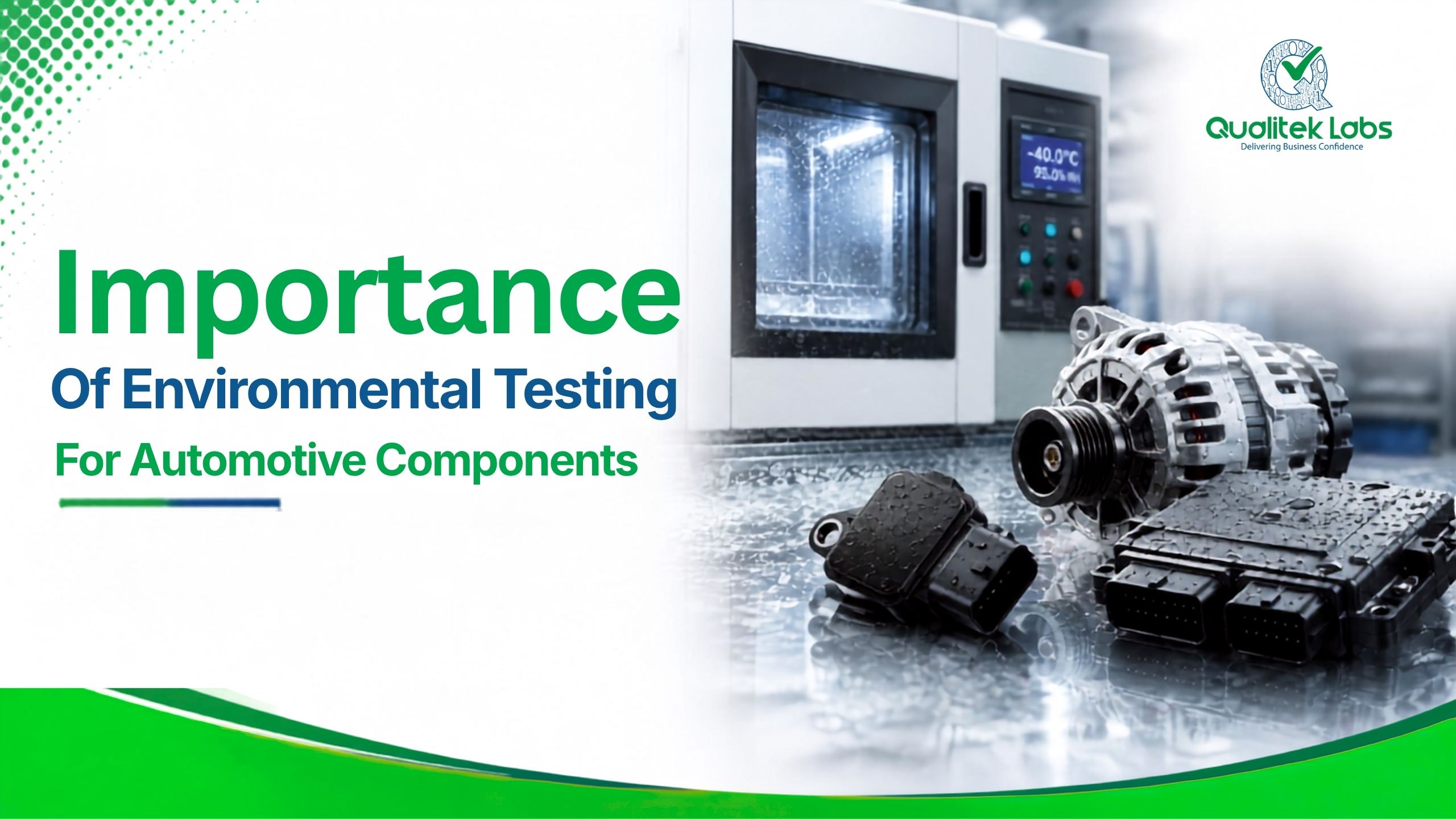
Automotive components rarely operate in controlled conditions. A vehicle may move from extreme heat to heavy rain, encounter dust and moisture, travel over rough roads, or remain exposed to changing temperatures for extended periods. Every component must continue to perform despite these conditions.
This is where environmental testing for automotive components becomes important. It helps manufacturers understand how parts respond to temperature, humidity, water, dust, corrosion, vibration, and other environmental stresses before they are used in real-world applications.
For automotive manufacturers and component suppliers, such testing can reveal weaknesses early, support product development, and help improve the reliability and service life of components.
What Is Environmental Testing in the Automotive Industry?
Environmental testing involves exposing automotive components to controlled conditions that simulate the stresses they may experience during use, transportation, storage, or operation.
Depending on the component and its intended application, testing may include temperature and humidity exposure, thermal cycling, thermal shock, water and dust ingress, salt spray, corrosion testing, UV exposure, and other environmental conditions.
The objective is not simply to determine whether a component works under ideal conditions. It is to understand how well it continues to perform when conditions become challenging.
Why Do Automotive Components Need Environmental Testing?
1. Automotive Components Face Changing Environmental Conditions
A vehicle can operate across different climates and terrains. Components may be exposed to high temperatures under the hood, low temperatures during winter operation, moisture during monsoons, or dust on unpaved roads.
These conditions can affect materials, coatings, electrical connections, seals, plastics, and mechanical parts.
Environmental testing for automotive components allows manufacturers to recreate selected conditions in a controlled laboratory environment and assess how the component responds.
2. It Helps Identify Material and Design Weaknesses
A component may appear reliable during initial inspection but develop problems after repeated exposure to environmental stress.
For example, temperature changes can cause materials to expand and contract. Moisture can contribute to corrosion. UV exposure can degrade certain polymers and surface finishes. Water or dust ingress can affect components that contain sensitive electrical systems.
Testing can bring these weaknesses to light before the component reaches large-scale production or the market.
3. It Supports Component Durability
Automotive components are expected to function throughout their intended service life, not just when they are new.
Environmental conditions can gradually affect their mechanical, electrical, or physical properties. Repeated exposure to temperature, humidity, vibration, moisture, or corrosive environments may accelerate deterioration.
By evaluating components under controlled environmental conditions, manufacturers can better understand their durability and identify areas where materials or designs may need improvement.
4. Corrosion Can Affect Long-Term Performance
Corrosion is a significant concern for automotive manufacturers, particularly for metallic components exposed to moisture, salts, and other corrosive conditions.
Salt spray and related corrosion tests can help evaluate the resistance of materials, coatings, and components to corrosive environments.
The findings can support decisions regarding material selection, surface treatment, protective coatings, and component design.
5. It Helps Evaluate Protection Against Dust and Water
Modern vehicles contain numerous electrical and electronic components. These parts may need protection against dust, water, and other external elements.
Ingress protection testing can evaluate how effectively an enclosure or component prevents the entry of solids and liquids under specified conditions.
This is particularly relevant for components installed in areas exposed to road spray, dust, rain, and other environmental conditions.
Common Environmental Tests for Automotive Components
The specific tests required depend on the component, application, material, and applicable standards. Some commonly used environmental evaluations include:
Temperature Testing
Components are exposed to specified high or low temperatures to assess their performance under thermal stress.
Humidity Testing
Controlled humidity conditions help evaluate the effects of prolonged moisture exposure on materials and components.
Thermal Shock Testing
Rapid changes between temperature extremes help identify weaknesses caused by sudden thermal transitions.
Salt Spray Testing
This test evaluates the corrosion resistance of metallic materials, coatings, and components.
Water and Dust Ingress Testing
Components are assessed for their ability to resist the entry of water and solid particles.
UV and Weathering Testing
Exposure to controlled UV radiation and environmental conditions helps evaluate changes in materials, surfaces, and finishes.
The appropriate combination of tests should be determined according to the component’s intended use and relevant technical requirements.
Environmental Testing Can Support Better Product Development
Testing should not always be viewed as something that happens only after a product has been developed.
When incorporated into the development process, environmental testing can provide manufacturers with useful information about material selection, component design, protective measures, and expected performance.
Testing results can help engineering teams identify potential failure points and make design changes before production volumes increase. This can reduce the risk of expensive modifications later in the development cycle.
Why Testing Through a Competent Laboratory Matters
The reliability of test results depends on several factors, including appropriate test methods, calibrated equipment, controlled conditions, competent personnel, and proper documentation.
An experienced automotive testing laboratory can help manufacturers select relevant evaluations based on the component and its intended application. Proper testing also provides documented results that can support internal quality processes, customer requirements, and applicable compliance needs.
For manufacturers supplying components to vehicle manufacturers or other automotive businesses, credible laboratory testing can therefore form an important part of quality assurance.
Choose Qualitek Labs for Automotive Testing
Qualitek Labs provides a range of automotive testing services designed to evaluate the performance, durability, safety, and reliability of automotive components under different conditions.
Its automotive testing capabilities include environmental evaluations alongside other areas such as electrical and electronic testing, shock and vibration testing, metallurgical testing, fire testing, durability testing, and EV battery testing.
By working with an experienced testing laboratory, automotive manufacturers and component suppliers can evaluate products under relevant conditions, identify potential weaknesses, and make better-informed decisions during product development and quality control.
Environmental testing is ultimately about understanding how a component performs beyond ideal laboratory conditions, before real-world conditions have the opportunity to expose its weaknesses.
FAQs
1. What is environmental testing for automotive components?
Environmental testing evaluates how automotive components perform when exposed to conditions such as temperature, humidity, water, dust, corrosion, UV radiation, and thermal changes.
2. Why is environmental testing important for automotive manufacturers?
It helps manufacturers identify material and design weaknesses, evaluate durability, improve component reliability, and reduce the risk of failures caused by environmental conditions.
3. What environmental tests are commonly performed on automotive components?
Common evaluations include temperature, humidity, thermal shock, salt spray, corrosion, water ingress, dust ingress, UV exposure, and weathering tests.
4. Can environmental testing help improve automotive component durability?
Yes. Controlled environmental exposure can reveal how components respond to repeated or prolonged stresses and help manufacturers identify opportunities to improve materials and designs.
5. Why should automotive manufacturers use an experienced testing laboratory?
A competent laboratory provides appropriate test methods, controlled conditions, calibrated equipment, technical expertise, and documented results that support quality and compliance requirements.