

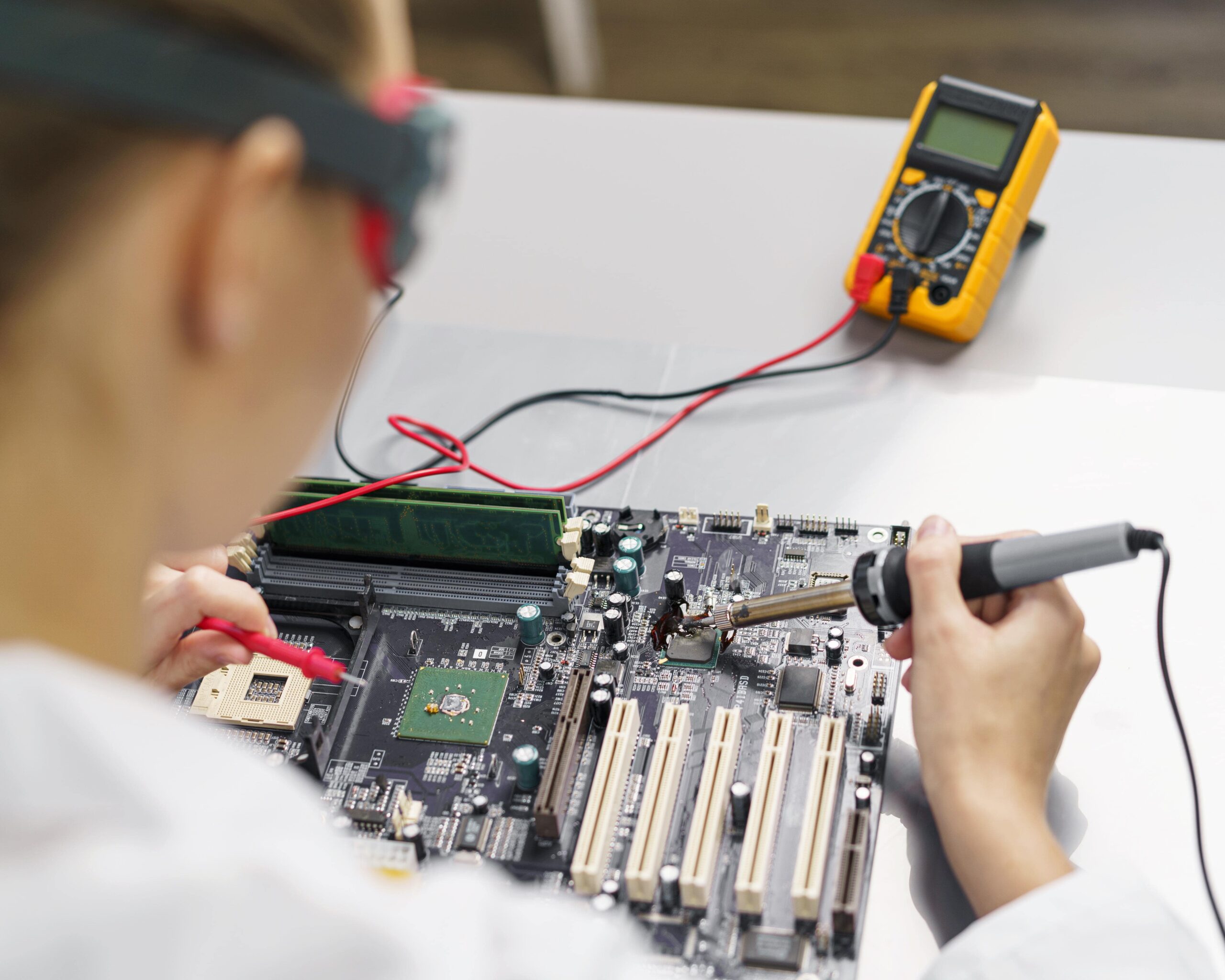
Achieving long-range electric vehicles is no longer just a consumer expectation—it has become the foundation of global EV innovation. Every improvement in driving range, charging speed, battery health, and safety depends on how thoroughly manufacturers conduct EV battery testing. Modern test data tells engineers exactly how batteries behave, age, transform chemically, and respond to stress. With world-class EV battery test equipment, advanced analytical testing services, and guidance from a certified inspection company, next-generation EVs are now closer to achieving 600–1,000 km ranges that once seemed impossible.
This blog explains why battery testing is the backbone of next-gen EV development, how laboratories push innovation forward, and why manufacturers partner with specialized facilities like Qualitek Labs to validate performance, safety, and global compliance.
Why Battery Testing Is the Heart of EV Range Innovation
Battery performance determines up to 60% of an EV’s total driving range. No matter how aerodynamic, lightweight, or efficient the EV is, the ultimate limiting factor is the battery’s ability to store and deliver energy.
But achieving higher range is complex. Batteries must deliver:
- Higher energy density
- Better thermal stability
- Faster charging speeds
- Slower degradation
- Higher safety margins
- Consistent performance across climates
This is why detailed EV battery testing is essential. It identifies weaknesses long before production, allowing engineers to redesign materials, adjust chemistry, or recalibrate BMS algorithms.
In short: better testing unlocks better battery design, which unlocks better EV range.
Key Factors That Decide Next-Gen EV Range
Energy Density: The Core of Modern EV Innovation
Energy density (Wh/kg) measures how much energy a battery can store per kilogram. Increasing this value is the industry’s biggest pursuit.
Testing Measures Energy Density Through:
- Charge/discharge testing
- Material purity analysis
- Cell-level performance characterization
- Chemical composition analysis (via an analytical testing lab)
- Internal resistance measurement
For example, NMC and solid-state batteries undergo extensive analytical testing services to verify stability under higher energy densities. Even a 5% increase in density can translate into 30–40 km of additional range in a modern EV.
Degradation Rate: The Silent Range Killer
All batteries lose capacity as they age—but the speed of degradation impacts long-term range more than consumers realize.
High degradation = fast capacity loss = lower range
EV battery testing evaluates degradation through:
- Long-term cycle life testing
- Calendar aging studies
- High-temperature accelerated aging
- Impurity and material fatigue analysis
A battery that retains 90% capacity after 1,000 cycles is significantly more valuable than one that drops to 80%.
Thermal Stability: Because Range Depends on Temperature
Batteries dislike heat and cold. Extreme temperatures reduce output, degrade materials, and increase safety risk.
Cold weather can reduce range by 20–40%, while high temperatures accelerate degradation.
Thermal testing includes:
- Thermal shock
- Heat generation measurement
- Performance at −40°C to +80°C
- Thermal runaway behavior
- Cooling system efficiency
This requires environmental chambers and specialized EV battery test equipment to simulate harsh climates.
Electrical Efficiency: The Hidden Contributor
Not all the energy stored in a battery is usable. Internal losses happen due to:
- Cell impedance
- Non-uniform charge distribution
- Aged cathodes
- Poor electrolyte performance
Through precise testing, an analytical testing laboratory identifies and helps minimize these losses, directly improving range.
Real-World Testing: How Labs Predict Actual EV Range
EV range in the real world differs from lab estimates due to:
- Stop-and-go traffic
- Weather
- Driving style
- Charging behavior
- Battery aging
To close this gap, modern labs use hardware-in-loop (HIL) and software-in-loop (SIL) simulations combined with vehicle-level load modeling.
Key Real-World Testing Parameters Include:
- Variable acceleration load
- Regenerative braking behavior
- High-speed consumption
- HVAC load impact
- Battery cooling system efficiency
Testing is no longer about capacity alone—it’s about predicting how the EV behaves across thousands of real-world scenarios.
Role of EV Battery Test Equipment in Pushing the Industry Forward
Modern EV development relies heavily on advanced EV battery test equipment capable of revealing micro-level insights. The precision of testing tools directly impacts the accuracy of the final EV range.
Battery Cyclers
Used to simulate years of charging and discharging in controlled cycles.
They help measure:
- Cycle life
- Power output stability
- Capacity fade rate
- Charge acceptance efficiency
Environmental & Climatic Chambers
Replicate global weather and geographical conditions:
- Arctic temperatures
- Desert heat
- High humidity
- High altitude
- Thermal shock
Simulating these ensures the EV performs reliably anywhere in the world.
Vibration & Mechanical Shock Systems
EVs experience constant mechanical vibrations from roads, potholes, and bumps. These forces can weaken connectors or cause internal short circuits.
A certified inspection company tests batteries for:
- Structural stability
- Mechanical fatigue
- Crash and drop behavior
- Vibration-induced microcracks
Advanced Analytical Tools
An analytical testing laboratory uses scientific instruments to examine cells at the atomic and molecular level.
Tools include:
- SEM / TEM
- FTIR and Raman spectroscopy
- ICP-OES for elemental analysis
- DSC/TGA for thermal properties
- GC-MS for electrolyte purity
These insights help engineers redesign materials that enhance longevity and range.
Analytical Testing Services: The Backbone of Battery Chemistry Optimization
The chemistry of the battery decides:
- How far an EV can travel
- How fast it charges
- How long it lasts
- How safe it remains
This is where analytical testing services become invaluable.
Purity of Raw Materials
Even minor contamination—such as metallic impurities—can drastically reduce battery performance and increase degradation.
Electrolyte Stability
Analytical labs determine how electrolytes behave under:
- High voltage
- High temperature
- Fast charging
- Long-term cycling
Cathode and Anode Material Analysis
Precision testing identifies:
- Microstructural defects
- Particle distribution
- Crystal phase
- Surface coatings
Better materials = better range + better safety.
Safety Testing: Ensuring Long-Range Batteries Remain Safe
Higher energy density means higher risk. That is why EV battery testing must also evaluate safety under extreme abuse conditions.
Key Safety Tests Include:
- Overcharge tests
- Short-circuit behavior
- Nail penetration
- Crush tests
- Fire resistance
- External heating
- Venting behavior
Safety failures not only reduce range—they endanger lives. Thorough testing from an accredited inspection company ensures compliance with global safety standards.
How Battery Testing Enables Fast Charging Without Compromising Range
Fast charging generates heat and accelerates degradation. Through precise testing, manufacturers optimize:
- Cell balancing
- Thermal management
- Charge rate distribution
- Electrode stability at high C-rates
Testing allows EV makers to deliver:
- 80% charge in 20–30 minutes
- Minimal degradation
- Consistent range over time
Regulatory Testing for Global Market Entry
To sell EVs worldwide, manufacturers must meet strict international standards such as:
- AIS (India)
- ISO
- IEC
- UL
- UNECE
- UN 38.3 for battery transport
A certified inspection company verifies compliance through:
- Vibration and shock tests
- Environmental stress tests
- Fire and thermal impact tests
- Transport safety
- Mechanical integrity tests
Without passing these, batteries cannot legally be sold or shipped.
Why Manufacturers Need Third-Party Testing Labs
Even top manufacturers rely on third-party laboratories for:
- Independent validation
- Regulatory approvals
- Prototype performance comparison
- Failure analysis
- Material quality verification
- Competitive benchmarking
An external analytical testing laboratory provides unbiased results based on standardized protocols—essential for credibility and global certification.
Why Choose Qualitek Labs for EV Battery Testing?
Qualitek Labs is one of the leading automotive and EV battery testing facilities, trusted by OEMs, Tier-1 suppliers, and innovators across the industry.
Comprehensive Testing Under One Roof
We offer complete automotive and battery testing solutions, covering:
- Electrical safety
- Environmental performance
- Mechanical durability
- Electrochemical analysis
- Material characterization
This eliminates the need to work with multiple vendors.
Cutting-Edge Testing Infrastructure
Equipped with world-class EV battery test equipment, environmental chambers, thermal analyzers, and advanced analytical instruments, we provide unmatched accuracy and reliability.
Our facilities comply with:
- ISO standards
- AIS regulations
- IEC and UL requirements
- International safety norms
Deep Industry Expertise
Our expert team consists of:
- Experienced engineers
- Chemists
- Automotive technologists
- Battery specialists
They bring decades of combined experience, helping clients achieve safer, more efficient, and higher-performing products.
Custom Testing Plans
Every manufacturer and every battery is different. Qualitek Labs specializes in building customized testing programs tailored to:
- Product goals
- Material selection
- Performance benchmarks
- Regulatory requirements
- R&D needs
Globally Compliant and Reliable Results
We ensure all tests meet international standards so your products are ready for global launch—minimizing delays, rework, and compliance issues.
Partner With Qualitek Labs for Reliable, Accurate, and Globally-Compliant Automotive Testing Services.
Let us help you deliver safer, better-performing EVs to the market.
Contact Us to learn more!
Frequently Asked Questions (FAQs)
1. How does EV battery testing improve driving range?
It helps manufacturers optimize energy density, reduce degradation, and improve thermal stability—directly increasing real-world range.
2. What equipment is used for EV battery testing?
Battery cyclers, environmental chambers, vibration rigs, thermal analyzers, electrical safety testers, and tools used in an analytical testing laboratory.
3. Why is analytical testing important in EV development?
It evaluates material purity, electrolyte stability, and microstructural integrity—key factors for safety, lifespan, and range.
4. Are third-party inspection companies necessary?
Yes. A certified inspection company provides unbiased compliance testing required for certifications like AIS, ISO, IEC, and UN 38.3.
5. What makes Qualitek Labs a preferred automotive testing partner?
State-of-the-art facilities, expert teams, global standard compliance, and customized testing plans tailored for EV innovation.