

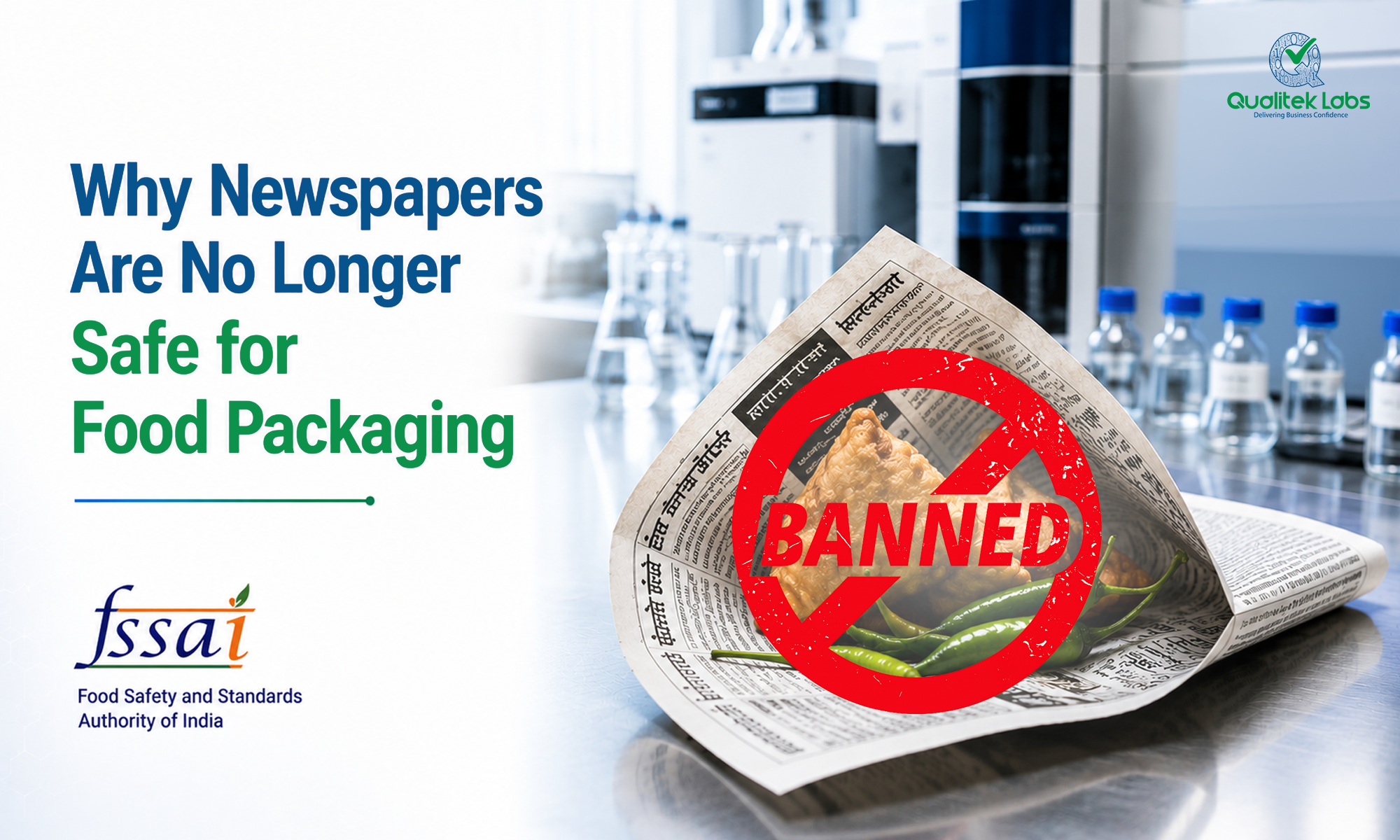
Picture this: a hot samosa handed to you in a folded sheet of newspaper, the ink still faintly visible through a thin layer of oil. For most of us, that’s not a strange image; it’s practically a childhood memory. Street vendors, local snack shops, and even some restaurants have been using newspapers as food packaging for as long as anyone can remember. It was cheap, it was available, and nobody questioned it much.
But the Food Safety and Standards Authority of India (FSSAI) is now drawing a firm line. Food business operators across the country have been directed to stop using newspapers for wrapping, serving, or packing food immediately. And the reasons behind this directive are worth understanding.
What Triggered This Advisory?
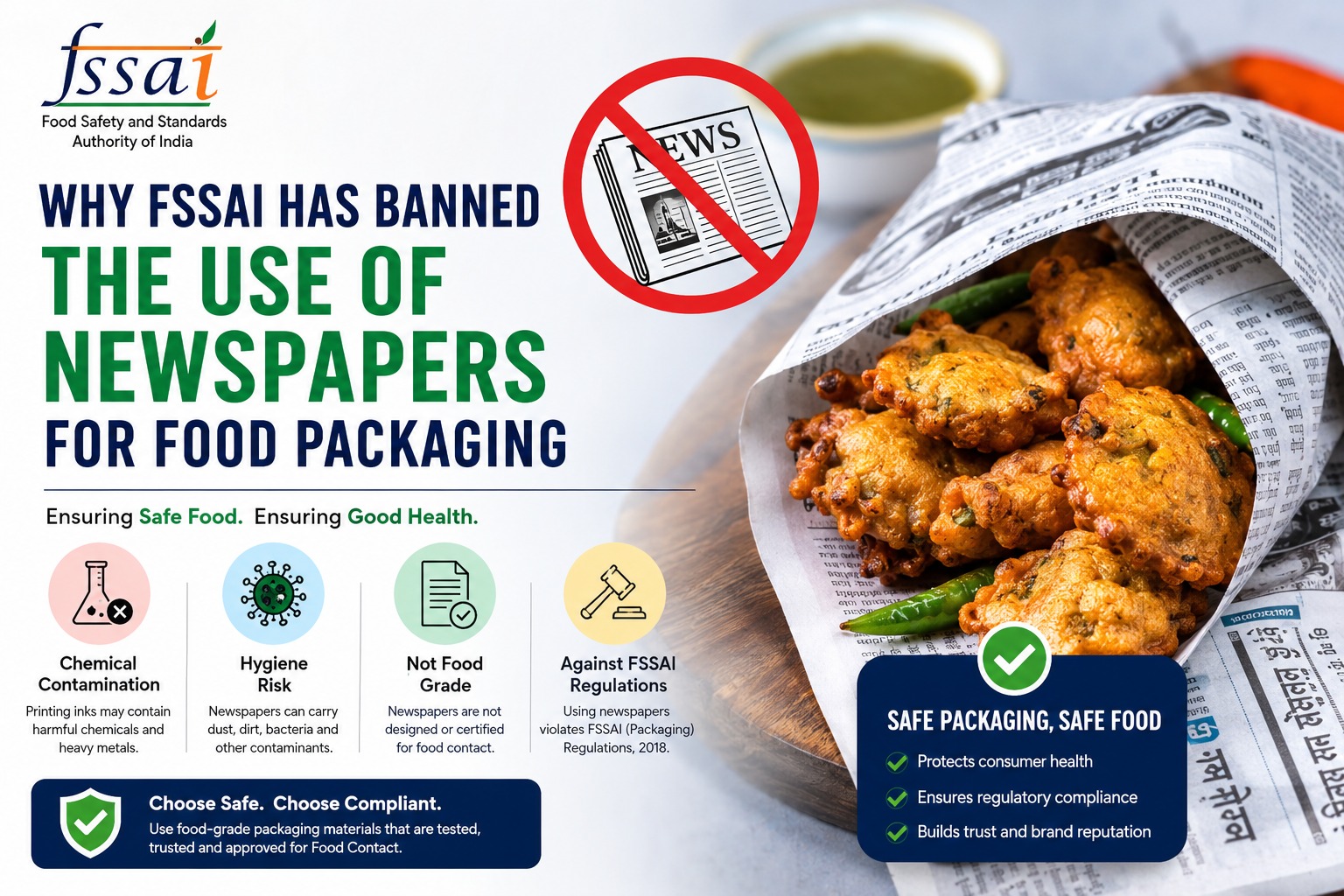
FSSAI’s Western Region issued a fresh advisory after an incident in Mumbai where food items were found being packed in newspapers. Authorities stepped in, and the advisory that followed was clear: newspapers are not approved food-grade materials. Their use violates the Food Safety and Standards (Packaging) Regulations, 2018, which explicitly prohibit the use of printed materials like newspapers for storing or serving food.
The directive applies across the board, to street vendors, restaurants, caterers, cloud kitchens, and any other business handling food commercially.
So What’s Actually Wrong With Newspapers?
It’s a fair question. After all, food is usually in contact with the newspaper for only a few minutes. How much harm could it really do?
Quite a bit, as it turns out.
The ink is the first problem
Printing inks used in newspapers aren’t designed with food safety in mind. They contain pigments, solvents, and, in some cases, heavy metals like lead. When food, especially hot, oily, or moist food, touches a printed surface, these chemicals don’t just sit there. They migrate. They transfer into the food. And when that happens repeatedly over time, the cumulative exposure can become a genuine health concern.
Hygiene is the second problem
Before that newspaper reaches a vendor’s hands, it has passed through printing presses, sorting facilities, delivery vans, and numerous sets of hands along the way. It has been exposed to dust, bacteria, and environments that have nothing to do with food safety. Wrapping edibles in that material isn’t just chemically risky, it’s a hygiene issue too.
The third problem is regulatory
Newspapers were never manufactured to be food-contact materials. They haven’t been tested or validated for that purpose. No food-grade certification exists for them because they were never meant for this use. That alone puts any business using them in direct violation of FSSAI guidelines.
Why Packaging Safety Deserves More Attention
One of the underappreciated truths of food safety is that what holds the food matters just as much as what’s in the food. Packaging is the first and last barrier between a product and the person consuming it, and yet it often gets far less scrutiny than the food itself.
Food packaging testing is the process that fills this gap. It determines whether a material is safe for direct food contact, whether harmful substances could migrate into food under real-world conditions, and whether the packaging holds up through storage, transport, and handling without compromising what’s inside.
For food businesses, this isn’t just a regulatory checkbox. It’s a meaningful quality measure.
What Testing Actually Covers
There are several layers to food packaging safety assessment, and each plays a different role:
Food contact material testing looks at whether packaging releases harmful substances into food under normal use. This is especially important for materials that come into direct contact with oily, acidic, or high-moisture products.
Packaging performance testing evaluates whether packaging can handle the physical demands of distribution, pressure, temperature changes, and rough handling without breaking down in ways that expose the food inside.
Packaging validation testing is done before a packaging solution goes to market, confirming that it meets functional and safety benchmarks before it’s used at scale.
Together, these assessments build a quality assurance layer around packaging that protects both consumers and businesses.
Compliance Is Now a Business Necessity
The regulatory landscape around food safety in India is tightening, and rightly so. FSSAI’s packaging regulations aren’t suggestions; non-compliance can lead to penalties, product recalls, reputational damage, and loss of consumer trust that’s very hard to rebuild.
For food businesses navigating this environment, working with an accredited testing laboratory takes a lot of the guesswork out of the equation. A NABL-accredited facility provides test results that carry regulatory credibility and give businesses the confidence that their packaging has been genuinely evaluated, not just assumed to be safe.
Conclusion
The ban on newspaper packaging isn’t bureaucratic overreach. It’s a response to a real, documented risk that the food industry has been slow to address. The familiarity of a practice doesn’t make it safe, and “we’ve always done it this way” isn’t a defence that holds up when consumer health is on the line.
For food businesses, the shift is straightforward: move to packaging materials that are designed and validated for food contact. Get them tested. Make sure they meet FSSAI standards. And work with a testing partner who can back up those claims with data.
At Qualitek Labs, we help food businesses do exactly that, through comprehensive food packaging testing, food contact material evaluation, and compliance support that keeps products safe and operations on the right side of regulation.
Frequently Asked Questions
1. Why has FSSAI banned the use of newspapers for food packaging?
FSSAI has banned newspaper packaging because printing inks and contaminants can migrate into food, posing potential health risks to consumers.
2. Is it legal to use newspapers for serving food in India?
No. FSSAI regulations prohibit the use of newspapers and other printed materials for wrapping, packaging, or serving food.
3. What are the risks of newspaper food packaging?
Newspapers may contain harmful chemicals, printing inks, dust, and microbes that can contaminate food and affect consumer safety.
4. What is Food Packaging Testing?
Food Packaging Testing evaluates packaging materials for safety, quality, compliance, and suitability for direct food contact applications.
5. Why is Food Contact Material Testing important?
Food Contact Material Testing helps identify harmful substance migration from packaging into food and ensures regulatory compliance.
6. Who should conduct Food Packaging Compliance Testing?
Food manufacturers, restaurants, caterers, cloud kitchens, and packaging suppliers should conduct testing to meet food safety requirements.
7. What is Packaging Performance Testing?
Packaging Performance Testing assesses the strength, durability, and protective capabilities of packaging during storage and transportation.
8. How can businesses ensure packaging safety compliance?
Businesses can partner with a NABL-accredited Food Packaging Testing Laboratory for comprehensive testing, validation, and quality assurance services.