

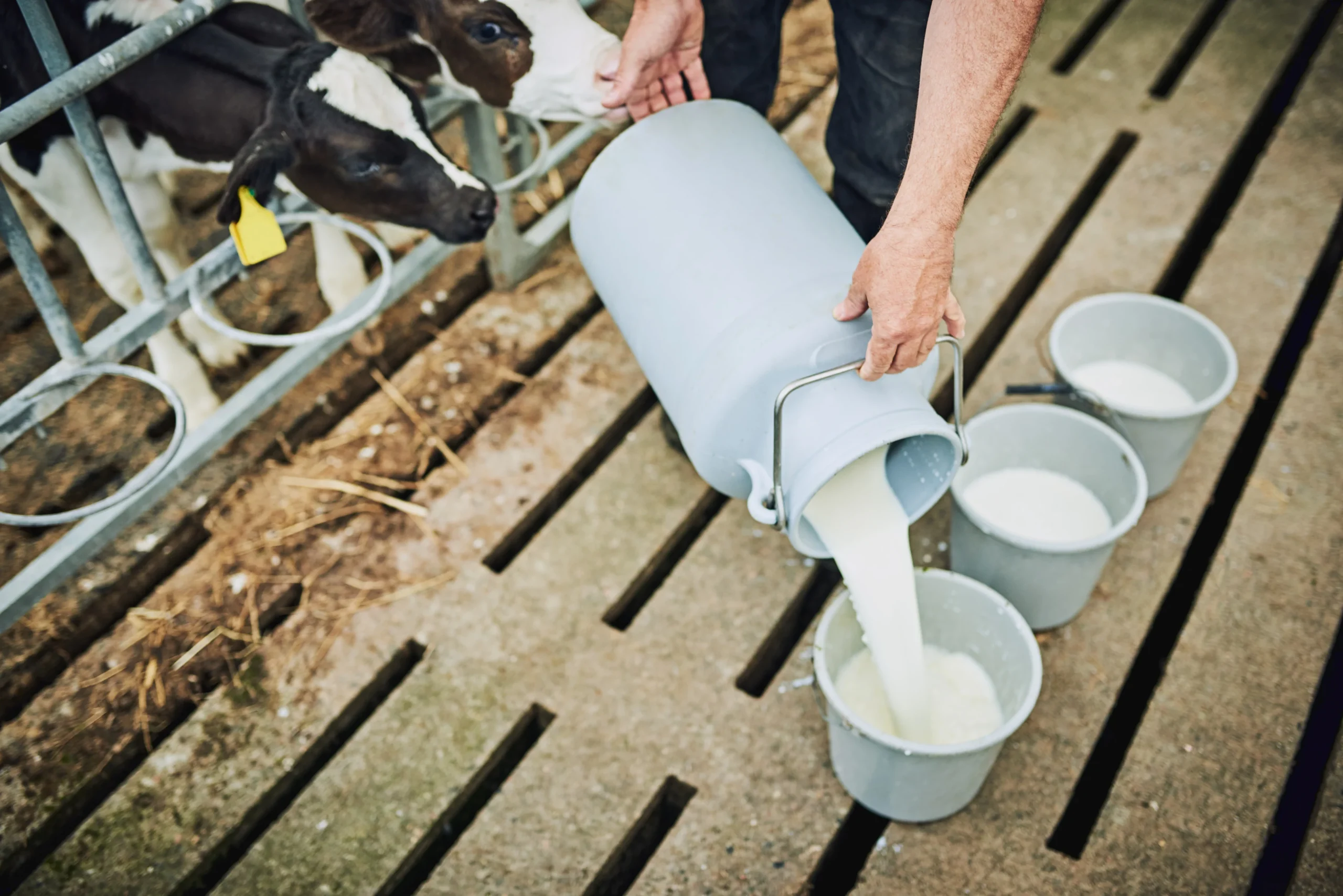
A comprehensive guide to FSSAI milk licensing, milk testing procedures, and dairy compliance for vendors across India
If you are selling milk in India — whether you are a small dairy farmer, a neighbourhood milk booth operator, or a large-scale dairy distributor — you need to stop and read this. FSSAI has issued a fresh advisory making it absolutely mandatory for every milk vendor to obtain a valid food business licence or registration before they can legally sell milk. Non-compliance could mean your business gets shut down. So, what does this mean for you? In simple terms: no registration, no selling. And at the heart of this compliance process is one critical requirement — milk testing. Whether you are operating a milk testing lab, using a dairy milk testing service, or seeking a milk testing laboratory near me, understanding FSSAI’s mandate is now more important than ever.
In this blog, we break down the new FSSAI advisory in plain language, explain the milk testing procedure you need to follow, walk you through how to apply for an FSSAI milk licence online, and tell you exactly where an accredited testing lab can help you stay compliant.
What Is FSSAI’s New Advisory on Milk Vendors?
The Food Safety and Standards Authority of India (FSSAI) — the apex food regulatory body in the country — has recently reinforced its advisory requiring all milk vendors and dairy food business operators (FBOs) to mandatorily register or obtain a food licence before engaging in the sale, storage, distribution, or processing of milk and dairy products.
The advisory is not entirely new in spirit, but its enforcement has become significantly stricter. FSSAI has directed state food safety commissioners to ensure that all milk vendors — from those selling loose milk to packaged dairy — are covered under the Food Safety and Standards Act, 2006.
Key highlights of the advisory include:
- All milk vendors must have either an FSSAI basic registration (annual turnover up to ₹12 lakhs) or a State/Central licence (for larger operations).
- Milk sold without valid documentation is considered illegal and can lead to penalties, seizure of goods, and cancellation of business.
- Vendors must comply with FSSAI’s quality and hygiene standards, which inherently require periodic milk testing.
- The advisory particularly targets unregistered vendors operating in rural, semi-urban, and urban informal markets.
- FSSAI milk licence apply online is now the primary mode of registration, making it easier than ever to get compliant.
According to FSSAI data, India produces over 230 million metric tonnes of milk annually, making it the world’s largest milk producer. Yet, a significant chunk of milk sold in the informal sector remains untested and unregulated. This advisory is a direct effort to fix that gap.
Why Milk Testing Is the Backbone of FSSAI Compliance
You cannot talk about FSSAI compliance for dairy vendors without understanding milk testing. It is the scientific foundation on which the entire regulatory framework rests. Milk testing is the process of analysing milk samples to verify their quality, purity, composition, and safety for human consumption.
Here is why milk testing matters so much:
- Adulteration Detection: Milk is one of the most commonly adulterated food items in India. Common adulterants include water, detergent, starch, urea, formalin, and synthetic milk. Only proper milk testing can catch these.
- Safety Verification: Milk can harbour harmful bacteria like Salmonella, E. coli, and Listeria. A quality assurance laboratory ensures these are detected before milk reaches consumers.
- Regulatory Requirement: FSSAI mandates that milk must conform to the standards set under the Food Safety and Standards (Food Products Standards and Food Additives) Regulations, 2011.
- Consumer Trust: For vendors, having tested and certified milk builds brand credibility in an increasingly aware market.
- Legal Protection: A milk testing report from a NABL accredited lab in India serves as evidence of compliance during inspections.
Real-world example: In 2023, FSSAI’s surveillance drive across Maharashtra revealed that over 35% of loose milk samples collected from unregistered vendors failed basic quality tests. This led to mass cancellations of temporary permits and seizure of milk stocks. Vendors who had availed food testing services from an accredited testing lab were better prepared to defend their products.
Understanding the Milk Testing Procedure: Step by Step
A proper milk testing procedure involves multiple stages, each aimed at evaluating different aspects of milk quality. If you are a vendor trying to understand what happens when your milk samples go to a food analysis laboratory, here is a simplified breakdown:
1. Sample Collection
Milk samples are collected from the vendor’s stock using sterile, standardised containers. The sample is labelled with details such as date, time, source, and batch number. Proper sample handling is critical — exposure to heat, light, or contamination can alter results.
2. Physical and Sensory Tests
At the milk testing lab, the first round of tests is sensory — colour, odour, and appearance. These basic parameters can indicate gross adulteration or spoilage. The Clot on Boiling (COB) test and alcohol test are also conducted at this stage to check milk freshness.
3. Chemical and Compositional Analysis
This is where the analytical testing laboratory conducts in-depth dairy milk testing to check for:
- Fat content (minimum 3.5% for full cream cow milk as per FSSAI standards)
- Solids-Not-Fat (SNF) — minimum 8.5% for cow milk
- Total Solids
- Protein content
- Lactose levels
- Presence of adulterants: starch, sugar, salt, urea, neutralisers, detergents
4. Microbiological Testing
A food testing lab will test for total plate count (TPC), coliform bacteria, yeast and mould count, and pathogens like Salmonella, Staphylococcus aureus, and Listeria monocytogenes. The FSSAI mandates that pasteurised milk must meet specific microbial limits.
5. Antibiotic and Pesticide Residue Testing
This is a growing concern in India. Animals treated with antibiotics can pass residues into milk. FSSAI has set Maximum Residue Limits (MRLs) for veterinary drugs in milk. An NABL accredited lab in India will use advanced techniques like HPLC and LC-MS/MS to detect these residues at trace levels.
6. Reporting and Certification
Once all tests are complete, the food testing services provider issues a detailed test report. For compliance purposes, you need this report from a food testing lab that is NABL accredited. This report is accepted by FSSAI, courts, and consumer forums as a credible document.
FSSAI Milk Licence: How to Apply Online and What to Know
One of the most searched questions among dairy vendors today is: how do I FSSAI milk licence apply online? The process has been significantly streamlined. Here is what you need to know:
Types of FSSAI Registration/Licence for Milk Vendors
- Basic Registration (Form A): For small vendors with an annual turnover below ₹12 lakhs. Valid for 1 to 5 years.
- State Licence (Form B): For medium-sized businesses with turnover between ₹12 lakhs and ₹20 crores.
- Central Licence (Form B): For large dairy processors, exporters, or multi-state operators with turnover above ₹20 crores.
Step-by-Step: FSSAI Milk Licence Apply Online
- Visit the official FoSCoS portal: https://foscos.fssai.gov.in
- Create an account with your mobile number and email ID.
- Select ‘Apply for New Licence/Registration’ and choose the appropriate form (A or B).
- Fill in details: business name, address, type of food business, dairy products handled.
- Upload required documents: identity proof, address proof, food safety management plan, layout plan of premises.
- Pay the prescribed fee online.
- Submit and track your application using the reference number provided.
- Once reviewed, your licence will be issued digitally.
FSSAI Milk Licence Check: How to Verify Your Status
Once you have applied, you can do an FSSAI milk licence check on the same FoSCoS portal by entering your application number or FSSAI licence number. You can verify the validity, status (active/expired/suspended), and the type of licence issued. It is always advisable to do a licence check before purchasing milk from any vendor — this is a growing practice among institutional buyers like hotels, hospitals, and schools.
Why You Need an Accredited Testing Lab — Not Just Any Lab
When you search for a milk testing laboratory near me, you might find dozens of options. But not all labs are created equal. FSSAI requires milk testing to be done by a notified food testing lab — and ideally one that is NABL accredited.
What Is NABL Accreditation?
The National Accreditation Board for Testing and Calibration Laboratories (NABL) is a government body under the Department for Promotion of Industry and Internal Trade (DPIIT). NABL accredited labs in India have been assessed for technical competence as per ISO/IEC 17025 standards.
Why does this matter for milk vendors?
- Reports from NABL accredited labs carry legal weight in food safety disputes.
- FSSAI’s food safety officers give higher credibility to results from an accredited testing lab.
- In case of consumer complaints or court proceedings, only reports from a notified or accredited lab are admissible.
- Many retailers, supermarkets, and institutional buyers demand proof of testing from NABL accredited labs in India before onboarding dairy vendors.
What Does a Food Analysis Laboratory Offer for Dairy?
A comprehensive food analysis laboratory providing food testing services for dairy products will typically offer:
- Physicochemical testing (fat, SNF, moisture, density)
- Microbiological testing (TPC, coliforms, pathogens)
- Adulteration testing (urea, starch, detergent, formalin, hydrogen peroxide)
- Antibiotic residue analysis
- Pesticide and heavy metal screening
- Aflatoxin M1 testing in milk
- Shelf life studies
- Label compliance verification
Tip: When looking for a milk testing laboratory near me, always verify if the lab is listed on the NABL website (nabl-india.org) or FSSAI’s notified lab list before submitting samples.
The Real Cost of Non-Compliance for Milk Vendors
Many vendors still operate under the assumption that FSSAI enforcement is not strict or that small vendors are exempt. This is a dangerous misconception. Here is what non-compliance can cost you:
- Fine of up to ₹5 lakh for selling milk without registration.
- Imprisonment of up to 6 months for repeated offences.
- Seizure and destruction of milk stock.
- Business closure orders.
- Reputational damage — especially in an era of social media and consumer awareness.
- Blacklisting from supplying to institutional buyers like hospitals, schools, and corporates.
Case in Point: In 2022, a milk vendor in Uttar Pradesh was penalised ₹2 lakh and had his entire stock seized after FSSAI inspectors found his milk was adulterated with urea and synthetic additives. He had no registration and no milk testing records to defend himself. A simple investment in food testing services and FSSAI registration could have saved his business.
Contrast this with vendors who regularly use a quality assurance laboratory for periodic milk testing. They are not only compliant but also command premium pricing in the market because they can prove the quality of their milk.
How Milk Vendors Can Build a Sustainable Compliance Framework
Compliance does not have to be a one-time panic exercise. Here is how dairy vendors — big or small — can build a sustainable quality and compliance framework:
Step 1: Register on FoSCoS and Get Your FSSAI Licence
Use the FSSAI milk licence apply online portal immediately. Do not delay. Choose the right category based on your business size and turnover.
Step 2: Partner With a Reputed Food Testing Lab
Find an NABL accredited lab or a notified food testing lab to conduct regular dairy milk testing. Schedule quarterly or monthly testing depending on your volume.
Step 3: Maintain Testing Records
Keep a systematic record of all milk testing reports from your analytical testing laboratory. These records are your defence during inspections.
Step 4: Train Your Team
Educate your staff on hygiene practices, proper sample collection, and handling procedures. Compliance is not just paperwork — it is a culture.
Step 5: Do Periodic FSSAI Milk Licence Check
Ensure your licence is always valid. Use the FoSCoS portal for FSSAI milk licence check regularly and renew before expiry.
Conclusion: Compliance Is Not Optional — And You Do Not Have to Navigate It Alone
FSSAI’s new advisory is a wake-up call for every milk vendor in India. Whether you are selling two litres a day from a roadside booth or operating a dairy plant supplying thousands of litres, the message is unambiguous: get registered, get tested, and get compliant. Milk testing is no longer a back-office formality — it is a core business requirement.
The good news is that compliance today is more accessible than ever. The FSSAI milk licence apply online portal makes registration simple. And for testing, India now has a robust network of NABL accredited labs and food testing labs that offer comprehensive dairy milk testing services at competitive prices.
If you are looking for a trusted partner for food testing services, look no further than Qualitek Labs.
Why Choose Qualitek Labs for Milk Testing and Food Safety?
With 6+ years of testing excellence and a team of experienced professionals, Qualitek Labs is one of the most trusted food testing laboratories in India. We bring together regulatory recognition, advanced analytical infrastructure, and a team of expert food technologists to deliver a full spectrum of food testing solutions — from dairy milk testing and adulteration checks to antibiotic residue analysis and microbiological evaluation.
At Qualitek Labs, we empower dairy businesses with insights they can trust — right from product development all the way to market release. Whether you are a small milk vendor needing basic compliance testing or a large dairy processor requiring comprehensive food analysis, our quality assurance laboratory is equipped to serve you.
- NABL accredited analytical testing laboratory
- Comprehensive dairy milk testing covering physical, chemical, and microbiological parameters
- Adulteration, antibiotic, and pesticide residue testing
- Fast turnaround times with detailed, FSSAI-accepted test reports
- Expert guidance on FSSAI compliance and food safety management
- Serving clients across India — find a Qualitek milk testing laboratory near you
Do not let non-compliance put your business at risk. Contact Qualitek Labs today for reliable, accredited food testing services and take the first step toward a fully compliant, trusted dairy business.
Frequently Asked Questions (FAQs)
Q1. Is milk testing mandatory for all milk vendors under FSSAI?
Yes. FSSAI mandates that all food business operators in the dairy sector must ensure their products meet the quality and safety standards defined under the FSS Act. Milk testing — either through internal checks or via a food testing lab — is integral to demonstrating compliance. For businesses supplying to retailers, institutions, or exports, testing from an accredited testing lab is strongly recommended.
Q2. How do I find a reliable milk testing laboratory near me?
You can search the NABL website (nabl-india.org) for NABL accredited labs in India that cover food and dairy testing. FSSAI also maintains a list of notified food testing labs on its portal. Always verify the lab’s scope of accreditation to ensure it covers dairy milk testing before sending samples.
Q3. How long does the FSSAI milk licence apply online process take?
For basic registration, the process is usually completed within 7 working days. For State and Central licences, it may take 30–60 days depending on document scrutiny and inspection requirements. It is advisable to apply well in advance and ensure all documents are accurate to avoid delays.
Q4. What parameters are checked during the milk testing procedure?
A standard milk testing procedure covers fat content, SNF (Solids-Not-Fat), total solids, protein, lactose, density, adulteration markers (urea, starch, formalin, hydrogen peroxide, detergent), microbiological parameters (TPC, coliforms, pathogens), antibiotic residues, and sometimes pesticide and heavy metal traces. The scope depends on the food analysis laboratory and the specific regulatory requirements.
Q5. What is the penalty for selling milk without FSSAI registration?
Under the Food Safety and Standards Act, 2006, a food business operator found selling food products without a valid FSSAI registration or licence can face a fine of up to ₹5 lakh. In cases of adulteration or repeated non-compliance, criminal prosecution with imprisonment is also possible. This makes it critical for all milk vendors to complete the FSSAI milk licence apply online process without delay.