

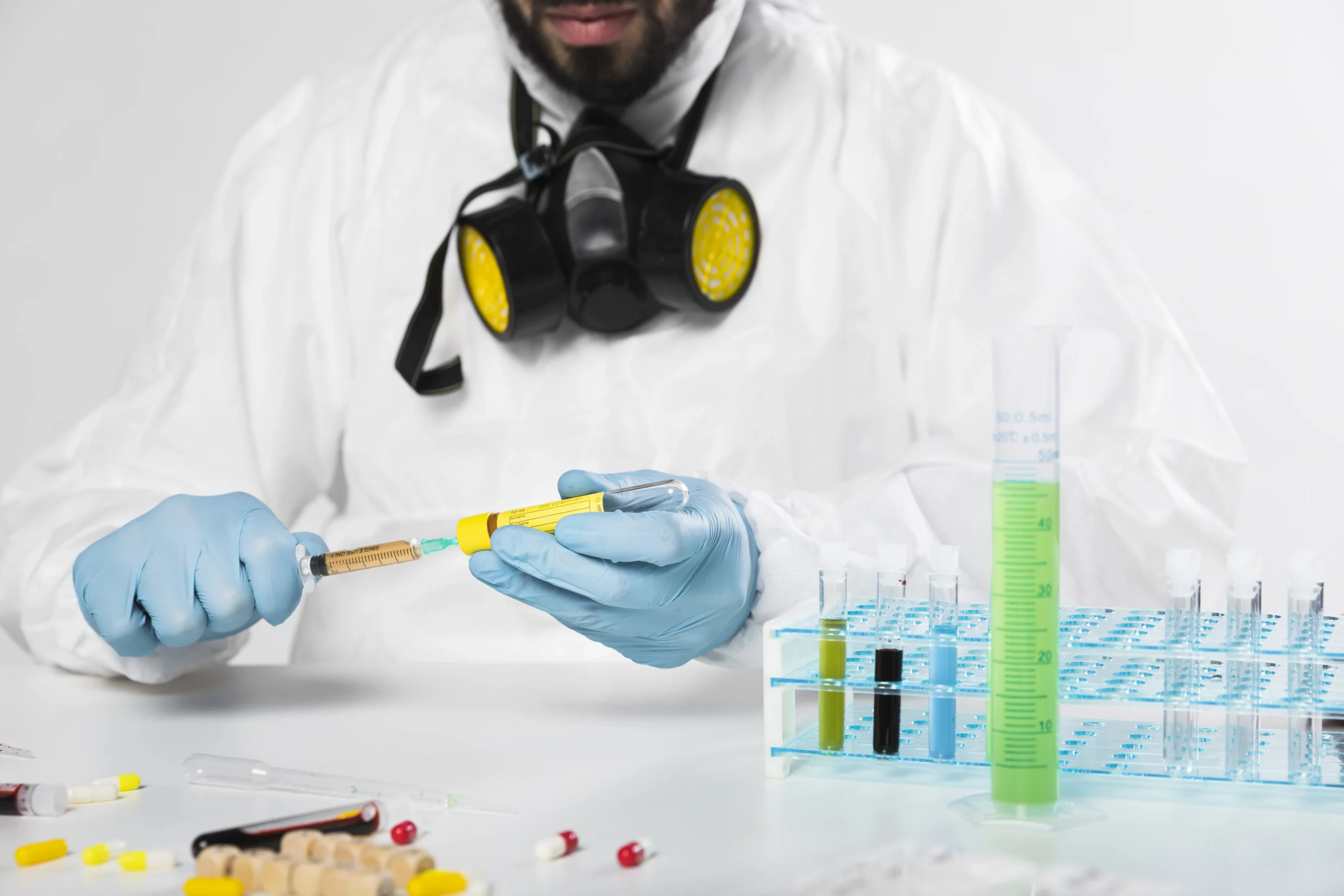
Pharmaceutical safety begins long before a medicine reaches a patient. It starts inside a Drug Testing Laboratory, where every formulation, tablet, capsule, and injectable is analyzed for purity, potency, and compliance. One of the most critical tools used in a drug quality testing laboratory is High-Performance Liquid Chromatography (HPLC). But simply running an HPLC test is not enough — the method must be validated.
HPLC method validation ensures that results generated by a Drug Testing Laboratory are accurate, reliable, reproducible, and compliant with regulatory standards. Without proper validation, even advanced drug testing labs risk inaccurate results, regulatory rejection, or product recalls.
In this comprehensive guide, we’ll explore why HPLC method validation is essential, how it supports pharmaceutical testing services, and why choosing the right drug testing laboratory makes all the difference.
What is HPLC and Why It Matters in a Drug Testing Laboratory
High-Performance Liquid Chromatography (HPLC) is an advanced analytical technique used in an analytical testing laboratory to separate, identify, and quantify components in a mixture. In pharmaceutical manufacturing, HPLC is widely used to:
- Determine Active Pharmaceutical Ingredient (API) concentration
- Identify impurities and degradation products
- Conduct stability studies
- Perform dissolution testing
- Carry out assay testing
In modern drug testing laboratories, HPLC is considered the backbone of quality control. From generic drug manufacturers to multinational pharmaceutical companies, every reliable drug quality testing laboratory depends heavily on validated HPLC methods.
Without validation, however, even the most sophisticated analytical testing services cannot guarantee trustworthy results.
What is HPLC Method Validation in a Drug Testing Laboratory?
HPLC method validation is a documented process that confirms a testing method consistently produces reliable and accurate results. Regulatory bodies such as ICH (International Council for Harmonisation) and CDSCO in India require proper validation before pharmaceutical products are approved.
In a Drug Testing Laboratory, validation typically evaluates:
- Accuracy
- Precision
- Specificity
- Linearity
- Range
- Detection limit (LOD)
- Quantitation limit (LOQ)
- Robustness
- System suitability
Validation ensures that when drug testing labs test a batch today and repeat the test next month, the results remain consistent and dependable.
Why HPLC Method Validation is Crucial in Drug Testing Laboratories
1. Ensures Drug Safety and Patient Protection
Medicines must contain the correct amount of active ingredient. Too little may reduce effectiveness. Too much may cause toxicity.
A validated method in a Drug Testing Laboratory ensures that assay results accurately reflect the true potency of the drug. For example, if a tablet is labeled as 500 mg, validation ensures that the HPLC system can precisely measure that 500 mg within acceptable variation limits.
This is especially critical in antibiotics, cardiovascular drugs, and oncology medicines.
2. Regulatory Compliance for Drug Testing Labs in India
Drug testing labs in India must comply with CDSCO, WHO-GMP, and ICH guidelines. Regulatory authorities frequently inspect drug testing laboratories to verify:
- Validation documentation
- Calibration records
- Audit trails
- Method transfer documentation
Failure to validate HPLC methods can result in:
- Warning letters
- Product recall
- Export restrictions
- Loss of manufacturing license
A professional drug testing laboratory ensures every method meets global compliance standards before releasing results.
3. Accuracy and Reproducibility in Analytical Testing Services
In pharmaceutical testing services, reproducibility is key. If two analysts perform the same test, results should not vary significantly.
Validated HPLC methods reduce variability caused by:
- Column changes
- Temperature fluctuations
- Mobile phase variations
- Analyst differences
This builds trust in drug test service providers and ensures consistent quality across manufacturing batches.
4. Impurity Profiling and Stability Testing
Over time, drugs can degrade due to light, heat, or humidity. A reliable analytical testing laboratory must detect even trace levels of degradation products.
HPLC validation ensures:
- Separation of impurities from active ingredients
- Accurate detection of unknown peaks
- Quantification within regulatory limits
In many global pharmaceutical recalls, the root cause was improper impurity detection — often due to unvalidated or poorly optimized methods.
Key Validation Parameters in a Drug Testing Laboratory
Let’s understand each parameter in simple terms:
Accuracy
Measures how close the test result is to the true value. In a drug quality testing laboratory, recovery studies are performed to confirm accuracy.
Precision
Checks consistency when the test is repeated multiple times. Includes repeatability and intermediate precision.
Specificity
Ensures the method can measure the drug without interference from impurities, excipients, or degradation products.
Linearity
Verifies that results are directly proportional to concentration within a given range.
Detection Limit (LOD) & Quantitation Limit (LOQ)
Critical for identifying trace impurities in drug testing laboratories.
Robustness
Tests how small deliberate changes (flow rate, temperature, pH) affect results.
Each of these parameters ensures that pharmaceutical testing services deliver defensible, regulatory-ready results.
Real-World Example: Why Validation Matters
Consider a pharmaceutical company manufacturing antihypertensive tablets. During export inspection, authorities discovered assay variation beyond acceptable limits.
Upon investigation, the issue was not with manufacturing — it was due to a poorly validated HPLC method that failed under slight temperature variations.
The consequence?
- Batch rejection
- Financial loss
- Brand reputation damage
This highlights why every Drug Testing Laboratory must prioritize method validation before offering drug test service results.
Role of an Analytical Testing Laboratory in Drug Quality
An analytical testing lab does more than just run machines. It:
- Develops and validates methods
- Documents standard operating procedures
- Maintains calibration logs
- Conducts internal audits
- Supports regulatory submissions
Professional drug testing laboratories integrate Laboratory Information Management Systems (LIMS) to ensure data integrity and compliance.
How Drug Testing Labs in India Are Strengthening Validation Practices
India is one of the largest pharmaceutical exporters globally. As a result, drug testing labs in India must meet international standards.
Leading pharma laboratory services now use:
- Automated HPLC systems
- Advanced software with audit trails
- Electronic documentation systems
- Risk-based validation approaches
With increasing global scrutiny, drug testing laboratories are investing heavily in training analysts and upgrading infrastructure.
HPLC Method Validation and Inspection Companies
An independent inspection company often audits manufacturing units and drug testing laboratories before international exports.
During audits, inspectors evaluate:
- Validation protocols
- Raw data records
- Chromatograms
- System suitability reports
- Deviation handling
Proper validation ensures smooth audits and uninterrupted business operations.
How to Choose the Right Drug Testing Laboratory
When selecting a drug testing laboratory, consider:
- Accreditation (NABL, ISO)
- Experience in pharmaceutical testing services
- Availability of advanced instruments
- Compliance record
- Data integrity systems
- Expertise in Drugs and Pharmaceutical Testing Services
A reliable analytical testing laboratory does not compromise on method validation.
The Business Impact of Proper HPLC Validation
Validation is not just a regulatory requirement — it is a business safeguard.
Benefits include:
- Reduced batch failure
- Faster regulatory approvals
- Improved global acceptance
- Lower risk of recalls
- Stronger brand credibility
For pharmaceutical companies outsourcing pharma laboratory services, partnering with the right drug testing lab ensures long-term operational stability.
Future Trends in Drug Testing Laboratories
Modern drug testing labs are moving toward:
- Risk-based validation
- Automation and AI-assisted chromatography
- Data integrity compliance (21 CFR Part 11)
- Electronic batch record integration
With increasing complexity in drug formulations, validation will continue to be a critical pillar of Pharmaceutical Testing Services.
Conclusion: Why Qualitek Labs is a Trusted Drug Testing Laboratory
If you are looking for a dependable Drug Testing Laboratory in India, Qualitek Labs stands out as a trusted partner.
At Qualitek Labs, expert scientists and analysts conduct tests using ultra-modern instruments including HPLC, GC-MS/MS, ICP-MS, and LC-MS/MS to ensure accurate and compliant results. Their commitment to excellence makes them one of the most reliable drug testing labs in India.
They offer a full spectrum of Drugs and Pharmaceutical Testing Services, from impurity profiling to packaging testing. With the integration of eLABSS LIMS, they maintain exceptional data accuracy, compliance, and innovation in pharma laboratory services.
Choosing the right drug quality testing laboratory is not just about testing — it is about safeguarding your product, your reputation, and ultimately, patient safety. Qualitek Labs combines expertise, technology, and regulatory compliance to deliver world-class analytical testing services.
Frequently Asked Questions (FAQs)
1. What is HPLC method validation in a Drug Testing Laboratory?
It is a documented process that ensures an HPLC method consistently produces accurate, precise, and reliable results according to regulatory standards.
2. Why is validation mandatory in drug testing labs in India?
Regulatory authorities such as CDSCO require validated methods to ensure drug safety, efficacy, and compliance before market approval.
3. How often should HPLC methods be revalidated?
Revalidation is required when there are significant changes in formulation, equipment, analytical conditions, or regulatory requirements.
4. What happens if a drug testing laboratory does not validate its methods?
It can lead to inaccurate results, regulatory penalties, product recalls, and business losses.
5. How do I select the right analytical testing laboratory?
Look for accreditation, experienced analysts, advanced instrumentation, strong compliance records, and expertise in pharmaceutical testing services.