

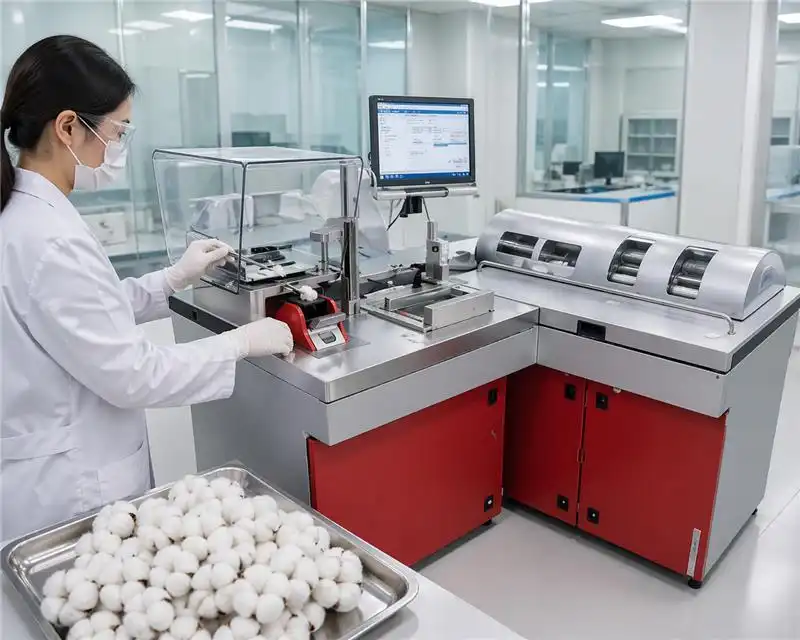
A decade ago, the cotton trade was simpler. You negotiated on volume, price, and availability — and that was largely enough. Not anymore. Today’s buyers are asking harder questions. They want documented proof of quality, verified origin, and evidence that the fibre they’re contracting actually meets the standards their customers and regulators expect. That change, gradual but now very real, has pushed one thing to the centre of the textile supply chain: cotton testing you can rely on and document.
For exporters, manufacturers, and traders, this means working with a trusted cotton testing lab is no longer something you do to resolve a dispute after the fact. It’s becoming part of the deal from the start.
What is Cotton Testing?
Cotton testing is the scientific analysis of fibre properties like length, strength, micronaire, and contamination using a cotton testing lab to ensure quality, consistency, and compliance in global trade.
The Quality Problem in Cotton Trade Is Bigger Than Most Realise
Anyone who’s worked in textiles long enough knows that cotton is never truly uniform. Two bales from the same farm, harvested the same week, can come out with measurably different fibre length, strength, micronaire, and trash content. Now scale that across a consignment of thousands of bales from multiple origins — and you start to see why mills are so particular about exactly what they’re buying.
A gap between declared quality and actual fibre characteristics doesn’t stay contained. It ripples through production efficiency, machine performance, fabric quality, and eventually the manufacturer’s ability to deliver on their own commitments downstream. That’s the gap cotton testing services are built to close. Objective, instrument-based data that both sides of a transaction can stand behind — no subjectivity, no guesswork, just measurement.
What Modern Cotton Fiber Testing Measures in a Cotton Testing Laboratory
A full cotton fiber testing profile goes well beyond a simple grade. Modern cotton testing laboratories use High Volume Instrument (HVI) systems to measure a comprehensive set of parameters that predict how the fibre will behave through the entire spinning process. Key parameters include:
- Fibre length and length uniformity — shorter or uneven fibres lead to more ends down in spinning and weaker yarn
- Fibre strength— measured in grams per tex, directly predicting yarn tenacity
- Micronaire — the fineness and maturity index that influences dyeability and processing behaviour
- Trash content and non-lint content— affecting cleaning efficiency and waste percentages
- Colour grade and brightness— relevant for bleaching requirements and final fabric aesthetics
These aren’t abstract numbers. Each parameter has a direct downstream consequence, and a cotton testing laboratory that measures all of them gives buyers and mills the kind of data they can actually base procurement and production decisions on.
Manual Cotton Classing: Still Relevant, But Not Sufficient Alone
Manual cotton classing has been part of this trade for well over a century, and it still holds real value. A skilled classer working in a manual cotton classing testing lab brings something instruments can’t fully replicate — the ability to assess preparation, gin-cut fibre, and subtle presentation issues that don’t always show up in HVI data. Manual cotton testing, done well, catches things.
But it has honest limitations too. Subjectivity varies between classers, fatigue affects consistency, and for high-value international trade, manual cotton testing lab results on their own are increasingly difficult to defend in a dispute. Serious buyers today expect both. Instrument data as the foundation, with trained manual cotton classing layered on where it adds context. And most will ask for HVI-certified results from a recognised cotton testing lab before purchase terms are even finalised.
Cotton DNA Testing: The New Frontier in Origin Verification
Of all the developments in cotton supply chain integrity over the past few years, cotton DNA testing may be the most consequential. It gives buyers something they’ve never really had before- the ability to verify origin at the fibre level itself. Not on paper. Not through declarations. At the bale. Whether cotton actually comes from the claimed source, region, or farm can now be confirmed scientifically, and that capability matters in ways that go well beyond quality assurance. Forced labour regulations, sustainability certifications, and origin-based pricing premiums — all of these create situations where paper documentation simply isn’t enough anymore.
The US Uyghur Forced Labor Prevention Act made that particularly concrete for brands and retailers, creating a legal standard for origin verification that no invoice or certificate can fully satisfy on its own. Cotton DNA testing fills that gap in a way nothing else currently can. Adoption is still building, but the demand is clearly there, accelerating across cotton testing services worldwide, including at cotton testing lab in India facilities that serve export-oriented supply chains with increasing frequency.
Cotton Inspection & Testing in India: Why It Matters for Exporters
India is one of the world’s largest cotton producers and exporters. The quality of Indian cotton — particularly Shankar-6, the dominant commercial variety — is well regarded, but variability between ginning seasons, growing regions, and ginning standards remains a real challenge for buyers. Cotton inspection and testing at origin is therefore critical for Indian exporters looking to protect their reputation and avoid post-shipment claims.
Working with an accredited cotton testing lab in India gives exporters the documentation they need to support their quality declarations, while giving overseas buyers confidence in what they’re receiving. Whether a buyer is searching for a cotton testing lab near me in Gujarat or sourcing from a centralised testing facility in Mumbai or Chennai, access to reliable, standardised testing infrastructure is what underpins credible export trade.
Why Buyers and Mills Are Demanding More From Testing
The pressure driving demand for better testing isn’t coming from one place — it’s coming from everywhere at once. Mills are squeezing harder on quality because their own margins are thinner and the cost of running substandard fibre through a production line is simply too high to absorb. Brands and retailers are being held to a higher standard on supply chain due diligence, both by regulators and by consumers who are paying closer attention.
Trading houses need documentation that actually holds up when a dispute lands in arbitration. And sustainability frameworks — Better Cotton, organic certifications, and others — are building traceability requirements that start at the fibre level. All of that pressure is landing in the same place: demand for cotton testing services that go well beyond a basic grade certificate. Contamination screening, full HVI profiles, origin verification — these are showing up as standard expectations in forward contracts now, not exceptions.
A cotton testing laboratory that offers fast turnaround, internationally recognised accreditation, and thorough cotton fiber testing isn’t a premium option anymore. It’s just what serious trade looks like.
Conclusion
The direction of travel is clear. Cotton trade is getting more demanding, more documented, and more scrutinised — and that’s not reversing. Exporters, mills, and trading houses still treating testing as an afterthought are going to find that gap increasingly costly.
The businesses getting ahead of this aren’t doing anything complicated. They’re working with a reliable cotton testing lab consistently, building a quality documentation trail that holds up, and choosing cotton testing services that cover fibre characteristics, contamination, origin, and compliance. That’s what protects margins, prevents disputes, and keeps trade relationships intact.
If you’re an exporter looking for a trusted cotton testing lab in India, a mill tightening incoming fibre assessment, or a trading house that needs documentation you can defend — Qualitek Labs is built for exactly that. As a NABL-accredited cotton testing laboratory, we offer end-to-end cotton testing services covering HVI-based cotton fiber testing, manual cotton classing, cotton DNA testing, and comprehensive cotton inspection and testing. Reports that carry weight where it matters. Get in touch with our team today.
Frequently Asked Questions
1. What is a cotton testing lab and why is it important in global trade?
A cotton testing lab provides scientific analysis of fibre quality, helping exporters and buyers ensure compliance, reduce disputes, and meet international trade standards with reliable documentation.
2. What do cotton testing services include?
Cotton testing services include fibre length, strength, micronaire, trash content, colour grading, and contamination analysis to ensure consistent quality and performance in textile manufacturing.
3. How does a cotton testing laboratory ensure quality?
A cotton testing laboratory uses advanced instruments like HVI systems and standardised methods to measure fibre properties, ensuring accurate, consistent, and globally accepted quality assessment.
4. What is cotton fiber testing and why is it essential?
Cotton fiber testing evaluates key properties like length, strength, and uniformity, helping manufacturers predict yarn performance and avoid production issues caused by inconsistent fibre quality.
5. What is the role of cotton DNA testing in trade?
Cotton DNA testing verifies fibre origin at a molecular level, helping brands meet traceability, sustainability, and regulatory requirements in global cotton supply chains.
6. How does cotton inspection and testing reduce trade risks?
Cotton inspection and testing identify quality variations before shipment, helping exporters avoid disputes, rejections, and financial losses in international trade transactions.
7. Why choose a cotton testing lab in India?
A cotton testing lab in India offers cost-effective, standardised testing services with export-ready documentation, supporting global trade requirements for Indian cotton suppliers.
8. How can I find a reliable cotton testing lab near me?
Search for a cotton testing lab near me that is accredited, offers comprehensive cotton testing services, and provides fast, accurate results aligned with international standards.
9. Why is manual cotton testing still relevant?
Manual cotton testing provides a visual assessment of fibre quality and preparation, complementing instrument-based results in a manual cotton classing testing lab for a more complete evaluation.